
Cross-Referencing Obituary Details with Other Public Records
Obituaries become far more powerful when paired with census data, vital records, and court filings. This guide shows you how to connect them.
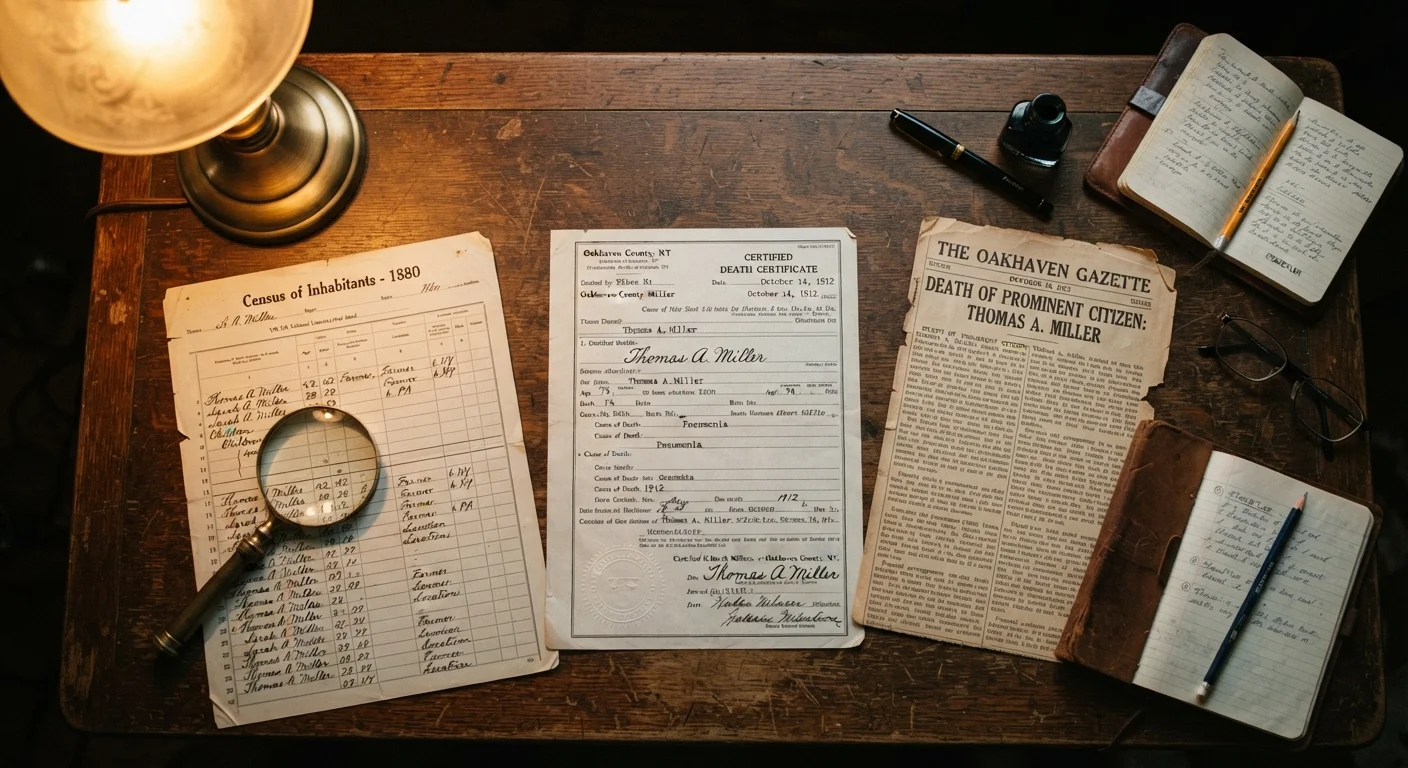
Photo: searchopenrecords editorial
—— In This Article
Key Takeaways
- Obituaries often contain small factual errors that cross-referencing with vital records can correct or confirm.
- Census records, death certificates, and probate files each fill gaps that obituaries leave behind.
- Discrepancies between sources are normal and often point to valuable new research leads.
- Organizing findings in a single research log prevents duplication and makes conflicts easier to spot.
- Free and low-cost public archives exist at federal, state, and county levels for most record types.
Why One Source Is Never Enough
An obituary is an invaluable starting point: it gathers names, dates, relationships, and geographic clues into a single narrative. But it is a privately composed document, not an official record, and the details it contains reflect what the family knew — or believed — at the time of writing. Memories compress, spellings shift across generations, and well-meaning errors get preserved in print.
Cross-referencing means treating the obituary as one voice in a conversation among multiple independent sources. When a death certificate, a census entry, and a probate filing all agree with what the obituary says, your confidence in that detail rises substantially. When they disagree, you have found something worth investigating. Understanding what obituary records are designed to capture — and where their limits lie — is the foundation for this work.
Obituaries Are Not Official Records
An obituary is written by family members or a funeral home and is not a government document. Dates, spellings, and relationship descriptions can reflect family memory rather than legal fact. Always verify critical details — birth dates, maiden names, and places of origin — against official vital records before treating them as confirmed.
The process described in this guide applies equally whether you are researching recent family history or tracing ancestors across several generations. The record types differ slightly by era, but the logic of comparison remains the same. Before you begin, gather the information described below.
What you will need
Tools and Records You Will Use
Effective cross-referencing draws on a small, consistent set of public record types. Having the right access points ready before you start will prevent unnecessary interruptions mid-search.
FamilySearch.org
Free access to indexed census records, vital records collections, and digitized historical documents from across the United States.
State Vital Records Office portal
The official source for certified death certificates and, in many states, older birth and marriage records.
County Probate Court records
Probate files list heirs, assets, and family relationships that can confirm or expand on what an obituary names.
Digitized newspaper archive
Allows you to locate the original published obituary and any surrounding coverage such as death notices or estate announcements.
Research log spreadsheet
Tracks every source consulted, what was found, and what remains unverified so you avoid repeating searches.
Many of these resources are accessible through a public library card, which often provides free remote access to subscription databases. If you are new to gathering the foundational details needed before a search, this checklist of key details to gather will help you prepare.
Step-by-Step: Connecting the Records
Follow these steps in order. Each one builds on what the previous step uncovered, so resist the temptation to skip ahead.
Extract every verifiable claim from the obituary
Read through the obituary carefully and list every factual statement it makes: full name and any nicknames, date and place of birth, date and place of death, spouse names, children's names, employer or occupation, military service, religious affiliation, and place of burial. These become your research hypotheses — claims to confirm, correct, or expand.
If you haven't already developed a systematic reading habit, our practical field guide to reading obituaries for genealogy walks through what each section of an obituary typically signals.
Locate the death certificate for the same individual
A death certificate is the closest official counterpart to an obituary. It records the legal date and place of death, the immediate and contributing causes, the informant's name, the place of burial, and — depending on the era and state — the deceased's birthplace, parents' names, and occupation. Request it through the relevant state vital records office or search digitized collections on FamilySearch.
Compare every shared data point against the obituary. Differences in birthplace spelling, age, or parental names are common and worth noting. For context on what these records typically contain, see Obituary Records Explained.
Pull relevant census records to establish earlier life context
Federal census records (enumerated every ten years) capture households at a moment in time. Search for the individual in the censuses taken during their lifetime — cross-referencing their name, age, birthplace, and listed relatives against what the obituary states. Maiden names, immigration years, and sibling relationships that appear in an obituary can often be confirmed or refined through census household entries.
For records from the late nineteenth and early twentieth century, the 1900, 1910, 1920, and 1930 censuses are especially information-dense. FamilySearch indexes most of these at no cost.
Check probate and court records for family relationships
When an obituary lists surviving children or a spouse, probate records from the county where the person died can confirm those relationships with legal weight. Wills name heirs directly; administration records name next-of-kin. Probate indexes are held by county courts and are increasingly available through state archives online. Cross-reference the names listed in the obituary against those appearing in probate documents to confirm spellings and identify family members not mentioned in the obituary.
For a broader view of which record types work best alongside obituaries, our article on public records that pair naturally with obituary research provides useful context.
Document conflicts and set follow-up research questions
Once you have compared the obituary against at least two other source types, review your research log for any inconsistencies. Record each conflict clearly: which sources disagree, on what point, and what possible explanations exist. Then formulate specific follow-up questions — for example, Did the family move between states, which might explain the different birthplace? — and identify which record type could resolve each one.
This disciplined approach to discrepancies is what separates reliable genealogical research from guesswork. You may find it helpful to then build a family timeline using obituary records to visualize how your verified findings connect across generations.
Log Every Discrepancy, Not Just Matches
When a census entry spells a surname differently from an obituary, or a death certificate shows a different birthplace, write it down rather than dismissing it. Discrepancies often expose name changes, immigration name adaptations, or clerical errors that open entirely new research avenues. A conflict between sources is a clue, not a dead end.
For research habits that experienced genealogists use to stay organized across multiple source types, see proven research habits for obituary searches. If your research eventually takes you into historical records from unfamiliar time periods or regions, reading obituaries from outside your own culture or era addresses the interpretive challenges those sources can present.

Obituary Search Editorial Team
Obituary Search Editorial Team is the collective byline for our editorial team and contributor network. Articles published under this byline or an editorial pen name are researched, written, and reviewed according to our editorial standards for clarity, consistency, and independence before publication.
View author profile