
Common Misconceptions About Public Access to Court Records
Many people assume court records are either totally open or totally private. The reality is more nuanced — here's the truth.
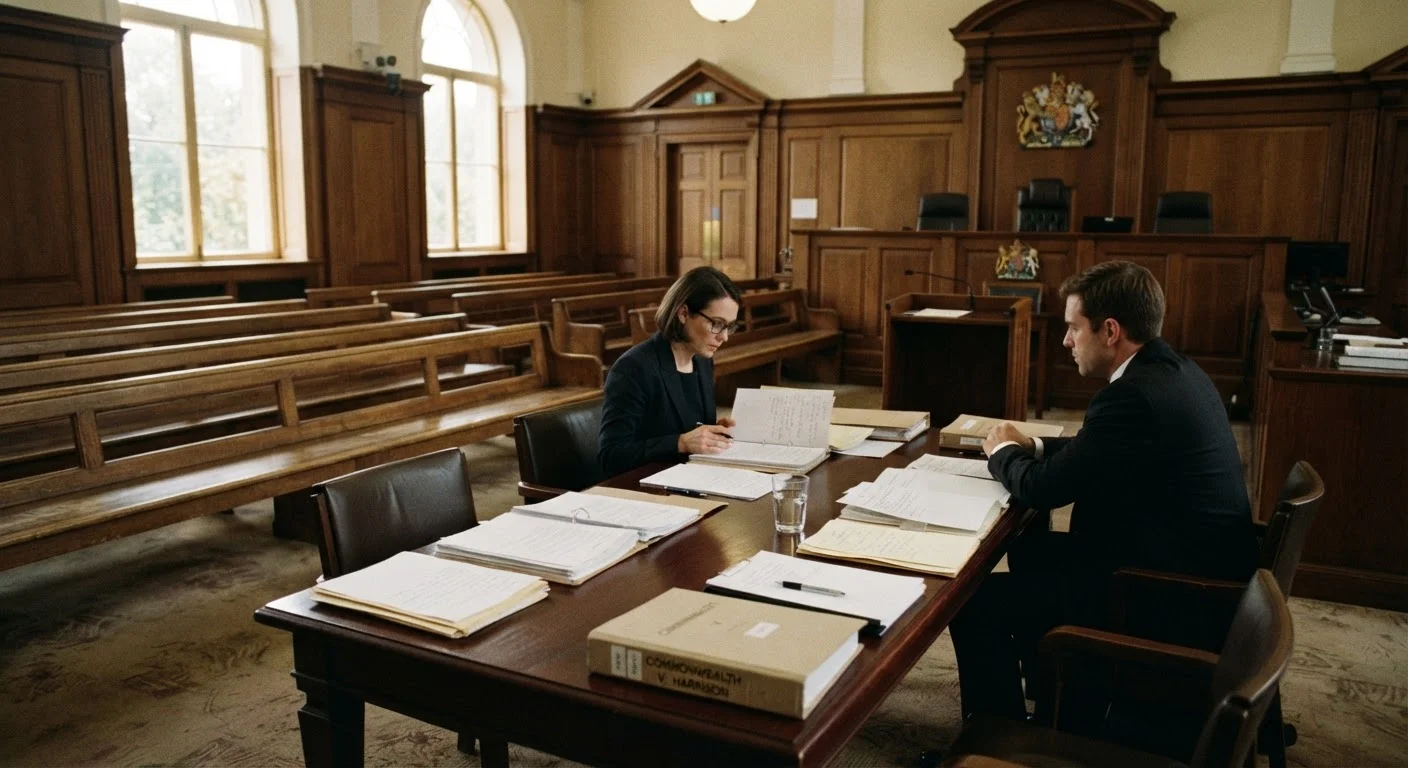
Photo: searchopenrecords editorial
—— In This Article
Key Takeaways
- Not all court records are publicly accessible — many categories are sealed or restricted by law.
- Availability varies significantly by jurisdiction, court level, and case type.
- Online access to court records is expanding but remains inconsistent across states.
- Expunged records are not automatically erased from every database or third-party source.
- A court record entry does not equal a conviction — charges and outcomes are distinct.
Why Misconceptions About Court Records Are So Widespread
Court records occupy a unique space in American public life — they are simultaneously a cornerstone of judicial transparency and a complex, fragmented system that resists easy generalizations. The confusion is understandable: federal courts operate differently from state courts, state rules differ dramatically from one another, and digital access has advanced unevenly. Add to this the rise of third-party data brokers who repackage court data with varying accuracy, and misinformation spreads quickly.
Understanding the legal framework behind U.S. public records systems is foundational before drawing conclusions from any court record. The myths below address the most consequential misunderstandings.
Myth
All court records are open to the public and anyone can view any case file.
Fact
Many court records are sealed, redacted, or restricted by statute. Access depends on the court, case type, and jurisdiction.
The principle of open courts is real and important in U.S. law, but it has meaningful limits. Juvenile court records, family law proceedings involving minors, mental health commitment hearings, certain immigration filings, and cases involving sensitive personal data are routinely sealed or restricted. Federal courts also apply their own protective order rules. What is available to the public in one state courthouse may be entirely off-limits in another. Always consult the specific court's access policy before assuming a record is viewable.
Myth
If a record exists, it's available online for free through a simple search.
Fact
Online availability is patchy. Many courts have not digitized older records, and free access portals vary widely in completeness.
Federal court records are available through PACER (Public Access to Court Electronic Records), which charges per-page fees after a small free threshold. State court portals range from comprehensive to nearly non-existent. Rural counties may only have records available in person at the clerk's office. Digitization projects are ongoing but uneven — a record from 2005 may be online while one from 2015 is not, depending on the court's backlog. Third-party aggregators fill some gaps but introduce their own accuracy risks.
Myth
An expunged record is permanently and completely erased everywhere.
Fact
Expungement removes a record from official court files, but it may persist in news archives, third-party databases, and some law enforcement systems.
Expungement is a legal order directing a court to seal or destroy its own records of a case. It does not reach newspaper archives, commercial background check databases that copied records before expungement, or certain federal agencies. Some states permit limited disclosure of expunged records to law enforcement or licensing boards even after the order is granted. People who obtain expungements should be aware that third-party data brokers may still hold copies and may not update promptly — or at all — without a direct legal demand.
Myth
A court record showing an arrest means the person was convicted of a crime.
Fact
Arrests, charges, and convictions are legally distinct. An arrest record alone says nothing about guilt or outcome.
Court records often capture every stage of a case — arrest, charge, arraignment, plea, trial, and verdict. Charges are frequently dismissed, reduced, or result in acquittals. Misreading an arrest or charge entry as a conviction is one of the most consequential errors people make when interpreting public records. For accurate interpretation, it is essential to trace the full case docket to its final disposition. Our article on common reasoning errors with public records covers this pattern in depth.
Myth
You need an attorney or a professional service to access court records.
Fact
Most court records can be requested directly by any member of the public through the clerk's office or official online portals.
U.S. courts are designed with public access as a default. Clerks of court are required to assist with public record requests, and many jurisdictions provide self-service kiosks or online docket search tools. While professional researchers and attorneys can navigate the system more efficiently, no legal representation is required to submit a request or view a public docket. Understanding your rights under U.S. public records law is a practical first step anyone can take independently.
Myth
Court records from any state can be searched from a single national database.
Fact
There is no single unified national court records database. Records are held by thousands of individual courts across federal, state, and local levels.
The U.S. court system is decentralized by design. Federal courts, state trial courts, appellate courts, and specialty courts (probate, family, bankruptcy) each maintain their own records systems. PACER covers federal courts only. State portals, where they exist, are separate and not interconnected. Aggregator services compile data from multiple sources, but coverage gaps are common and data currency is not guaranteed. Anyone conducting a thorough court records search must be prepared to query multiple systems depending on where relevant events occurred.
Using Court Records Accurately and Responsibly
Knowing that a record exists is only the beginning. Interpreting it correctly — and using it lawfully — are equally important skills. Court documents must be read in full context: a docket entry mid-case tells a very different story than a final judgment. Charges listed without a final disposition are legally and ethically distinct from convictions.
94
U.S. federal court districts with PACER access
PACER provides electronic access to federal court documents across all 94 U.S. district and appellate court jurisdictions, though per-page fees apply.
50+
Separate state court record systems
Each U.S. state maintains its own court records infrastructure, resulting in more than 50 distinct systems with no centralized national index.
~30%
Felony arrests that do not result in conviction
Research by the Bureau of Justice Statistics has found that a substantial share of felony arrests are dismissed or result in acquittal, underscoring why arrest records alone are misleading.
Access rights also come with responsibilities. The Fair Credit Reporting Act (FCRA) governs how background check companies may use court data for employment, housing, or credit decisions, and imposes obligations on both the reporting agency and the end user. Accessing records for permissible purposes — and not for harassment, stalking, or discrimination — is both a legal and ethical obligation. See our guide on searching court records responsibly for a detailed look at where those limits fall.
If you encounter records that seem incomplete or contradictory, consult guidance on avoiding common misreadings of public records before drawing conclusions. For decisions that carry significant legal or financial weight, consulting a qualified attorney remains the most reliable path forward.
This article is for general informational purposes only and does not constitute legal advice. Consult a licensed attorney for guidance specific to your situation.

Background Checks Editorial Team
Background Checks Editorial Team is the collective byline for our editorial team and contributor network. Articles published under this byline or an editorial pen name are researched, written, and reviewed according to our editorial standards for clarity, consistency, and independence before publication.
View author profile