
Why a Fraud Flag Doesn't Always Mean What You Think It Does
Fraud indicators in public records are frequently misread. This article separates common myths from what the data actually says.
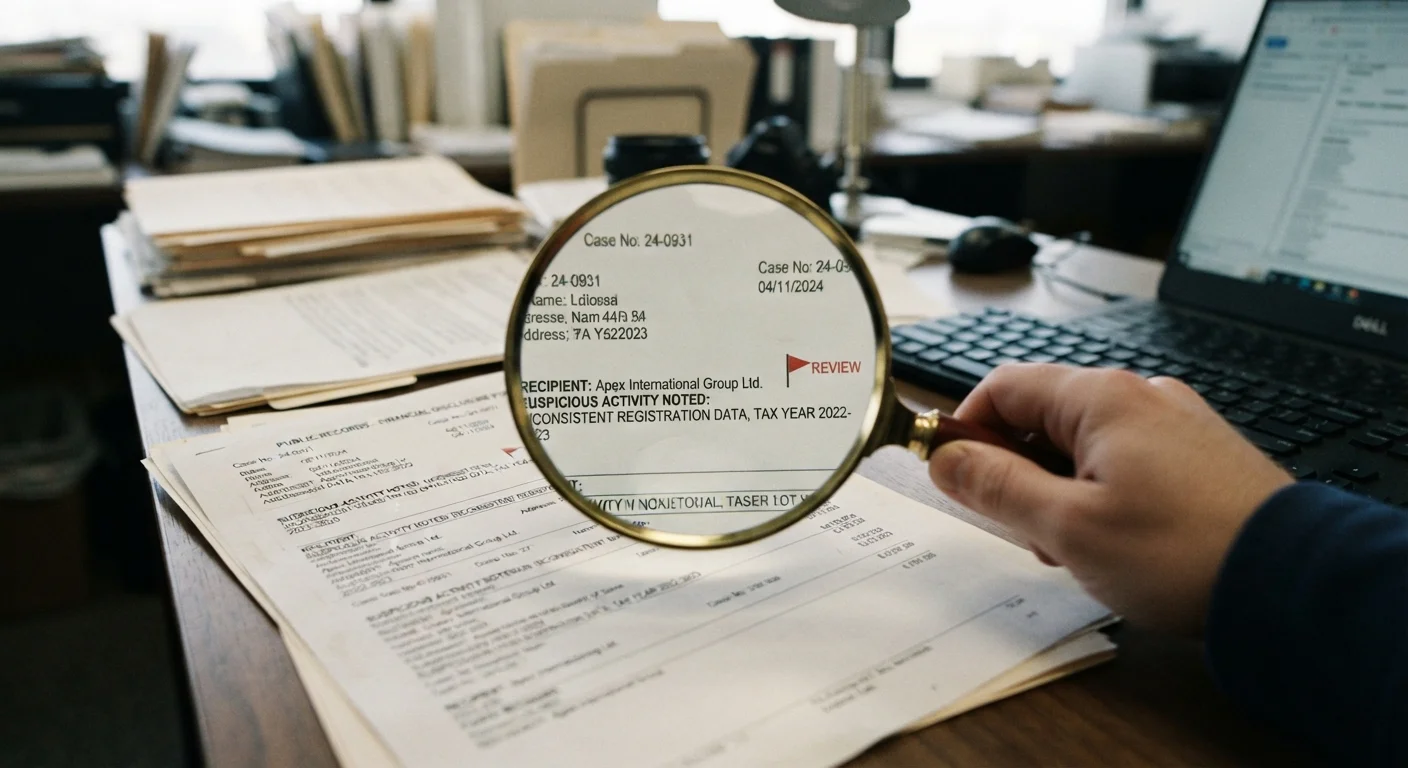
Photo: searchopenrecords editorial
—— In This Article
Key Takeaways
- A fraud flag in a public record is an algorithmic signal, not a legal finding or confirmed conclusion.
- Many flags result from data entry errors, identity overlaps, or legitimate life changes rather than wrongdoing.
- Context, verification, and applicable consumer rights under the FCRA are essential before acting on any flag.
- Misreading a fraud indicator can harm an innocent person and expose you to legal risk.
- Multiple corroborating data points — not a single flag — are needed to draw meaningful conclusions.
What a Fraud Flag Actually Is
When a fraud indicator surfaces in a background check or public records report, many people treat it as proof of wrongdoing. In reality, a fraud flag is a data signal — a pattern that a system has identified as statistically unusual compared to baseline records. It is not a court finding, a criminal charge, or a regulatory determination. Understanding this distinction is the foundation for interpreting any fraud-related record responsibly.
Fraud indicators typically arise when an algorithm detects anomalies: a Social Security number associated with more than one name, an address history with unusual gaps, or a date of birth that doesn't align consistently across datasets. These patterns can indicate fraud — but they can just as easily reflect a clerical error, a database merge issue, or a legal name change. For a detailed overview of how these signals surface and what they mean, see our guide to fraud flags in background checks.
Myth
If a fraud flag appears in a background report, the person is likely guilty of fraud.
Fact
A fraud flag is an algorithmic signal indicating a data anomaly — it does not establish guilt, intent, or any legal finding.
Automated screening systems flag records that deviate from expected patterns. That deviation can have dozens of innocent explanations: merged database records, typographical errors by a clerk, or normal life events like relocation or a legal name change. No algorithm can evaluate intent, context, or circumstance — only humans reviewing primary-source documents can do that.
Myth
A fraud flag means the information in a record is definitively wrong or fabricated.
Fact
Flags identify statistical anomalies, not confirmed inaccuracies. The underlying data may be entirely correct.
Consider someone who moved six times in three years for legitimate career reasons. Their address history looks unusual to a pattern-detection system even though every entry is accurate. The flag reflects the algorithm's baseline, not objective truth. Verifying directly against source documents is always the necessary next step before drawing any conclusion about accuracy.
Myth
More fraud flags on a record means a higher likelihood of actual fraud.
Fact
Multiple flags can accumulate from a single root error that has propagated across databases, not from multiple independent incidents.
When a data error enters one major records aggregator, it is often replicated across dozens of downstream databases. A single incorrect address linked to a name can generate multiple separate flags in a compiled report. The apparent volume of indicators may reflect one compounding mistake rather than a pattern of deceptive behavior. Always trace flags back to their originating data source before interpreting frequency as significance.
Myth
You can't do anything about a fraud flag that appears on your own record.
Fact
Under the FCRA, consumers have the right to dispute inaccurate or incomplete information in consumer reports and request corrections.
The Fair Credit Reporting Act gives individuals specific rights: you can request your consumer file, dispute errors with the reporting agency, and require that corrections be sent to anyone who received the inaccurate report for employment or credit purposes within a set timeframe. The dispute process requires documentation, but it is a legally guaranteed right — not an optional courtesy. A consumer law attorney can advise on specific steps for your situation.
Myth
Fraud flags in public records and fraud flags in credit reports mean the same thing.
Fact
These are generated by different systems, governed by different rules, and carry different legal weight.
Credit report fraud alerts (such as those placed after an identity theft) are governed by the FCRA and require creditors to take specific verification steps. Fraud indicators in compiled public records reports are generated by private aggregators using their own proprietary algorithms and do not carry the same legal obligations. Treating them interchangeably leads to misinterpretation of what action, if any, is warranted. See what records typically appear in a background check for context on the different data categories involved.
Why Flags Appear on Innocent Records
The public records ecosystem is vast, decentralized, and maintained by thousands of county, state, and federal agencies — each with different data standards. Errors propagate easily. A transposed digit in a date of birth, a maiden name attached to the wrong SSN record, or a duplicate entry created during a records migration can all trigger fraud-detection algorithms without any actual fraud occurring.
Life events also generate flag-triggering patterns. Moving frequently, hyphenating a surname after marriage, or using a P.O. box for financial correspondence can each look suspicious to automated scoring systems that were designed to flag unusual behavior. {{link:/background-checks/fraud-scan/interpreting-fraud-scans-accurately-where-people-go-wrong|Common interpretation errors}|Common interpretation errors}} explored by our editorial team show how often these benign explanations are overlooked.
Acting on a Flag Without Verification Carries Real Risk
Denying housing, employment, or other opportunities based on an unverified fraud flag may violate the FCRA and expose the decision-maker to legal liability. The law generally requires adverse action notices and an opportunity to dispute before a negative decision is finalized. Do not treat an algorithmic indicator as a substitute for a thorough, documented review process.
Consumer rights matter here. Under the FCRA, you have the right to dispute inaccurate information in consumer reports and to receive a copy of any report used against you in a decision. If a flag has affected a credit, employment, or housing decision, knowing these rights is critical. Always consult a qualified legal professional for guidance specific to your situation.
How to Respond When You See a Flag
The appropriate response to a fraud flag is investigation — not immediate judgment. Begin by identifying the specific data point triggering the indicator. Is it an address anomaly? A name variation? A SSN discrepancy? Each type has different likely causes and different verification pathways.
Next, cross-reference the flagged data against primary source documents: government-issued ID, official court records, utility accounts, and financial records. A single flag that cannot be corroborated by any other data point deserves significant skepticism. Our step-by-step verification walkthrough outlines exactly how to confirm whether a flag is accurate, current, and relevant.
If you are conducting research on someone else's records, the ethical and legal stakes rise sharply. Permissible purposes under the FCRA are narrowly defined — employment screening, tenant screening, and a small number of other uses. Applying fraud indicators outside these boundaries can expose you to legal liability. Review best practices for responsible use before drawing any conclusions that affect another person. For a comprehensive foundation, our complete guide to public records and fraud indicators covers the full landscape.
This article is for general informational purposes only and does not constitute legal, financial, or investigative advice. For decisions that affect your rights or another person's rights, consult a qualified attorney or licensed professional.

Background Checks Editorial Team
Background Checks Editorial Team is the collective byline for our editorial team and contributor network. Articles published under this byline or an editorial pen name are researched, written, and reviewed according to our editorial standards for clarity, consistency, and independence before publication.
View author profile