
Immigration and Naturalization Records: Reading the Paper Trail of Your Ancestors' Journey
Ship manifests, passenger lists, and naturalization papers reveal when and how ancestors arrived. Learn to locate and interpret these documents.
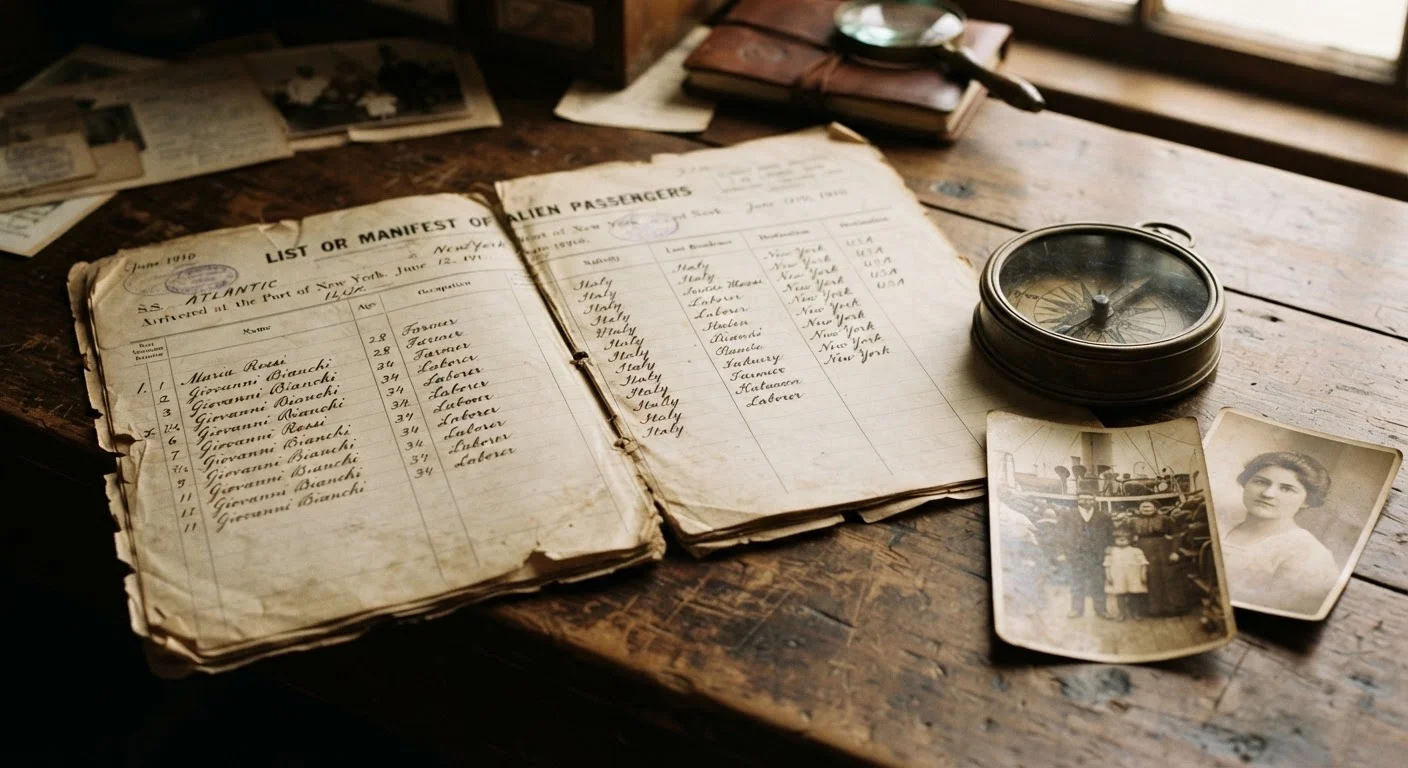
Photo: searchopenrecords editorial
—— In This Article
Key Takeaways
- Immigration and naturalization records span multiple document types, each revealing different details about your ancestor.
- Passenger lists from the late 1800s onward often include village of origin, physical description, and contact names.
- Name variations and anglicization are common — phonetic searches outperform exact-match queries.
- Naturalization was a multi-step process; declaration of intent and final papers are separate, searchable documents.
- Many federal immigration records are freely accessible through the National Archives and digitized databases.
- Record gaps often reflect historical policy changes, courthouse fires, or undocumented migration patterns.
Understanding What Documents Exist — and When
Before searching, it helps to know what the paper trail actually looks like. Immigration and naturalization records fall into two broad categories: arrival records and citizenship records. Each was created at a different moment in your ancestor's journey and by a different government authority.
Arrival records include passenger lists (also called ship manifests), inspection cards, and border crossing records. Their content changed dramatically over time. Lists from before 1895 typically capture only name, age, sex, and occupation. From 1895 onward — and especially after the landmark Immigration Act of 1891 expanded federal oversight — manifests grew far more detailed. By the peak immigration years of 1906–1957, a single manifest line might record an immigrant's last residence, nearest relative in the home country, physical description, and the name of a U.S. contact. That single line can unlock an entire village of origin.
Naturalization records are a separate chain. Before 1906, any court of record — federal, state, or local — could naturalize immigrants, and those records stayed with that court. After September 27, 1906, the Bureau of Immigration and Naturalization (later the INS) standardized the process and began keeping duplicate copies. This split matters because pre-1906 naturalizations are scattered across county courthouses, while post-1906 records are more centralized.
For a broader look at how these documents fit into ancestry research generally, the Tracing Family Roots hub is a useful starting point.
What You Need Before You Start
Gathering basic facts before you open a database saves significant time and reduces the frustration of sorting through hundreds of false matches.
What you will need
Pay particular attention to approximate arrival year. Immigration records are indexed chronologically, and a five-year window dramatically narrows your search. If your ancestor's arrival year is unknown, work backward: a naturalization certificate usually states the port and date of arrival, and census records from 1900, 1910, and 1920 asked respondents for their year of immigration.
Step-by-Step: Locating and Reading the Records
Follow these steps in order. Each stage builds on the last and generates leads for the next document type.
Search Federal Passenger List Databases
Start with the National Archives and Records Administration (NARA), which holds the core federal immigration record collections. The Ancestry database and FamilySearch both offer digitized passenger lists indexed from NARA holdings — FamilySearch is free to use. Search using the immigrant's surname plus a narrow date range. If you get no results, broaden the date window by ten years and try a phonetic variant of the surname.
For arrivals at Ellis Island between 1892 and 1957, the Stephen A. Schwarzman Building collection and related indexes are searchable. Arrivals at other ports — Baltimore, Boston, Philadelphia, New Orleans, and San Francisco — are held in separate NARA record groups (RG 85).
Read the Manifest Line Carefully
Once you locate the record, read every column — not just the name. Post-1906 manifests include columns for the immigrant's last town of residence, the name and address of their nearest relative abroad, whether they had been to the U.S. before, and the name of a contact in the United States. The "nearest relative abroad" field frequently names a parent or sibling still in the home country, giving you a direct lead into foreign records.
Physical description columns (height, eye color, distinguishing marks) help confirm identity when names are common. The "condition of health" and "amount of money" columns can reveal circumstances that shaped your ancestor's early years in the U.S.
Locate the Declaration of Intent
The declaration of intent (informally called "first papers") was the first formal step toward citizenship. Filed in a local court, it recorded the immigrant's name, age, birthplace, and a renunciation of allegiance to their home country. Declarations filed after 1906 are indexed in NARA's Naturalization Certificate Files (C-Files). For earlier declarations, contact the clerk of court for the county where your ancestor lived.
The declaration does not grant citizenship — it is a statement of intention filed typically two or more years before the final petition. Some immigrants filed a declaration and never followed through, so its existence does not confirm eventual naturalization.
Find the Final Naturalization Papers
The petition for naturalization and the resulting certificate of citizenship are separate from the declaration. The petition typically includes a more complete biography — occupation, physical description, spouse's name and birthplace, and children's names and ages. For post-1906 records, search NARA's online catalog under Record Group 85 or submit a records request. For pre-1906 records, identify which court had jurisdiction and contact that court directly or search its microfilmed records through FamilySearch.
Women who married U.S. citizens automatically became citizens under the Expatriation Act of 1907 (until 1922), so they may have no naturalization file of their own — their status derived from their husband's papers.
Cross-Reference with Census and Vital Records
Immigration records become most powerful when triangulated with other sources. The 1900, 1910, and 1920 federal censuses each asked for year of immigration and whether the respondent was naturalized, had taken out first papers, or was still an alien. These census answers won't always align precisely with the documents you've found — but the discrepancies themselves are clues worth noting.
State and county vital records (birth, marriage, death certificates) frequently list parents' birthplaces or immigration status, sometimes more accurately than the immigrant's own self-reported data. For deeper context on what these records reveal together, see what historic immigration and naturalization papers reveal about your family.
FamilySearch Is Free — Start There
FamilySearch.org provides free access to a large portion of digitized NARA immigration holdings, including Ellis Island arrivals and many naturalization indexes. Before subscribing to any paid service, exhaust what FamilySearch offers. Many researchers find their key documents without ever needing a paid database.
Common Pitfalls and How to Work Around Them
Even experienced researchers hit walls with immigration records. The most frequent obstacles — and their solutions — are worth knowing in advance.
Name changes and anglicization. An ancestor named Wojciech Kowalczyk might appear in U.S. records as Albert Coleman. Clerks transliterated names as they heard them, and immigrants sometimes adopted new names voluntarily. Use Soundex or phonetic search modes in databases, and search under all plausible anglicized versions. The article on ancestors who seem to disappear before 1900 covers name-change strategies in depth.
Missing records. The 1906 San Francisco earthquake and fire destroyed many local naturalization records. The 1921 Ellis Island fire damaged some passenger arrival records. For gaps, look for derivative evidence: a newspaper announcement of naturalization, a church record noting citizenship, or a passport application that references earlier documents.
Conflicting dates and ages. Immigrants frequently stated different ages in different records — sometimes to appear older for work, younger for military exemption, or simply because they were uncertain of their own birth year. Treat all dates as approximate and triangulate across at least three independent records before committing to a single figure.
Obituaries for immigrant relatives can also surface home-country details that official records omit. See using obituaries to research immigrant ancestors for guidance on what those sources can and cannot confirm.
Once you've exhausted U.S.-held records, the research often needs to cross borders. The guide to ancestry research across borders explains how record-keeping varies by country and where to search next.

Genealogy Search Editorial Team
Genealogy Search Editorial Team is the collective byline for our editorial team and contributor network. Articles published under this byline or an editorial pen name are researched, written, and reviewed according to our editorial standards for clarity, consistency, and independence before publication.
View author profile