
Tracing a Family Line From Living Relatives Back Through Generations
Learn the step-by-step process of working backwards from known relatives to uncover earlier generations using public documents.
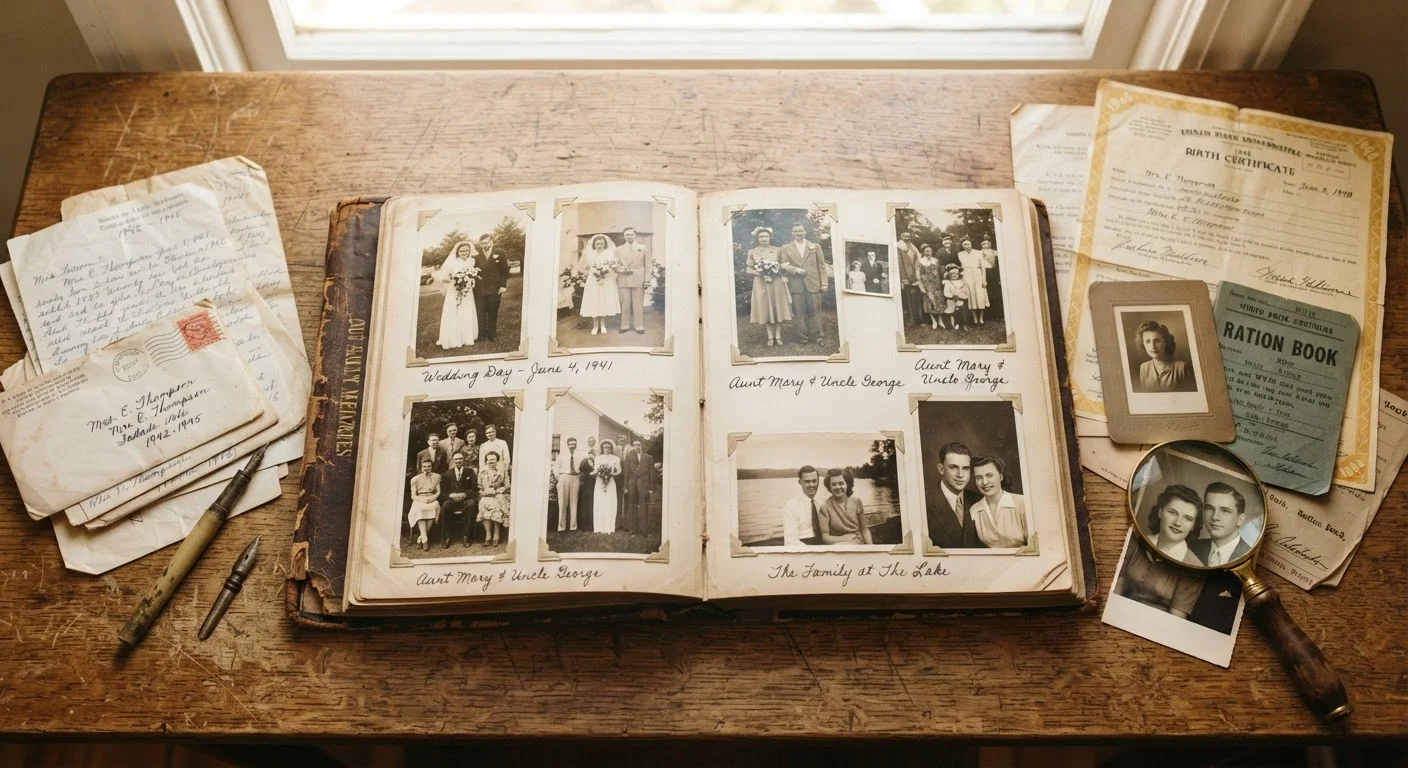
Photo: searchopenrecords editorial
—— In This Article
Key Takeaways
- Always start with yourself and living relatives before consulting any external records.
- Document every source immediately — unsourced data introduces errors that compound over generations.
- Each generation requires a distinct set of record types, from vital records to census and land documents.
- Name variations, digitization gaps, and transcription errors are common obstacles requiring flexible search strategies.
- Verify each connection with at least two independent primary sources before moving further back.
Why the 'Living Relatives First' Approach Works
Genealogical methodology universally recommends working from the known to the unknown — that is, beginning with people and facts you can verify directly, then extending backward one generation at a time. Skipping ahead to search for a great-great-grandparent before firmly establishing the intervening links is one of the most common causes of collapsed family trees, where researchers unknowingly attach their line to the wrong family of the same surname.
The approach described in this guide — interview, document, verify, repeat — mirrors the standards used by professional genealogists and institutions such as the Board for Certification of Genealogists. It is also the foundation of the broader research process covered in our complete family tree research walkthrough.
What you will need
If you are starting your research with a recently deceased relative rather than a living one, obituaries are an excellent bridge. They frequently name surviving and predeceased family members, funeral homes (which hold records), and hometowns — all of which anchor further research. See our companion guide on tracing a family tree using obituaries as your starting point.
Common Obstacles and How to Navigate Them
Even a careful, methodical researcher will encounter obstacles. Understanding the most frequent ones in advance keeps frustration from derailing progress.
Name Variations
Surnames change spelling across generations — sometimes deliberately (to assimilate), sometimes through clerical error. Search for all plausible phonetic variants simultaneously. The Soundex coding system, used to index many historical U.S. records, groups names by sound rather than spelling and can surface overlooked entries.
Digitization Gaps
Not all records have been scanned. Many county-level court records, church registers, and pre-1880 vital records exist only on microfilm or in physical archives. When an online search returns nothing, contact the relevant county courthouse, state archive, or historical society directly before concluding that a record does not exist.
Destroyed or Missing Records
The 1890 U.S. federal census was almost entirely destroyed by fire and water damage in 1921. Several Southern states lost courthouse records during the Civil War. Substitutes — such as state censuses, city directories, and church records — can partially fill these gaps. If you are researching ancestors who owned land, tracing family roots through property records may surface evidence that other record types cannot provide.
Conflicting Records
Two legitimate documents may give different birth years for the same person. Assess each source's likely reliability: a birth certificate created at birth outranks an age reported to a census enumerator decades later. Document the conflict and your reasoning rather than silently choosing one figure. Transparency in your notes is what separates a defensible family history from a guess.
If you are working within a budget, our guide on building a three-generation family tree using only free sources identifies government archives, library databases, and other no-cost tools that cover the majority of standard research needs.
Save Sources as You Go
Download or photograph every record you consult, and note the repository, collection name, and URL or call number immediately. Records move, databases restructure, and freely accessible scans can become paywalled. A source you cannot relocate later is a source you cannot cite — and an uncited connection weakens your entire tree.

Genealogy Search Editorial Team
Genealogy Search Editorial Team is the collective byline for our editorial team and contributor network. Articles published under this byline or an editorial pen name are researched, written, and reviewed according to our editorial standards for clarity, consistency, and independence before publication.
View author profile