
Address Lookup Explained: What It Is and How It Actually Works
Understand what address lookup tools are, what data they draw from, and what you can realistically expect to find using public records.
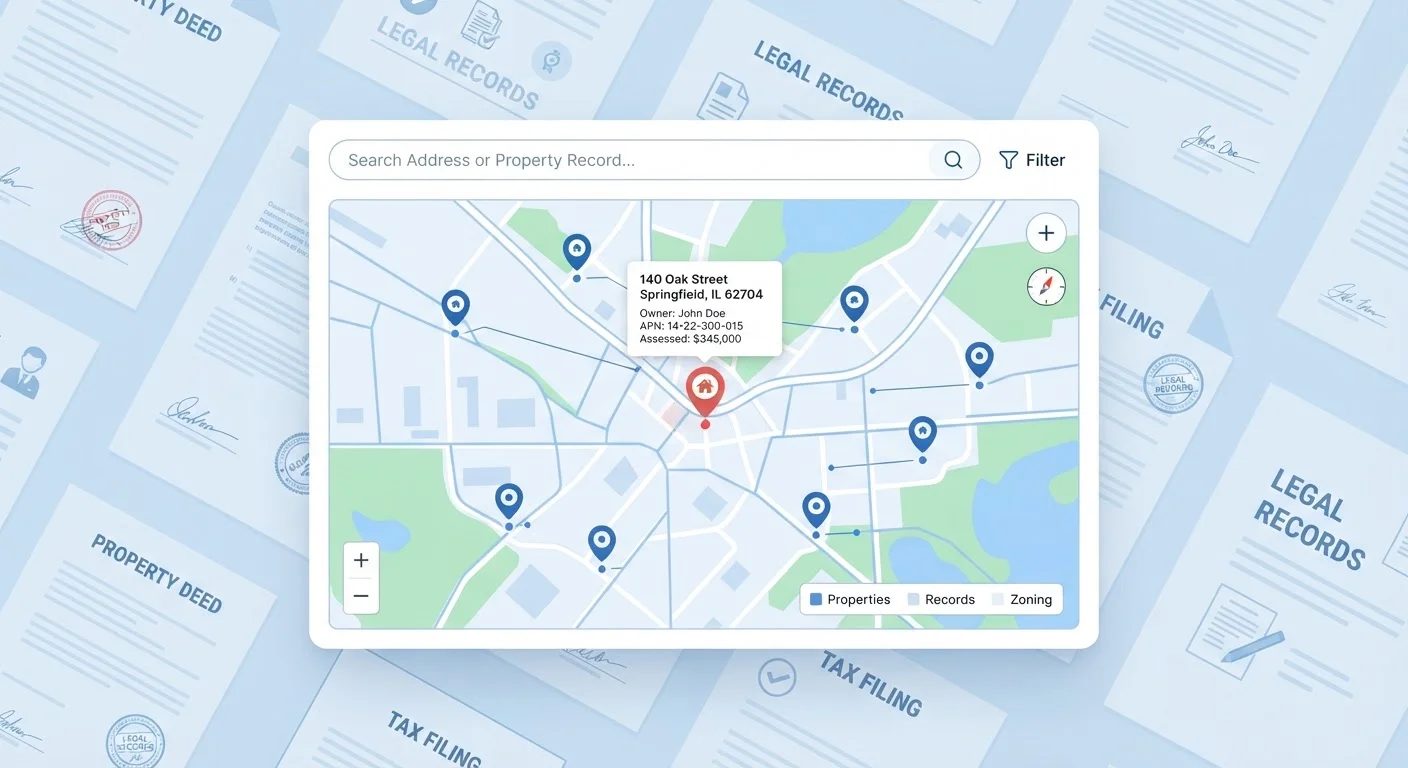
Photo: searchopenrecords editorial
—— In This Article
Key Takeaways
- Address lookup tools pull from public records, not a single live database maintained by one authority.
- Results can include both current and historical addresses, and the two are not always clearly labeled.
- Data accuracy depends heavily on how recently the underlying sources were updated.
- These tools are not designed for use in employment screening, tenant screening, or credit decisions under the FCRA.
- Gaps and errors in results are normal — no lookup tool has complete, real-time coverage of every U.S. address.
What an Address Lookup Tool Actually Does
An address lookup tool is a search interface that retrieves address-related information from aggregated public and semi-public data sources. Despite what the name implies, these tools are not connected to a single authoritative government registry. Instead, they compile records from dozens of distinct sources — property tax assessments, court filings, postal change-of-address notifications, voter registration databases, and commercial data brokers — and present them in a unified search result.
The practical implication is significant: the quality of results depends entirely on the quality and recency of whatever sources the aggregator has indexed. A tool that draws from frequently updated property records in California may return far more reliable results for that state than for a state where its data sources update quarterly.
For a broader foundation on how residential address data enters the public record in the first place, see our guide on public records and residential addresses.
Where the Data Comes From
Understanding the data pipeline helps set realistic expectations. Address lookup results typically originate from several distinct source categories:
- Property records: County assessor and recorder offices maintain ownership and tax records that include property addresses. These are among the most reliable sources for current homeowners.
- Voter registration: Many states make registration rolls publicly available, often including residential addresses. Coverage and availability vary considerably by state law.
- Court records: Addresses listed in civil and criminal filings become part of the public record and are frequently indexed by data aggregators, even when the record itself is years old.
- Postal data: Change-of-address submissions to the U.S. Postal Service inform some commercial datasets, though this data is licensed to third parties rather than made directly public.
- Commercial data brokers: Private companies compile address histories from loyalty programs, magazine subscriptions, warranty registrations, and similar sources, then license this data to lookup services.
Each source has a different update cycle, coverage area, and error rate. Aggregators combine these feeds, but they do not verify individual records for accuracy before surfacing them in results.
50+
Distinct public record source types aggregators may index
Data brokers and lookup platforms commonly draw from dozens of source categories including property filings, court records, and postal data, according to published descriptions of major aggregator methodologies.
~11%
U.S. population that moves in a given year
According to U.S. Census Bureau estimates, roughly one in nine Americans changes residence annually, contributing to the lag between real-world moves and updated address records.
Varies by state
Voter registration address availability
State laws differ significantly on whether voter registration data — including residential addresses — is publicly accessible, creating uneven coverage across address lookup databases.
What You Can Realistically Expect to Find
A typical address lookup result for a person with a stable public record may include a current or recent street address, a list of prior addresses, names of other individuals associated with the same addresses, and sometimes phone numbers or relatives' names pulled from related records.
What results will not reliably include: real-time location data, addresses for individuals who have actively opted out of data broker databases, accurate information for people who move frequently or use alternative mailing arrangements, and verified current addresses for renters whose names do not appear on public-facing lease documents.
Results also commonly conflate current and historical data without clear dating. An address labeled in a result may reflect where someone lived five years ago, not today. Learning to read these results critically is essential — our article on reading address lookup results without being misled covers confidence scores, date stamps, and source labels in detail.
Address lookup is also a distinct process from related searches. For comparison, email lookup tools follow a similar aggregation model but are optimized for different identifier types and data sources.
Practical and Legal Boundaries
Address lookup tools are appropriate for a range of everyday purposes: reconnecting with a lost contact, verifying that an address you have on file is still active, or conducting informal due diligence before a meeting. They are not appropriate — and in some cases not lawful — for making decisions about employment, housing, credit, or insurance eligibility.
The Fair Credit Reporting Act (FCRA) governs the use of consumer data in those high-stakes contexts and requires that any report used for such decisions come from a regulated consumer reporting agency. General address lookup platforms do not meet that standard.
Beyond FCRA compliance, using address data to locate someone for purposes of harassment or stalking is a criminal matter in every U.S. jurisdiction. The legality of a search does not make all uses of its results lawful. For a thorough treatment of where the legal lines fall, see our explainer on privacy, consent, and legality in address lookup.
Address lookup also intersects with background screening. If you are specifically interested in how address history appears in formal background reports and how those records are compiled and interpreted, see our companion piece on address history on a background check.
For a comprehensive end-to-end resource covering everything from data sourcing to interpreting results, the complete address lookup and public records guide consolidates all of these topics in one place.
Frequently Asked Questions

People Search Editorial Team
People Search Editorial Team is the collective byline for our editorial team and contributor network. Articles published under this byline or an editorial pen name are researched, written, and reviewed according to our editorial standards for clarity, consistency, and independence before publication.
View author profile