
Address History on a Background Check: How It's Compiled and What It Reveals
Address history is one of the most consistently appearing sections in background reports. Learn where this data comes from and how it's used to verify identity.
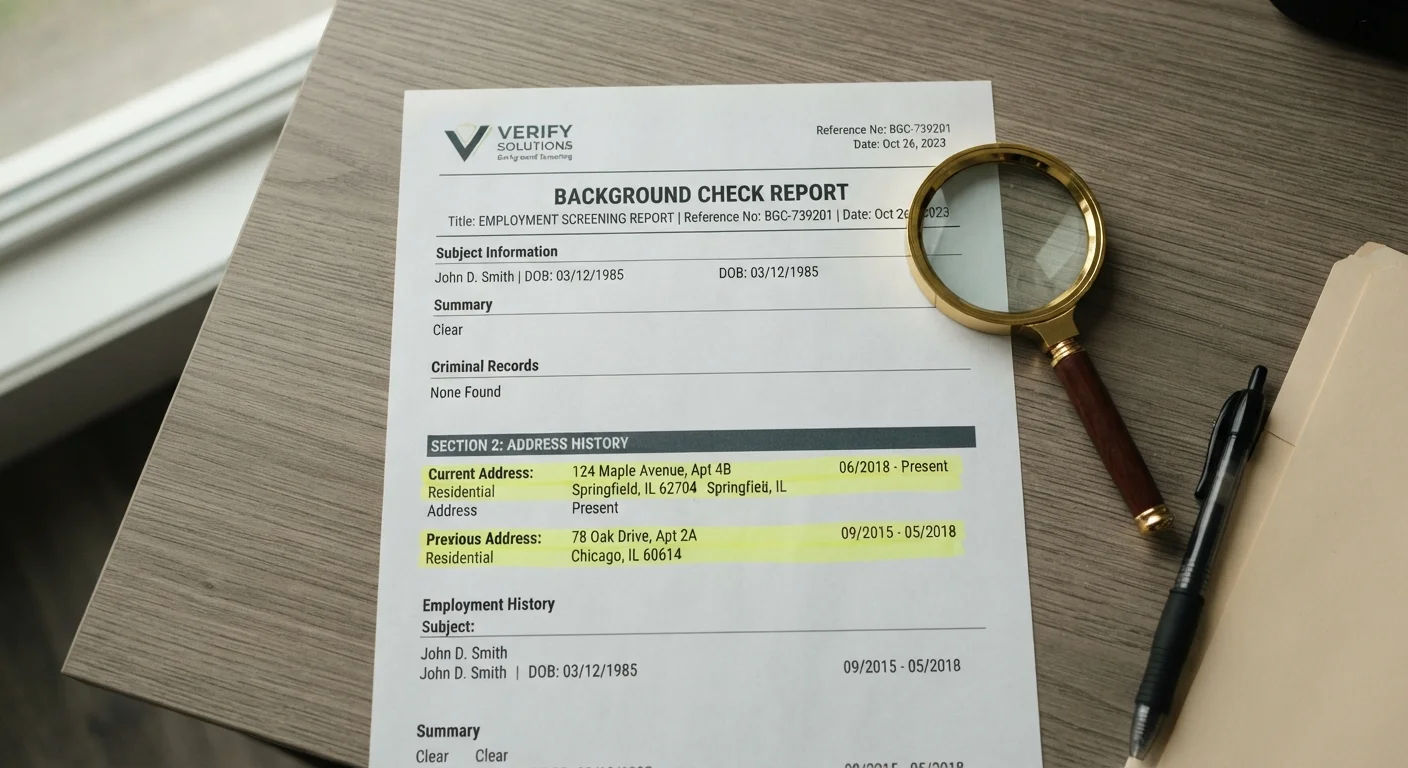
Photo: searchopenrecords editorial
—— In This Article
Key Takeaways
- Address history is pulled from multiple sources, including credit bureau files, utility records, and public records.
- The section primarily serves identity verification, not as a definitive residential timeline.
- Errors in address history are common and can result from data entry mistakes or merged consumer files.
- FCRA-governed reports restrict who can access your address history and for what purpose.
- Consumers have the right to dispute inaccurate address information with the reporting agency.
Where Address History Data Comes From
Address history on a background check is not drawn from a single registry. Instead, consumer reporting agencies aggregate data from several overlapping sources to build a composite picture. Understanding those sources helps explain both what appears in a report and why entries sometimes conflict.
The primary contributors include:
- Credit bureau files: Every time a person applies for credit, opens a utility account, or registers with a lender, their address is recorded. Credit bureaus — Equifax, Experian, and TransUnion — maintain this data and license it to background check providers.
- Public records: Voter registration rolls, property deed filings, court records, and motor vehicle registrations all carry address information. These records enter the public domain and are aggregated into commercial databases. See where background check data actually comes from for a deeper look at these pipelines.
- Utility and subscription accounts: Phone, cable, and electricity providers routinely report customer address data to data brokers, which in turn supply it to background check platforms.
- Self-reported information: Addresses provided on job applications, rental forms, and government forms can also be cross-referenced within a report.
For a broader perspective on how address data enters public circulation, explore the real sources behind address data.
Data Aggregation Is Not the Same as Verification
Background check providers compile address data from many sources, but compilation is not the same as independent verification. An address appearing in a report means it was associated with a person in at least one data source — not that they definitively lived there. Reviewers should treat address history as a starting point for inquiry, not a confirmed residential timeline.
What Address History Is Actually Used For
Address history serves a specific functional purpose within a background check: identity verification. Before a consumer reporting agency searches court records, sex offender registries, or employment databases, it needs to confirm it has the right person. Address history helps anchor a subject's identity across time and geography.
Specifically, address history is used to:
- Confirm identity: Matching a reported address against an applicant's stated history reduces the risk of mistaken-identity results — a common problem when names are common.
- Define the search scope: Courts and criminal records are jurisdiction-specific. Address history tells the reporting agency which counties, states, or federal districts to search.
- Detect inconsistencies: If an applicant claims to have lived in one state for five years but address data shows frequent relocations or gaps, this may warrant clarification — not automatic disqualification.
- Support tenant and employment screening: Landlords and employers use address history to verify that an applicant's self-reported residential history is plausible and consistent.
It is worth noting that address history does not independently determine the outcome of a background check. It is one input among many. For a complete picture of how reports are assembled, see what actually happens after you submit a background check.
96%
Employers conducting background checks
According to a survey by the Professional Background Screening Association (PBSA), approximately 96% of employers conduct at least one type of background screening.
1 in 3
Background reports containing errors
Consumer advocacy organizations have consistently estimated that a significant share of consumer reports contain some form of inaccurate or outdated information, including address data.
7–10 years
Typical address history depth
Most consumer reporting agencies compile address records spanning the prior seven to ten years, consistent with FCRA guidelines on the reporting window for certain record types.
Accuracy Limitations and Your Rights as a Consumer
Address history sections frequently contain inaccuracies. Common issues include outdated entries that were never purged, addresses associated with former roommates whose files became partially merged, and mail-forwarding addresses that were recorded as residential locations. These errors do not indicate fraud on the subject's part — they reflect the imprecision inherent in aggregated data systems.
Under the FCRA, consumers have enforceable rights related to background reports:
- Right to disclosure: You can request a copy of any consumer report compiled about you.
- Right to dispute: If an address entry is inaccurate or does not belong to you, you can submit a formal dispute to the reporting agency, which must investigate and correct confirmed errors.
- Right to know: If a background check result leads to an adverse action — such as a denied rental application — you must be notified and provided a copy of the report.
If you are researching address data more broadly outside of the FCRA-governed background check context, address lookup tools work differently and are subject to distinct standards. A comprehensive overview is also available through this end-to-end guide to address lookup and public records.
This article is for general informational purposes only and does not constitute legal advice. Consult a qualified attorney for guidance specific to your situation.
Frequently Asked Questions

Background Checks Editorial Team
Background Checks Editorial Team is the collective byline for our editorial team and contributor network. Articles published under this byline or an editorial pen name are researched, written, and reviewed according to our editorial standards for clarity, consistency, and independence before publication.
View author profile