
Address Lookup vs. Reverse Address Lookup: Two Different Searches
Starting with a name or starting with an address leads to very different searches. Here's how each method works and when to use which.
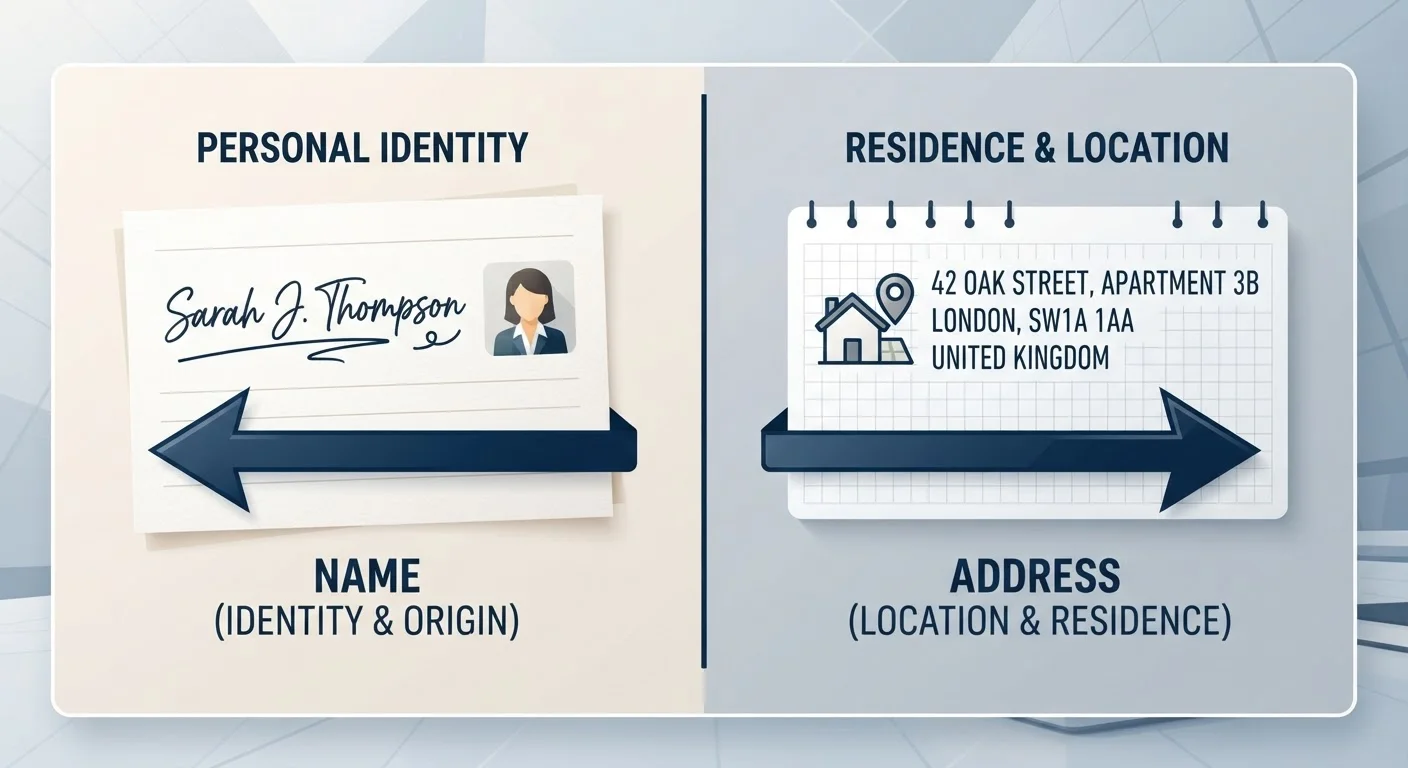
Photo: searchopenrecords editorial
—— In This Article
Key Takeaways
- Address lookup starts with a name and returns location data; reverse address lookup starts with an address and returns identity data.
- Both methods draw from similar public record sources but query and return different fields.
- Neither method guarantees current or complete results — data freshness depends on source and aggregator update cycles.
- Choosing the wrong method for your starting information wastes time and produces irrelevant results.
- Accuracy improves when you can supply additional identifying details alongside the primary search input.
The Core Distinction: Direction of the Search
The difference between these two search types is straightforward but consequential: they run in opposite directions. Address lookup treats a person's name as the input and address data as the output. Reverse address lookup flips that entirely — the street address is the input, and the output is identity information about current or past occupants.
This directional distinction matters because public records databases are indexed differently depending on the use case. A name-first query navigates through voter registrations, utility records, court filings, and property deeds linked to an individual. An address-first query pivots to the location itself — pulling property tax records, deed transfers, and occupancy histories keyed to that specific parcel or unit.
Confusing the two approaches means supplying the wrong type of starting information and getting back results that don't answer your actual question. If you only have an address, a standard address lookup tool won't help you — and vice versa. Understanding what you already know is the first step in choosing the right search method. For a parallel example of how direction shapes lookup tools, see how reverse and forward email searches differ in practice.
| Criterion | Address Lookup | Reverse Address Lookup |
|---|---|---|
| Primary input | Person's name | Street address |
| Primary output | Associated addresses | Associated names / occupants |
| Core record sources | Voter rolls, court filings, utility records | Property deeds, tax assessor, postal data |
| Best use case | Locating where a known person lives | Identifying who lives at a known address |
| Common accuracy challenge | Name collisions with similar individuals | High-turnover rentals, recent sales |
| Historical data value | Shows prior addresses for one person | Shows prior occupants at one location |
How Each Method Works in Practice
Address lookup aggregates data from sources such as county assessor records, electoral rolls, court documents, and historical utility filings. When you enter a name, the system attempts to match it against these records and surface associated addresses — often including a residential history showing prior locations. The quality of results depends heavily on how frequently the underlying sources update and whether the individual has a meaningful public record footprint.
Accuracy is not guaranteed. Common name collisions — multiple people sharing similar names — can produce mixed results that require secondary verification. Supplying a middle initial, approximate age, or known city significantly narrows results and improves relevance.
Reverse address lookup queries property-centered data: deed records, county tax assessor databases, postal address registries, and sometimes business filing records for commercial addresses. The goal is to return names of current and past residents or owners tied to that location. This method is particularly useful for researching property history or identifying an unknown sender associated with a specific address.
Limitations apply here too. Rental properties with frequent tenant turnover, addresses associated with mail-forwarding services, and recently sold properties may return outdated occupant data. For a deeper look at how different record sources compare when researching addresses, see our side-by-side view of address lookup record sources.
Accuracy Factors and Realistic Expectations
Both search methods share a common limitation: they rely on the completeness and recency of underlying public records. No lookup tool has real-time access to where every person lives today. Data aggregators compile, normalize, and cache information from many sources — meaning any result reflects a snapshot, not a live update.
Several factors affect accuracy across both methods:
- Record age: Older addresses may appear prominently if newer filings haven't been indexed yet.
- Geographic variation: Some states and counties make more records publicly accessible than others, creating uneven data coverage.
- Common names and dense housing: High-density urban addresses or very common names increase the chance of irrelevant matches.
- Input quality: Misspellings, incomplete names, or imprecise address formats degrade results in both search types.
Free tools typically draw from shallower data pools than paid or premium aggregators. If accuracy matters for your use case, it's worth understanding those trade-offs — our guide on free vs. paid address lookup methods breaks down what that difference actually means for the depth of results you can expect.
When the starting point is a phone number rather than a name or address, the appropriate tool shifts again — reverse phone lookup tools follow their own data logic and are designed specifically for number-to-identity resolution.

People Search Editorial Team
People Search Editorial Team is the collective byline for our editorial team and contributor network. Articles published under this byline or an editorial pen name are researched, written, and reviewed according to our editorial standards for clarity, consistency, and independence before publication.
View author profile