
Email Lookup in People Search: How It Fits the Bigger Picture
Email addresses are one data point among many in people-search research. See how they connect to names, phone numbers, and public records as a whole.
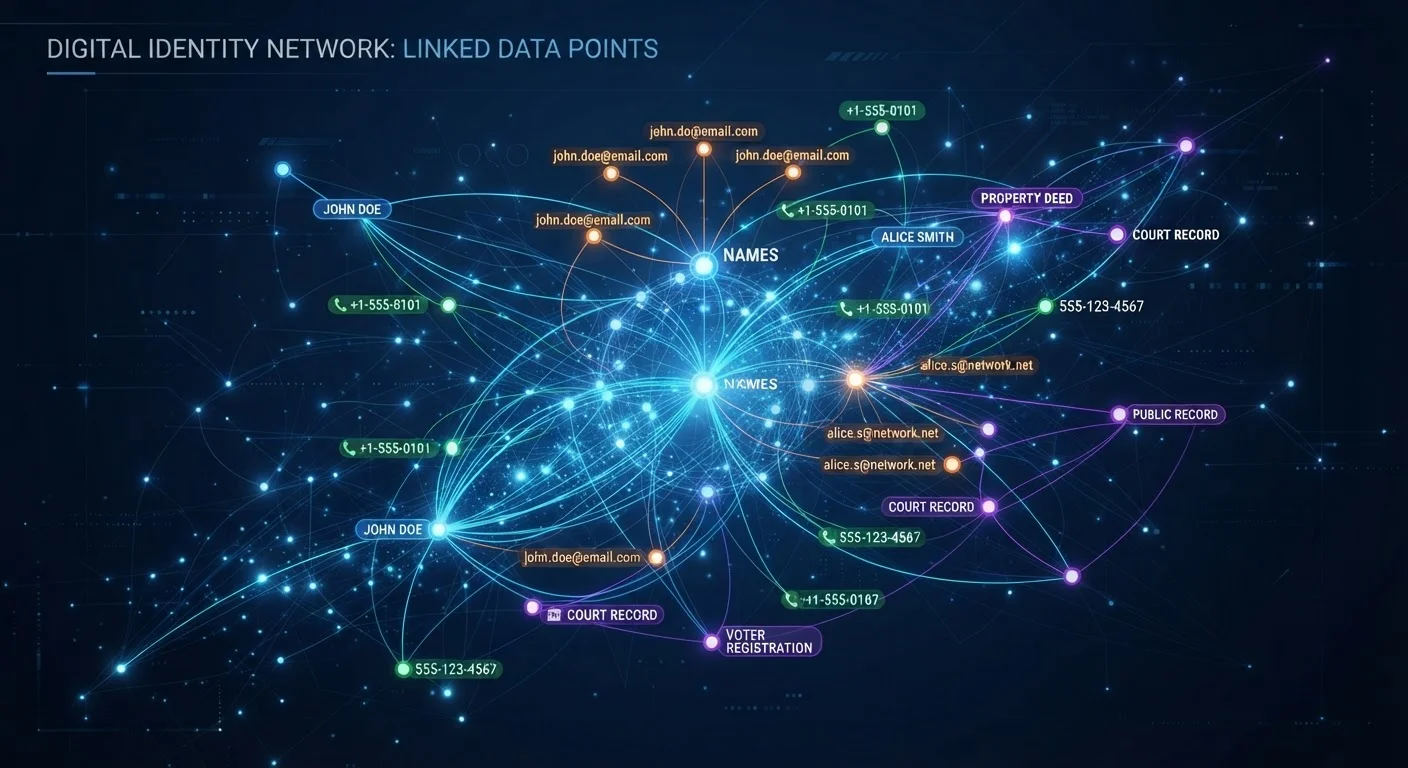
Photo: searchopenrecords editorial
—— In This Article
Key Takeaways
- An email address is a starting point, not a complete profile — it connects to other identifiers.
- People-search tools cross-reference emails against public records, social data, and aggregated databases.
- Results are often incomplete or outdated; no tool can guarantee accuracy.
- Legal use is restricted to permissible purposes under applicable privacy regulations.
- Combining email lookup with address, phone, and username searches produces more reliable results.
What Email Lookup Actually Does
Email lookup is the process of querying one or more databases to find information associated with a specific email address. At its core, it answers a deceptively simple question: who or what is connected to this address? The answer, however, is rarely a single clean record.
Most lookup tools work by matching an email address against aggregated datasets compiled from publicly available sources — court filings, voter registrations, data breach compilations, social platform registrations, and domain WHOIS records, among others. When a match is found, the tool surfaces whatever linked identifiers exist in that dataset: a name, a phone number, a location, or an account handle.
For a more detailed breakdown of the mechanics, see our email lookup explained guide.
Always verify email-linked results against at least one independent source before drawing conclusions. A single aggregator match is a lead, not a confirmed fact.
Data aggregators compile from multiple upstream sources that may themselves contain errors or outdated entries, making corroboration essential for accuracy.
When an email search returns minimal results, try reversing the query — search the associated name or phone number to find email addresses connected to that identity cluster.
Identity graphs are bidirectional; starting from a different identifier often surfaces associations that a direct email query misses due to indexing gaps.
How an Email Address Connects to Other Identifiers
An email address rarely exists in isolation. When someone registers for a service, files a public document, or creates an online profile, they typically provide other personal details alongside their email — a name, a phone number, a mailing address. Over time, these associations accumulate across dozens of platforms and records.
People-search systems exploit these associations by building identity graphs: structured maps linking one identifier (an email) to others (a name, a phone, an address). The same logic applies in reverse — a known name or phone number may surface email addresses attached to the same identity cluster.
- Name linkage: Registration records and public filings often pair an email with a full legal name.
- Phone number linkage: Account recovery fields and directory listings frequently tie emails to mobile or landline numbers.
- Address linkage: Shipping forms, voter rolls, and property records may associate an email with a residential address. See how address lookup fits into this picture.
- Username linkage: Social profiles registered with the same email often share a recurring username. Our username search hub covers this angle in depth.
- Social media linkage: Public profiles indexed by search engines can tie an email to platform accounts. Learn more about social media footprints and email tracing.
The Role of Public Records in Email Research
Public records are government-generated documents — court filings, property deeds, business registrations, licensing records — that are accessible to the general public. They are not designed to store email addresses, but email addresses appear in them incidentally: as contact details in business license applications, in bankruptcy filings, in civil lawsuit exhibits.
Data aggregators ingest these records and index them alongside commercial and social datasets, making it possible to surface email-adjacent information from sources the average person would never manually query. This is how a single email address can return a property address, a business name, or a court record association.
For a precise account of which public datasets contribute to email-linked results and how trustworthy that data tends to be, read our companion article on what public records can reveal about an email address.
Limitations You Should Expect
Email lookup results are structurally constrained by how the underlying data was collected, how recently it was updated, and whether the person in question has any meaningful public footprint at all. Three realities define the ceiling on what any tool can return:
- Data staleness: Aggregated records reflect a snapshot in time. An email address abandoned years ago may still return old associated details that are no longer accurate.
- Coverage gaps: People who limit their online activity, use aliases, or operate primarily in non-indexed environments will appear thin or absent in lookup results.
- False positives: Shared email formats (e.g., common first-name combinations at major providers) can produce identity confusion, linking unrelated records to the same address.
These are not edge cases — they are routine. Our article on why email lookup results are often incomplete or outdated explains the structural reasons in detail.
Legal and Ethical Boundaries
Email lookup sits within a regulatory framework that varies by jurisdiction but generally restricts how personal data may be collected, shared, and used. In the United States, the CAN-SPAM Act governs commercial email practices, while state-level laws — most prominently the California Consumer Privacy Act (CCPA) — grant individuals rights over their personal data held by data brokers and aggregators.
Permissible use cases for email lookup typically include reconnecting with a lost contact, verifying an identity for a legitimate business purpose, or conducting journalism-related research. Using email lookup to harass, stalk, or discriminate against individuals is prohibited under multiple federal and state statutes.
For a full overview of where the legal lines fall, see our guide on email lookup and privacy law.
Using Email Lookup Responsibly Within a Broader Research Strategy
The most effective people-search research treats email lookup as one signal among many rather than a definitive answer. When an email search returns a name and city, that output becomes the input for the next query — a public records search, an address verification, or a username trace. Cross-referencing multiple data types reduces the risk of acting on a single erroneous result.
A practical approach looks like this:
- Start with the email address to surface any linked name or phone number.
- Use the returned name to query public records and address databases independently.
- Compare results across sources; treat any single match that cannot be corroborated as unconfirmed.
- Note the date of any data you retrieve and account for the possibility that it is outdated.
Email lookup is a legitimate and useful tool when applied with realistic expectations and in compliance with applicable law. Understanding its place within the broader people-search ecosystem — rather than treating it as a standalone oracle — is what separates productive research from frustrating dead ends.
This article is for general informational purposes only and does not constitute legal advice. For questions about your rights or obligations under privacy law, consult a qualified legal professional.

People Search Editorial Team
People Search Editorial Team is the collective byline for our editorial team and contributor network. Articles published under this byline or an editorial pen name are researched, written, and reviewed according to our editorial standards for clarity, consistency, and independence before publication.
View author profile