
The Role of Domain Registration Data in Email Address Research
WHOIS records and domain ownership data can shed light on who controls an email domain. Learn how this fits into broader email verification efforts.
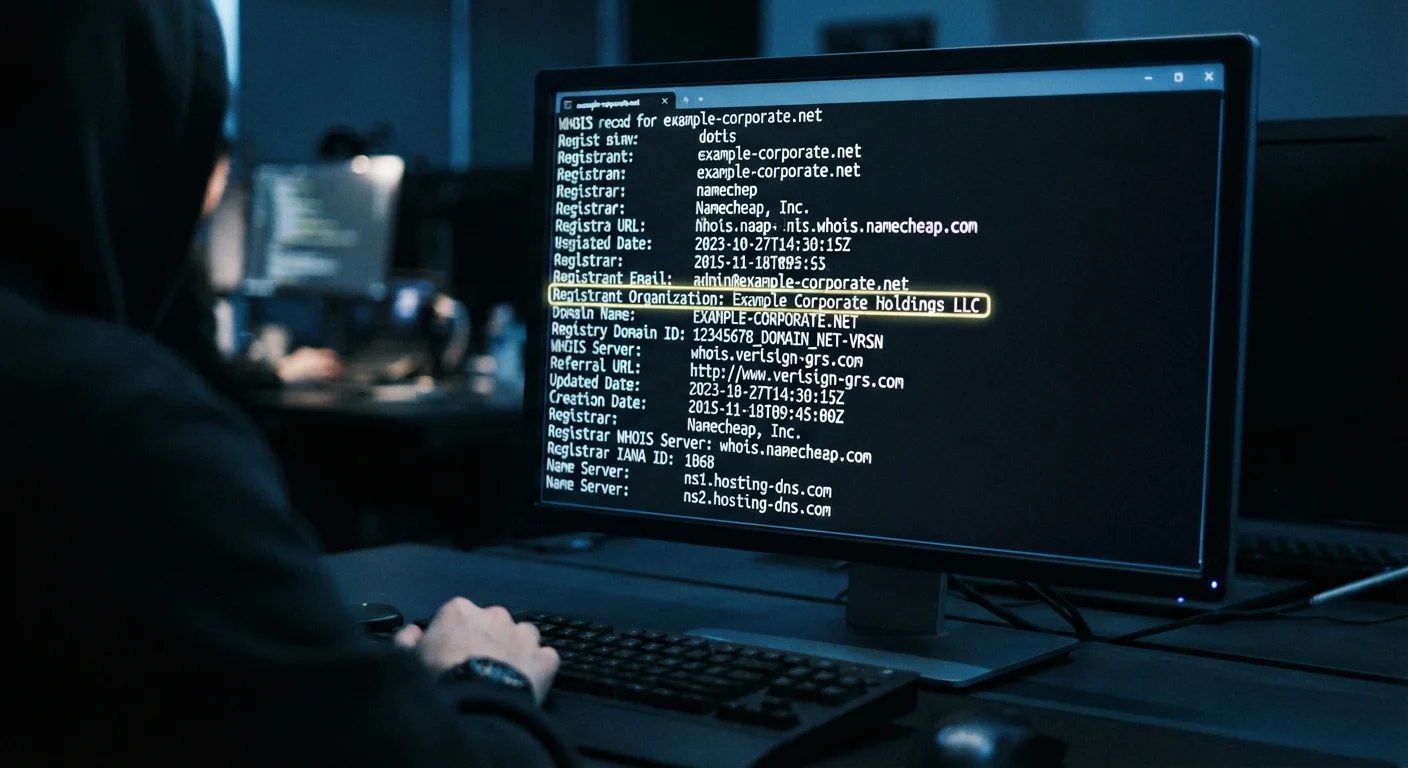
Photo: searchopenrecords editorial
—— In This Article
Key Takeaways
- WHOIS records document who registered a domain, which can indicate who controls an email address using that domain.
- Privacy protection services are now widely used, meaning registrant details are often masked in public WHOIS results.
- Domain registration data is most useful for business or organizational email addresses, not free-provider accounts.
- WHOIS data alone rarely identifies a specific individual — it is one piece of a broader research process.
- Legitimate use cases include fraud screening, due diligence, and verifying organizational email authenticity.
What Domain Registration Records Actually Contain
Every domain on the internet — from a small business website to a large corporation's web presence — must be registered through an accredited registrar. That registration creates a record stored in a publicly queryable system known as WHOIS. Historically, these records included the registrant's full name, organization, mailing address, phone number, and an administrative email contact.
When you receive an email from [email protected], a WHOIS query on companyname.com may surface who owns and controls that domain. This connection between domain ownership and email domain is what makes WHOIS relevant to email address research — particularly for custom business or organizational domains.
It is important to understand that WHOIS does not index individual email accounts. It documents the entity responsible for the domain as a whole. A company with 500 employees all using the same corporate domain will have one WHOIS record reflecting the organization, not the individuals themselves.
The Limits Imposed by Privacy Services and Regulatory Changes
The practical value of WHOIS data has shifted significantly over the past several years. Privacy proxy services — offered by most major registrars — allow domain owners to mask their personal contact details behind a forwarding address managed by the registrar. When a privacy service is active, the public WHOIS record shows the registrar's proxy information instead of the registrant's actual name and address.
Additionally, following GDPR implementation in the European Union and the adoption of similar privacy frameworks, ICANN and many registrars moved to redact personally identifying information from public WHOIS results for individual registrants globally. The result is that a meaningful portion of WHOIS records now yield limited useful data for email research.
WHOIS Redaction Is Not Universal
Privacy masking is common for individually owned domains but less prevalent among large organizations, government agencies, and publicly traded companies, which are often required or expected to maintain transparent registration data. Before assuming a record is blocked, run the query — many business domains still return substantive results.
This does not mean WHOIS has lost all utility. For commercial entities, government bodies, and organizations that have not applied privacy masking, records frequently remain detailed and informative. The gap exists primarily for individually registered domains.
For a broader look at how public records intersect with email research, see what public records can actually reveal about an email address.
How WHOIS Fits Into Broader Email Verification
Domain registration data works best as one layer within a multi-source approach to email verification, not as a standalone tool. Researchers and fraud analysts typically combine WHOIS lookups with other signals: MX record checks (which confirm a domain is configured to receive email), domain age analysis, SSL certificate data, and cross-referencing with public business registries.
For example, an email claiming to be from a financial institution but registered only weeks ago to an individual in an unrelated location raises obvious red flags — flags that domain data makes visible. This kind of contextual verification is central to verifying whether an email address is real before you respond.
Understanding what the domain data does not tell you is equally important. WHOIS does not confirm that an email account is currently active, does not identify the individual user behind a corporate address, and cannot expose accounts hosted on major free providers. For a grounded discussion of what email tracing can and cannot achieve, the overview at tracing an email address back to a person provides useful framing. Readers should also be aware that common misconceptions about email tracing often overstate how much domain data alone can reveal.
Practical and Responsible Use of Domain Lookup Data
The most defensible uses of WHOIS data in email research are organizational: confirming that a business email belongs to a legitimately registered company, screening for domain spoofing in fraud investigations, or conducting due diligence before entering a professional relationship. These contexts have clear, proportionate justifications.
It is worth noting that your own email address may be researchable by others if you have registered a domain with your contact information. Understanding that exposure is the first step toward managing it — something explored in depth in the guide on protecting your own email address from reverse lookup.
Domain registration data is a public infrastructure record, but it is not a surveillance tool. Using it responsibly means applying it to genuine verification needs, acknowledging what it cannot confirm, and treating any findings as starting points for further inquiry rather than conclusions.
This article is for general informational purposes only and does not constitute legal advice. Consult a qualified legal professional before taking any action based on information gathered through domain or email research tools.
Frequently Asked Questions

People Search Editorial Team
People Search Editorial Team is the collective byline for our editorial team and contributor network. Articles published under this byline or an editorial pen name are researched, written, and reviewed according to our editorial standards for clarity, consistency, and independence before publication.
View author profile