
Everything Username Searches Can and Cannot Tell You
A clear-eyed reference on the scope, limitations, and typical data outputs of a username search across open web sources.
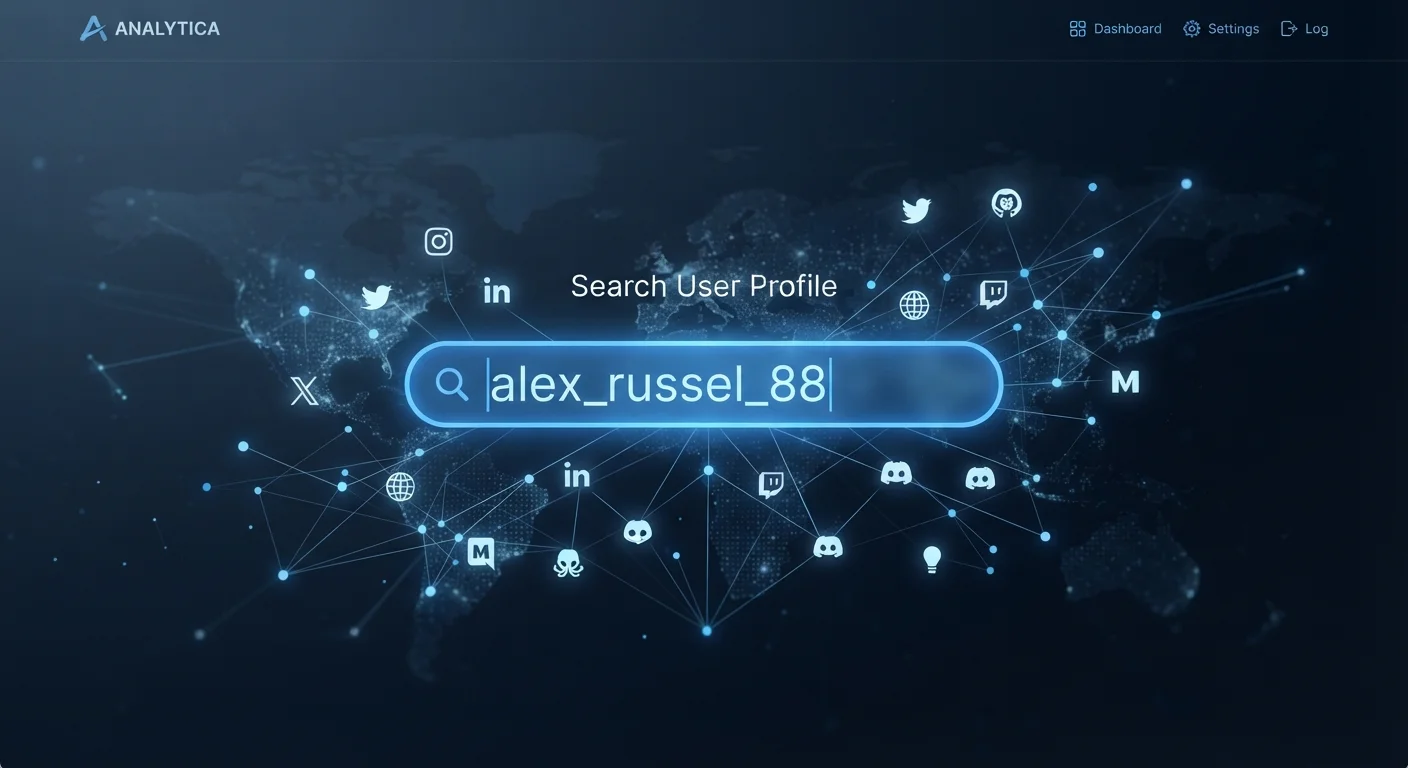
Photo: searchopenrecords editorial
—— In This Article
What a Username Search Actually Does
A username search is a systematic query that checks whether a given handle — a screenname chosen by a user — appears across social media platforms, forums, gaming networks, and other online communities. The process works by matching an exact or near-exact string against public-facing profile data that platforms expose to the open web.
Most username lookup approaches fall into two broad categories: manual checks (visiting individual platforms and searching directly) and automated tools that query multiple sites simultaneously. Each has trade-offs in speed, coverage, and accuracy. See our comparison of manual vs. automated approaches for a detailed breakdown.
What these searches surface is limited strictly to publicly accessible profile data. If an account is set to private, a username search will typically confirm the account exists but reveal nothing about its content. If a platform blocks external indexing entirely, the handle may not appear in results at all.
| Primary data source | Publicly visible platform profiles |
| Identity verification | Not possible — usernames are self-reported |
| Private account visibility | Account existence may show; content does not |
| Same username = same person? | Not confirmed — requires corroborating evidence |
| Deleted accounts | Generally not retrievable unless third-party cached |
| Legal/financial records accessible | No — outside scope of username lookup |
Typical Data Outputs: What You Can Expect to Find
When a username resolves to a public profile, the information visible depends entirely on what the account holder has chosen to share and what the platform exposes. Commonly returned data includes:
- Display name — often different from the username itself
- Profile bio or description — freeform text the user wrote
- Profile photo — a chosen avatar or photograph
- Account creation date — where platforms make this visible
- Post history or activity — publicly visible content, comments, or contributions
- Linked accounts — when a user voluntarily connects their profiles across platforms
- Location — only if the user has entered and made it public
It's worth noting that the same username appearing on multiple platforms does not confirm the accounts belong to the same person. Usernames are chosen independently on each platform, and popular handles are frequently claimed by different individuals. Our article on why results can mislead explains this in more depth.
For a look at which platform categories tend to yield the richest profile data, see the platforms where username searches are most revealing.
Hard Limits: What a Username Search Cannot Tell You
Understanding the ceiling of this tool is as important as understanding its outputs. A username search generally cannot reveal:
- A verified real identity — profile names and usernames are self-reported and unverified on most platforms
- Contact details — email addresses, phone numbers, and physical addresses are rarely public and never reliably tied to a username alone
- Private account content — posts, messages, or photos behind a privacy setting
- Deleted accounts — once a profile is removed, it typically disappears from lookup results unless cached by a third-party index
- Financial, legal, or health records — these are governed by separate privacy frameworks and are not surfaced by username queries
Username data and formal public records occupy partially overlapping but mostly distinct spaces. The intersection — such as forum posts archived in court documents or usernames tied to verified business registrations — is narrower than many assume. Our reference on where username data and public records overlap covers this carefully. For a broader view of what public records systems protect, see our hub on privacy and limits in public records.
Username
A self-chosen alphanumeric handle used to identify an account on a platform. It is distinct from a display name and is typically unique within that platform's system.
Open web indexing
The process by which search engines and automated tools crawl publicly accessible web pages and store their content for retrieval. Profiles on platforms that block indexing will not appear in these results.
Data aggregation
The collection and combination of information from multiple separate sources into a single dataset or report. In the context of username searches, this means pulling profile data from many platforms simultaneously.
Handle collision
When two or more different individuals independently register the same username on different platforms. A common source of false attribution in username search results.
Privacy setting
A user-controlled configuration on a platform that restricts who can view account content. Accounts set to private are typically invisible to username search tools beyond basic account existence.
Responsible Use and Ethical Framing
Username searches sit in an ethically nuanced space. The data they surface is technically public, but aggregating it to build a profile of a private individual raises legitimate concerns — particularly around consent, context, and intent. A person who posts publicly in a niche hobby forum has not necessarily consented to having that activity compiled alongside their activity on other platforms.
Common legitimate uses include verifying an online contact's consistency across platforms, conducting due diligence on a professional collaborator, or locating a long-lost connection using a known handle. Uses that cross ethical lines tend to involve surveillance, harassment, or data harvesting without clear justification.
Our article on the ethics of looking up someone's username offers a fuller framework for thinking through intent and impact before running a search. If you're new to this topic, our plain-language introduction to username searches is a practical starting point.
Finally, it's worth addressing a common misconception: using a pseudonym or an obscure handle does not guarantee anonymity. Cross-referencing patterns, writing styles, and linked accounts can sometimes narrow attribution significantly. For more on this, see common myths about username searches and online anonymity.

People Search Editorial Team
People Search Editorial Team is the collective byline for our editorial team and contributor network. Articles published under this byline or an editorial pen name are researched, written, and reviewed according to our editorial standards for clarity, consistency, and independence before publication.
View author profile