
Username Reuse: The Privacy Risk Most People Overlook
Using the same handle everywhere is convenient—but it also makes your online activity far easier to aggregate and trace.
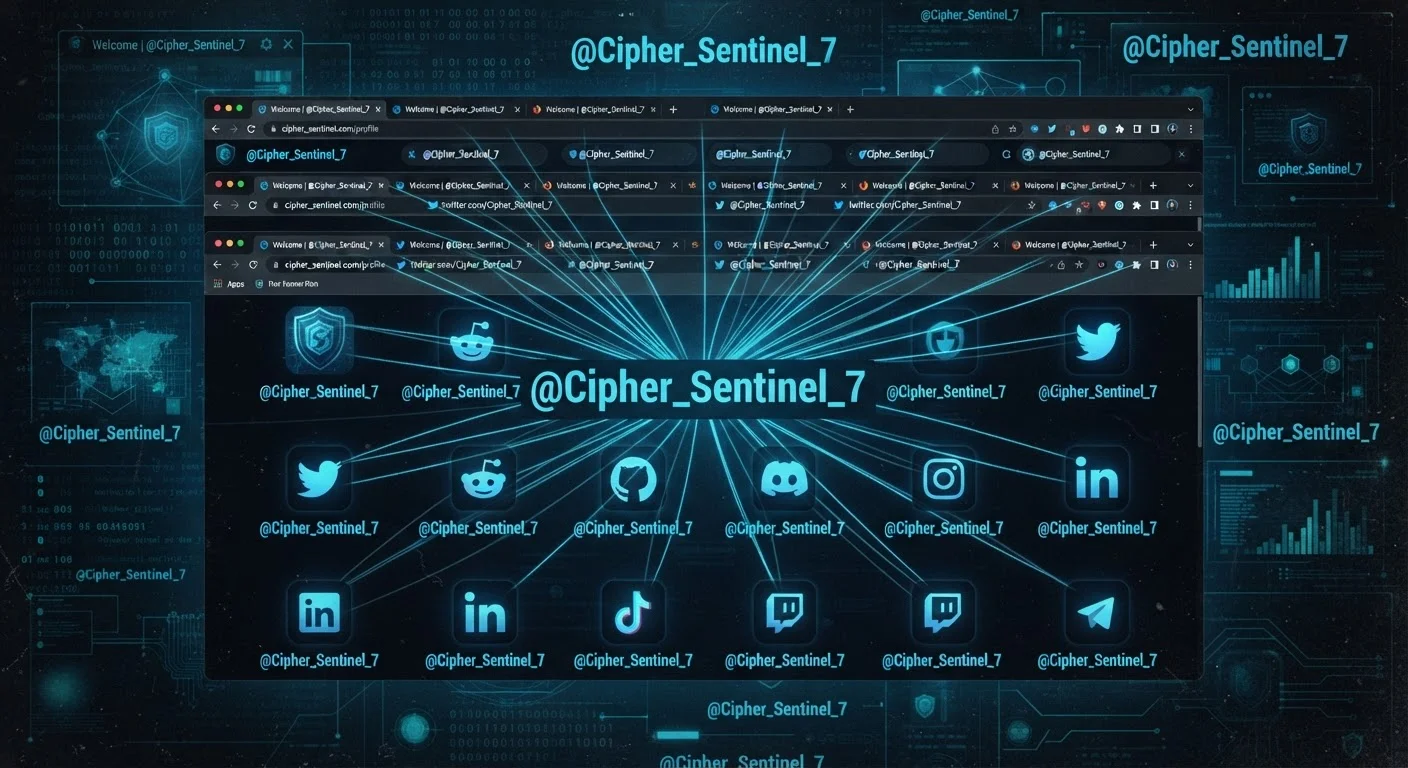
Photo: searchopenrecords editorial
—— In This Article
Key Takeaways
- A consistent username makes your profiles across dozens of platforms easily linkable by anyone who searches it.
- Username reuse offers real convenience benefits, but those same benefits can expose you to aggregated profiling.
- Username search tools can map activity from social media, forums, gaming sites, and comment sections into a single picture.
- Understanding both sides of username reuse helps you make deliberate, informed choices about your online identity.
Easier to remember and manage across platforms
A single handle eliminates the need to track multiple usernames, reducing login friction and the risk of forgetting which alias you used on a given site.
Builds a recognizable, consistent personal brand
For creators, professionals, or community contributors, name consistency signals reliability and makes it straightforward for others to verify or follow your work.
Simplifies legitimate discoverability
When collaborators, employers, or community members want to find your other work, a shared handle makes that connection instant without requiring you to share every link manually.
Reduces credential confusion and account lockouts
Maintaining one identity across services means fewer variations to remember and less risk of being locked out after forgetting which variant you registered with.
Enables rapid cross-platform profiling by anyone
A single search on any username lookup tool can surface your activity across social networks, forums, gaming sites, and comment sections simultaneously — no technical skill required.
Links otherwise unconnected areas of your life
A handle used on a professional network and a personal hobby forum may individually seem harmless, but together they can reveal interests, locations, or opinions you never intended to connect.
Old, forgotten accounts remain searchable indefinitely
Platforms you abandoned years ago may still index your username publicly, preserving outdated content or opinions that resurface in a search long after you have moved on.
Increases exposure if one platform is breached
When a site suffers a data breach, a reused username becomes a lookup key that can match your exposed data to your presence on other platforms, compounding the harm.
Undermines pseudonymity even when no real name is used
Even without a real name attached, a consistent handle accumulates enough contextual detail — location references, writing style, activity patterns — to make identification plausible over time.
Why Username Reuse Is So Common
Picking a username feels trivial — until you realize it shapes how discoverable you are across the entire internet. Most people default to a single consistent handle because it is easy to remember, easy to share, and becomes part of a personal brand over time. A gamer who has used the same tag for a decade, a developer whose GitHub handle matches their Twitter profile, or a hobbyist whose forum name follows them from site to site — these are not careless choices. They are practical ones.
But convenience and privacy pull in opposite directions. As username searches have become more capable, a handle that once felt anonymous can now serve as a precise cross-platform identifier. Understanding what reuse actually costs — and what it offers — is the first step to managing it.
The Case for Reusing a Username
Consistency is not simply laziness. There are tangible reasons people maintain the same handle across platforms:
Easier to remember and manage across platforms
A single handle eliminates the need to track multiple usernames, reducing login friction and the risk of forgetting which alias you used on a given site.
Builds a recognizable, consistent personal brand
For creators, professionals, or community contributors, name consistency signals reliability and makes it straightforward for others to verify or follow your work.
Simplifies legitimate discoverability
When collaborators, employers, or community members want to find your other work, a shared handle makes that connection instant without requiring you to share every link manually.
Reduces credential confusion and account lockouts
Maintaining one identity across services means fewer variations to remember and less risk of being locked out after forgetting which variant you registered with.
For public-facing professionals, creators, and community contributors, a consistent identity is often the point. Fragmentation can undermine credibility and make it genuinely harder for legitimate contacts to find you.
The Case Against: How Reuse Becomes a Liability
The same properties that make a consistent username useful also make it a powerful aggregation tool — for anyone, not just people you want to find you. As a single handle can map your digital footprint across social media, forums, gaming platforms, and comment sections, the picture that emerges can be surprisingly detailed.
Enables rapid cross-platform profiling by anyone
A single search on any username lookup tool can surface your activity across social networks, forums, gaming sites, and comment sections simultaneously — no technical skill required.
Links otherwise unconnected areas of your life
A handle used on a professional network and a personal hobby forum may individually seem harmless, but together they can reveal interests, locations, or opinions you never intended to connect.
Old, forgotten accounts remain searchable indefinitely
Platforms you abandoned years ago may still index your username publicly, preserving outdated content or opinions that resurface in a search long after you have moved on.
Increases exposure if one platform is breached
When a site suffers a data breach, a reused username becomes a lookup key that can match your exposed data to your presence on other platforms, compounding the harm.
Undermines pseudonymity even when no real name is used
Even without a real name attached, a consistent handle accumulates enough contextual detail — location references, writing style, activity patterns — to make identification plausible over time.
65%+
Adults reuse passwords or usernames online
Multiple security surveys have consistently found that the majority of internet users reuse credentials or handles across more than one platform, increasing aggregation risk.
100+
Platforms scanned by username search tools
Publicly available username search utilities routinely check hundreds of platforms simultaneously, returning results within seconds from a single query.
It is also worth noting that username data and public records overlap more than most people expect. Where public records and username searches intersect, the combination can link an online alias to a real name, location, or other identifying detail without the subject ever intending it.
What to Do With This Information
Partial Separation Is a Realistic Middle Ground
You do not have to choose between one universal handle and dozens of unrelated aliases. Many people use a consistent identity for professional or public-facing contexts while maintaining separate, unlinked usernames for sensitive, anonymous, or personal activities. The key is to treat each new account registration as a deliberate choice rather than a reflex. Deciding upfront whether a new account connects to your primary identity — or should not — takes seconds and significantly limits involuntary aggregation over time.
The practical response to username reuse risk is not necessarily to abandon consistency altogether. It is to be deliberate about where you apply it. A useful starting point is to conduct your own search before someone else does. Auditing your own username presence reveals what is already visible and helps you decide which accounts to separate, limit, or remove.
If you believe your current handle is effectively anonymous, it is worth revisiting that assumption. Common myths about username searches and online anonymity outlines why anonymity online is far harder to maintain than most people assume — and why a username you have used for years may carry more information than you realize.
The goal is not paranoia. It is informed consent: knowing what your choices reveal so you can make them deliberately rather than by default.

People Search Editorial Team
People Search Editorial Team is the collective byline for our editorial team and contributor network. Articles published under this byline or an editorial pen name are researched, written, and reviewed according to our editorial standards for clarity, consistency, and independence before publication.
View author profile