
Responsible Use of Reverse Phone Lookup: A Practical Checklist
Before acting on reverse lookup results, run through these key checks covering data accuracy, privacy considerations, and appropriate use of public records.
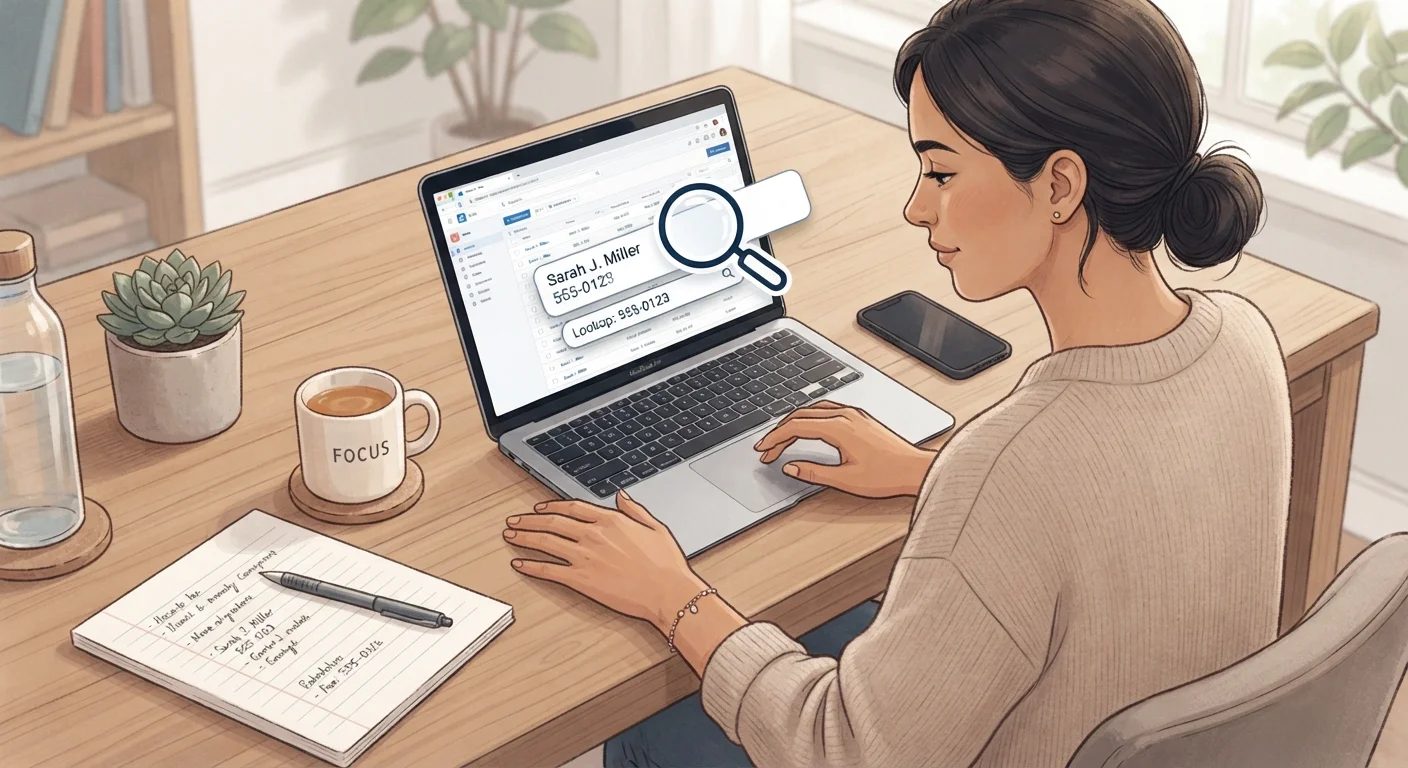
Photo: searchopenrecords editorial
—— In This Article
Key Takeaways
- Reverse phone lookup results are compiled from public records and carrier data — not all results are current or complete.
- Using lookup results for harassment, stalking, or discrimination violates federal and state law.
- Always cross-reference results against at least one additional source before acting on the information.
- VoIP and prepaid numbers are significantly harder to trace than traditional landlines or postpaid mobile numbers.
- You have rights around your own data — most legitimate services offer opt-out mechanisms.
Why a Responsible-Use Checklist Matters
Reverse phone lookup is a straightforward concept — enter a number, retrieve associated public information — but the downstream consequences of acting on those results are anything but trivial. The data returned by a lookup is drawn from a layered mix of carrier records, voter rolls, property filings, and commercial aggregators, as explained in detail in our guide to the public data behind reverse phone lookups. Because these sources vary in freshness and completeness, results carry inherent uncertainty that users need to account for before drawing conclusions.
Beyond accuracy, there is a legal dimension. How you use lookup results — not just whether you run the search — determines your exposure to civil and criminal liability. Our overview of privacy law and reverse phone lookup covers the frameworks that apply, including the FCRA and various state statutes. The checklist below distills these practical and legal considerations into concrete steps you can apply every time you perform a lookup.
Harassment and Stalking Are Illegal
Using reverse phone lookup results to locate, monitor, or repeatedly contact someone without consent can constitute stalking or harassment under federal and state law. The fact that data comes from public records does not make any subsequent use of it lawful. If you are uncertain whether a planned action is permissible, stop and seek legal advice before proceeding.
How to Use This Checklist
Work through each group in order. The Before You Search group establishes intent — the single most important factor in determining whether your use is appropriate. The Evaluating Your Source group helps you judge the reliability of whatever service or tool you are using. The Interpreting Results Accurately group guards against the most common errors users make when reading lookup data. The Acting on Results Responsibly group covers what you should — and should not — do once you have results in hand.
Items marked must are non-negotiable for responsible use. Items marked should are strongly recommended for most situations. Items marked nice to have add an additional layer of care that is especially worthwhile if the stakes of your decision are high.
If you have ever used a similar process for address verification, you will find some parallel logic here — our address verification checklist applies the same cross-referencing discipline to location data.
Before You Search
Evaluating Your Source
Interpreting Results Accurately
Acting on Results Responsibly
Tools and Resources Referenced in This Checklist
Several of the checklist items direct you to specific external resources. The cards below identify the key tools by name and purpose so you can locate them quickly when working through the steps.
FTC Complaint Assistant
Report suspected scam or spam numbers directly to the Federal Trade Commission at reportfraud.ftc.gov.
National Do Not Call Registry
Check whether a number is registered and report unwanted calls at donotcall.gov.
Your Carrier's Spam Reporting Line
Forward suspicious SMS messages to 7726 (SPAM) — a service offered by most major US carriers at no charge.
Service Opt-Out Page
Use the lookup platform's own opt-out or data removal form to suppress your personal information from search results.
Note that none of these resources constitutes an endorsement of any commercial lookup service. Government tools such as the FTC Complaint Assistant and the Do Not Call Registry are free, publicly operated services. For a grounded assessment of what any lookup tool can and cannot realistically deliver, see our article on the strengths and limitations of reverse phone lookup.
Protecting Your Own Data
Responsible use of public records runs in both directions. If a reverse lookup can surface information about others, it can surface information about you. Most legitimate lookup services maintain opt-out mechanisms that allow individuals to suppress or remove their own listings. Finding and submitting these forms is one of the most practical privacy steps available to US consumers short of changing your phone number entirely.
The same logic extends beyond phone data. If you want to understand how other forms of personal identifiers are exposed through public record aggregators, our hub on email lookup covers how email addresses are traced, and our article on protecting your email address from reverse lookup explains practical steps to limit your exposure. For residential data specifically, our address lookup hub provides context on how location information is compiled and searched.
FCRA Restrictions Apply in Certain Contexts
The Fair Credit Reporting Act (FCRA) governs how consumer report information — which can include certain phone lookup data — may be used for employment, housing, credit, and similar decisions. Using a reverse lookup service for these purposes without following FCRA requirements can expose you to significant legal liability. If your intended use falls into any of these categories, consult a qualified attorney before proceeding.
Number Reassignment Can Mislead You
Phone numbers in the US are routinely recycled by carriers after an account closes. A result linking a number to a specific name may be months or years out of date. Acting on stale data — especially to contact or make decisions about a person — risks reaching the wrong individual entirely. Always cross-reference before acting.
This article is for general informational and educational purposes only. It does not constitute legal advice. For questions about your specific situation — particularly any use of lookup results in employment, housing, credit, or legal proceedings — consult a qualified attorney.

Phone Lookup Editorial Team
Phone Lookup Editorial Team is the collective byline for our editorial team and contributor network. Articles published under this byline or an editorial pen name are researched, written, and reviewed according to our editorial standards for clarity, consistency, and independence before publication.
View author profile