
Understanding Government Record Retention Schedules
Agencies don't keep records forever. Retention schedules determine how long documents must be preserved before they can be destroyed or archived.
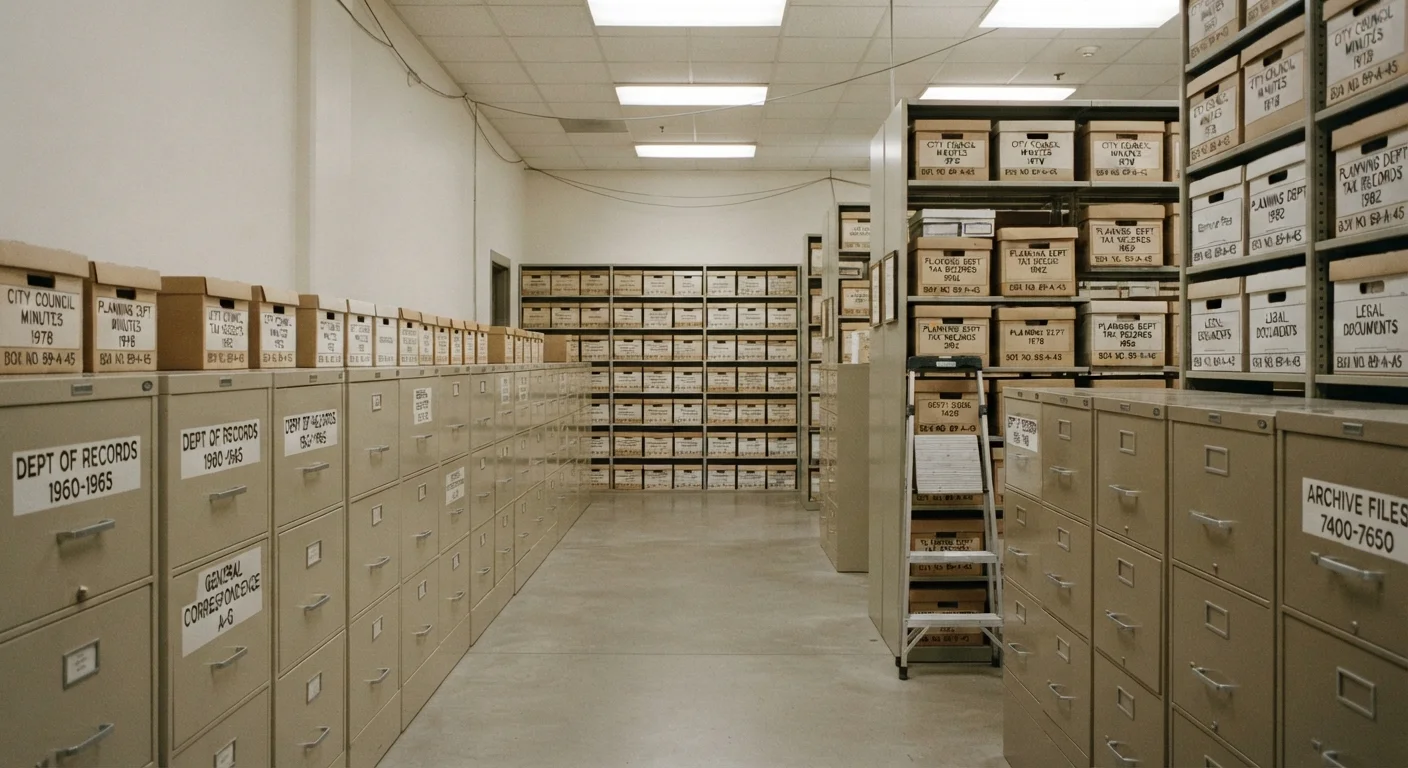
Photo: searchopenrecords editorial
—— In This Article
Key Takeaways
- Government agencies are legally required to follow retention schedules — they cannot destroy records arbitrarily.
- Retention periods vary widely by record type, ranging from a few years to permanent preservation.
- Federal schedules are managed by NARA; states and localities maintain their own separate schedules.
- Once a retention period expires, records may be destroyed, transferred, or archived — affecting public access.
- Knowing a record's retention status helps you understand whether it still exists before filing a request.
Why Retention Schedules Exist
Government agencies generate enormous volumes of records — court filings, permits, tax documents, personnel files, meeting minutes, and more. Without structured rules governing how long each type must be kept, agencies would face two equally problematic extremes: destroying valuable records too soon, or storing everything indefinitely at enormous cost.
Retention schedules resolve this by assigning a specific lifespan to each record category based on its administrative, legal, fiscal, and historical value. A routine expense report might have a three-year retention period. A birth certificate issued by a vital records office may be kept permanently. The schedule reflects a deliberate judgment about what the public and the government actually need over time.
This structure also supports accountability. Because agencies must follow approved schedules — and cannot destroy records on a whim — retention rules form a baseline of institutional transparency. Understanding what makes a government record public is a useful complement to understanding how long those records remain accessible.
How Federal and State Schedules Differ
At the federal level, the National Archives and Records Administration (NARA) oversees the retention of all records created by executive branch agencies. Agencies develop their own schedules but must submit them to NARA for approval before any records covered by those schedules can be legally destroyed. This creates a standardized layer of oversight across the federal government.
State and local governments operate independently. Each state has its own records management laws, and most have a designated state archivist or records management office responsible for approving local schedules. A county sheriff's office, a municipal water authority, and a state supreme court may each follow different schedules — and those schedules are unlikely to mirror federal ones.
Retention Schedules Are Publicly Available
Most government retention schedules are themselves public documents. Federal schedules can be searched through NARA's online records management resources. State schedules are typically published by the state archives or library agency. Reviewing a schedule before submitting a records request can confirm whether the record you need still exists — and where it is likely held.
For genealogy researchers and anyone accessing older documents, retention schedules directly shape which historical records have survived in archives versus those that were lawfully destroyed before archival transfer occurred.
What Happens When a Retention Period Ends
When a record reaches the end of its scheduled retention period, one of three outcomes typically follows: the record is destroyed, it is transferred to an archival repository for permanent preservation, or in some cases, the agency applies for an extension. The outcome depends on the record's assessed long-term value.
Records flagged as having permanent historical significance — such as founding legislative documents, landmark court decisions, or certain census materials — are transferred to national or state archives rather than destroyed. This transfer shifts custody and affects how and where you access the record.
For researchers and the general public, this matters practically. If a record has been destroyed per schedule, no records request can produce it. Knowing the retention status of a record type before submitting a request under the Freedom of Information Act or a state equivalent can help set realistic expectations. The process of how custodial agencies decide what to release is closely tied to whether records still exist in the first place.
Practical Implications for Background Checks and Personal Records
Retention schedules have direct consequences for anyone researching their own records or running a background check. Criminal court records, for example, may have different retention periods depending on the offense level, jurisdiction, and outcome — an acquittal may be treated differently than a conviction. Sealed or expunged records follow their own disposition rules, which vary by state.
Similarly, how long records stay on a background check report is a related but distinct question from how long the underlying government record is retained. A record can be retained by an agency long after it stops appearing on a consumer background report under Fair Credit Reporting Act (FCRA) lookback limits.
If you've wondered what happens to your information after a background check is complete, retention schedules are part of that answer — both for the consumer reporting agency holding the report and the government agency holding the original source record.
This article is for general informational purposes only and does not constitute legal advice. For questions about specific records or your rights under applicable law, consult a qualified attorney or contact the relevant agency directly.
Frequently Asked Questions

Public Records 101 Editorial Team
Public Records 101 Editorial Team is the collective byline for our editorial team and contributor network. Articles published under this byline or an editorial pen name are researched, written, and reviewed according to our editorial standards for clarity, consistency, and independence before publication.
View author profile