
Inside a Background Check: What Actually Happens After You Hit Submit
From data request to final report, here's a clear walkthrough of every stage in the background check process.
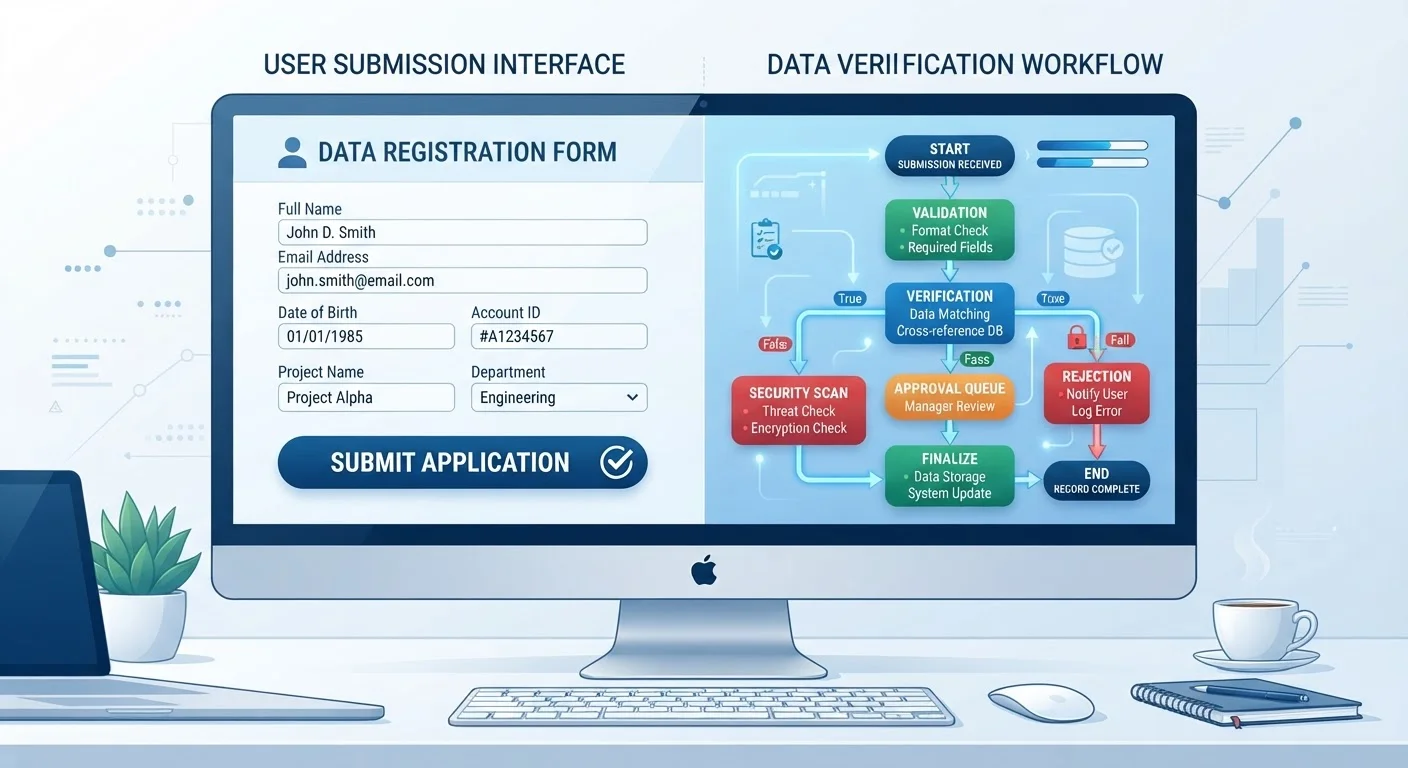
Photo: searchopenrecords editorial
—— In This Article
Key Takeaways
- A background check begins only after written consent is obtained from the subject, as required by the FCRA.
- Data is pulled from multiple independent sources, including criminal courts, credit bureaus, and employment records.
- Automated matching algorithms link records to the correct individual using name, date of birth, and Social Security Number.
- Most standard background checks are completed within one to five business days, though complex checks take longer.
- Subjects have the legal right to dispute inaccurate information found in any consumer report.
Step One: Consent and Identity Verification
The background check process cannot legally begin without the subject's knowledge and written authorization. Under the FCRA, any entity requesting a consumer report for employment, housing, or credit must obtain prior written consent using a standalone disclosure form — it cannot be buried in general onboarding paperwork.
Once consent is provided, the requester submits identifying information to a consumer reporting agency (CRA). This typically includes full legal name, date of birth, current and previous addresses, and Social Security Number. The CRA's systems immediately begin using this data to construct a search profile that will be matched against source databases.
Scope Varies by Purpose and Requester
Not all background checks search the same sources. An employment check for a financial role may include a credit history pull that a standard rental check would not. The permissible scope is defined by both the requester's stated purpose and applicable state laws, which in some cases impose additional restrictions on what information can be considered.
Step Two: Multi-Source Data Collection
The CRA simultaneously queries multiple independent data sources. These commonly include national criminal record aggregators, county courthouse repositories, the Social Security Administration's Death Master File (for identity validation), federal district court records (via PACER), sex offender registries, and — when applicable — credit bureau files.
Criminal record retrieval is particularly layered. National databases aggregate records contributed voluntarily by courts and law enforcement agencies, but coverage is uneven across jurisdictions. For this reason, reputable CRAs also conduct targeted county-level searches based on the subject's address history. To understand how that court data travels from a courthouse filing to the final report, see our companion piece on how court record information flows into background check reports.
~95%
U.S. employers using background checks
According to the Professional Background Screening Association (PBSA), the vast majority of U.S. employers conduct background checks on at least some job candidates.
1–5 days
Typical background check turnaround
Standard employment background checks generally complete within one to five business days, though complex or multi-jurisdiction checks can take longer.
3,100+
County-level court jurisdictions in the U.S.
Because criminal records are maintained at the county level, comprehensive checks must navigate thousands of separate courthouse repositories across the country.
Step Three: Record Matching and Adjudication
Raw data returned from source databases must be matched to the specific individual under review. This is not a trivial step. Common names can return dozens of partial matches, and data entry inconsistencies across courthouse systems introduce further noise. CRAs use probabilistic matching algorithms that weigh name, date of birth, SSN, and address history together — a partial match on one field alone is typically insufficient to confirm a hit.
When a potential criminal record match is found, many CRAs send a researcher to retrieve the original courthouse record to verify details before including it in the report. This manual verification step is what distinguishes a compliant, accurate report from one that risks FCRA violations due to misattributed records.
Step Four: Verification of Employment and Education
For employment-purposed checks, the CRA or its subcontractors contact past employers and educational institutions directly to verify dates, job titles, and degrees. This step introduces the most variability in turnaround time. Some large employers use automated employment verification platforms; others require manual contact with an HR department. Educational institutions vary widely in how quickly they respond to verification requests.
In some cases, the CRA uses the Work Number database — a large commercial employment verification service — to retrieve employer records electronically, which can significantly accelerate this step.
Step Five: Report Compilation and Delivery
Once data collection and verification are complete, the CRA compiles all findings into a structured report. Depending on the requester's platform, this may be delivered as an online portal summary, a PDF, or an integrated feed into an applicant tracking system. The report is typically organized by category: identity, criminal history, employment, education, and any specialty searches such as credit or motor vehicle records.
After delivery, the subject has FCRA-protected rights — including the right to receive a copy of the report if adverse action is being considered and the right to dispute any entry believed to be inaccurate. For a plain-language explanation of each section in the final document, see our guide on every section of a background check report explained. To understand what happens to your data after the report is delivered, our article on what happens to your information after a background check is complete covers retention and deletion obligations in detail.
This article is for general informational purposes only and does not constitute legal advice. Readers with questions about their rights under the FCRA or a specific background check dispute should consult a qualified attorney.
Frequently Asked Questions

Background Checks Editorial Team
Background Checks Editorial Team is the collective byline for our editorial team and contributor network. Articles published under this byline or an editorial pen name are researched, written, and reviewed according to our editorial standards for clarity, consistency, and independence before publication.
View author profile