
Why Two Background Check Reports on the Same Person Can Look Different
Data sources, search scope, and reporting rules all vary by provider. Here's why the same person can generate very different background check results.
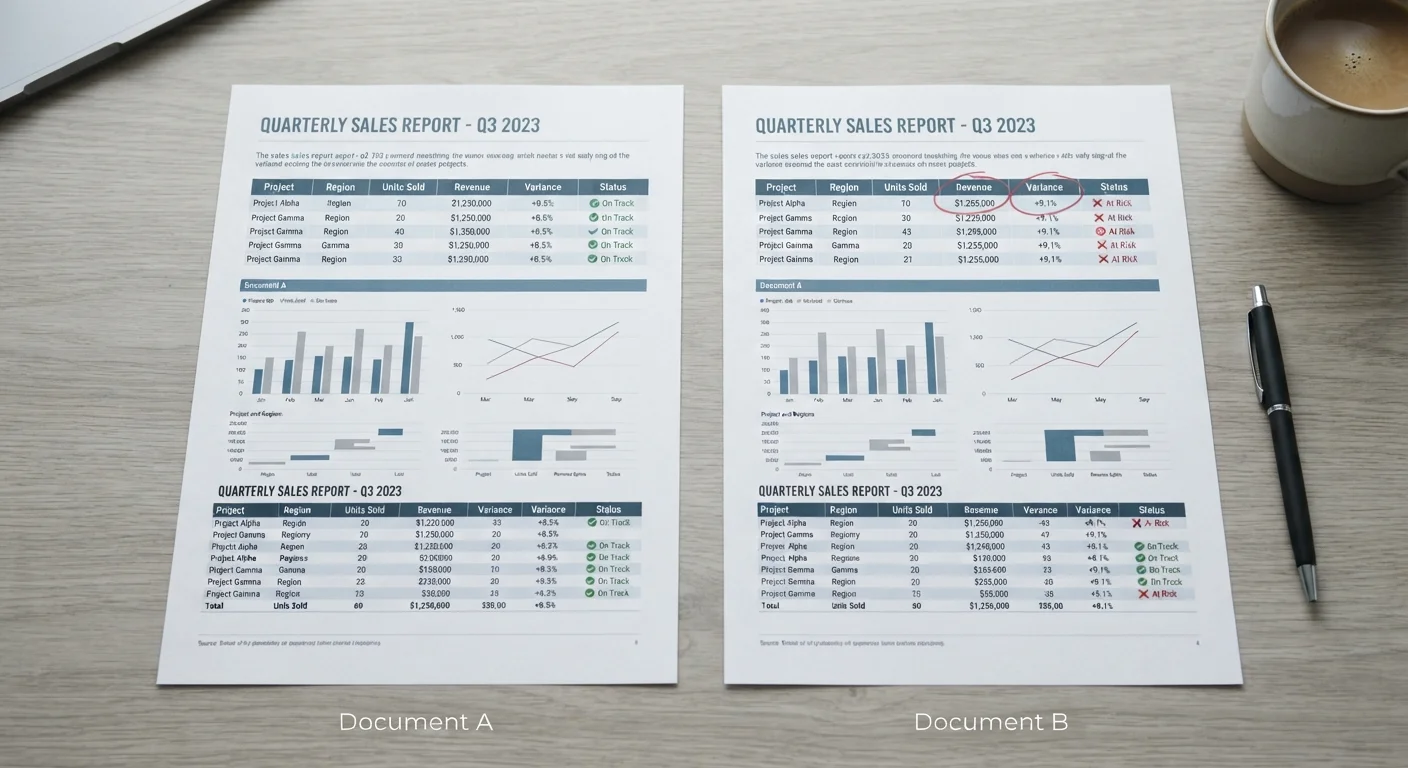
Photo: searchopenrecords editorial
—— In This Article
Key Takeaways
- No two background check providers draw from exactly the same set of databases or jurisdictions.
- FCRA reporting time limits mean older records legally appear on some reports but not others.
- Instant database checks and court-level manual searches frequently return different results for the same person.
- Name variations, aliases, and data entry differences can cause records to match or miss entirely.
- Running multiple check types — or from multiple sources — gives a more complete picture than any single report.
The Core Reason: Data Sources Are Not Uniform
Background check providers are not all plugging into the same master database. Each company selects which sources to license, which jurisdictions to query, and how frequently to refresh its records. One provider might draw from a national criminal database aggregator covering hundreds of millions of records; another might prioritize direct county courthouse searches across a narrower geographic area. Neither approach is inherently wrong — they're simply different.
This structural reality means that a felony conviction recorded at the county level in a rural jurisdiction may appear in one report and be entirely absent from another, not because of an error, but because the second provider's database never ingested that court's records. Different check types are assembled from different record categories, and the underlying data pipelines are just as varied as the check types themselves.
FCRA Reporting Rules and Time Limits
The Fair Credit Reporting Act sets specific time limits on how long certain adverse information can appear on a consumer report used for employment or credit decisions. Most negative records — arrests without convictions, civil judgments, tax liens — are subject to a seven-year reporting window. Bankruptcies can remain for up to ten years. Once those periods lapse, a compliant consumer reporting agency must suppress those records from FCRA-governed reports.
However, not all background checks are FCRA-governed. A personal self-search conducted outside the employment-screening context may surface older records that a formal employer-ordered check would legally omit. This is one of the most misunderstood sources of report variation. The distinction between a personal check and an employer-ordered check matters enormously here — the legal rules applying to each are fundamentally different.
FCRA Rules Apply Only in Specific Contexts
The FCRA's reporting time limits apply to consumer reports used for employment, credit, housing, and similar purposes — not to all background checks. Some information services marketed directly to consumers operate outside the FCRA framework and may display records of any age. Always check whether a report is FCRA-compliant before relying on it for a regulated purpose.
Instant vs. Manual Searches: Speed Has a Cost
The method used to retrieve records also drives significant variation. Instant background checks query pre-compiled, aggregated databases and return results within seconds. These databases are updated periodically — sometimes daily, sometimes monthly — meaning a recent conviction may not yet appear. Manual searches, by contrast, involve a researcher pulling records directly from a courthouse, which captures whatever is on file at that moment but takes considerably longer.
Instant and manual background checks differ in both method and reliability. A provider using only instant database queries might miss a case that a manual county search would find — or find an expunged record that hasn't yet been purged from an older aggregated dataset. Both scenarios produce legitimate differences between two reports on the same subject.
Name Matching, Aliases, and Indexing Gaps
Unlike Social Security numbers, criminal court records are not always indexed by a universal identifier. Many jurisdictions file cases by name, date of birth, or a local case number. When a subject has multiple name variations — a hyphenated surname, a maiden name, a common nickname used on older documents — different providers will return different results depending on how thoroughly they search across those variations.
A provider that searches only the name submitted in the request form may miss a serious record filed under a middle name or a prior surname. Another provider that queries multiple alias combinations may surface that same record. This is why professional background screening companies often ask for multiple identifiers — full legal name, all known aliases, date of birth, and address history — to maximize match accuracy.
What This Means for Readers Reviewing Their Own Results
If you've run a background check on yourself and received results that surprise you — or notably don't surprise you when you expected something to appear — understanding these variables helps interpret the output accurately. A clean result from one source doesn't guarantee that a different provider queried by an employer will return the same result. Conversely, a record appearing in a personal search may not appear in a formal employment screen due to FCRA suppression rules.
For a broader view of why discrepancies arise across public record searches generally, conflicting public records results are a well-documented phenomenon rooted in the same database fragmentation issues. Readers who want the most complete picture should consider requesting records directly from the relevant courts or agencies rather than relying on any single aggregated report.
This article provides general educational information about how background check reports are compiled and why results may vary. It is not legal advice. Individuals with questions about their rights under the FCRA or specific records in their reports should consult a qualified attorney or contact the relevant consumer reporting agency directly.
Frequently Asked Questions

Background Checks Editorial Team
Background Checks Editorial Team is the collective byline for our editorial team and contributor network. Articles published under this byline or an editorial pen name are researched, written, and reviewed according to our editorial standards for clarity, consistency, and independence before publication.
View author profile