
Starting Your Family Tree When You Know Almost Nothing
A practical starting point for anyone building a family tree from scratch, including how to gather what you already have before searching records.
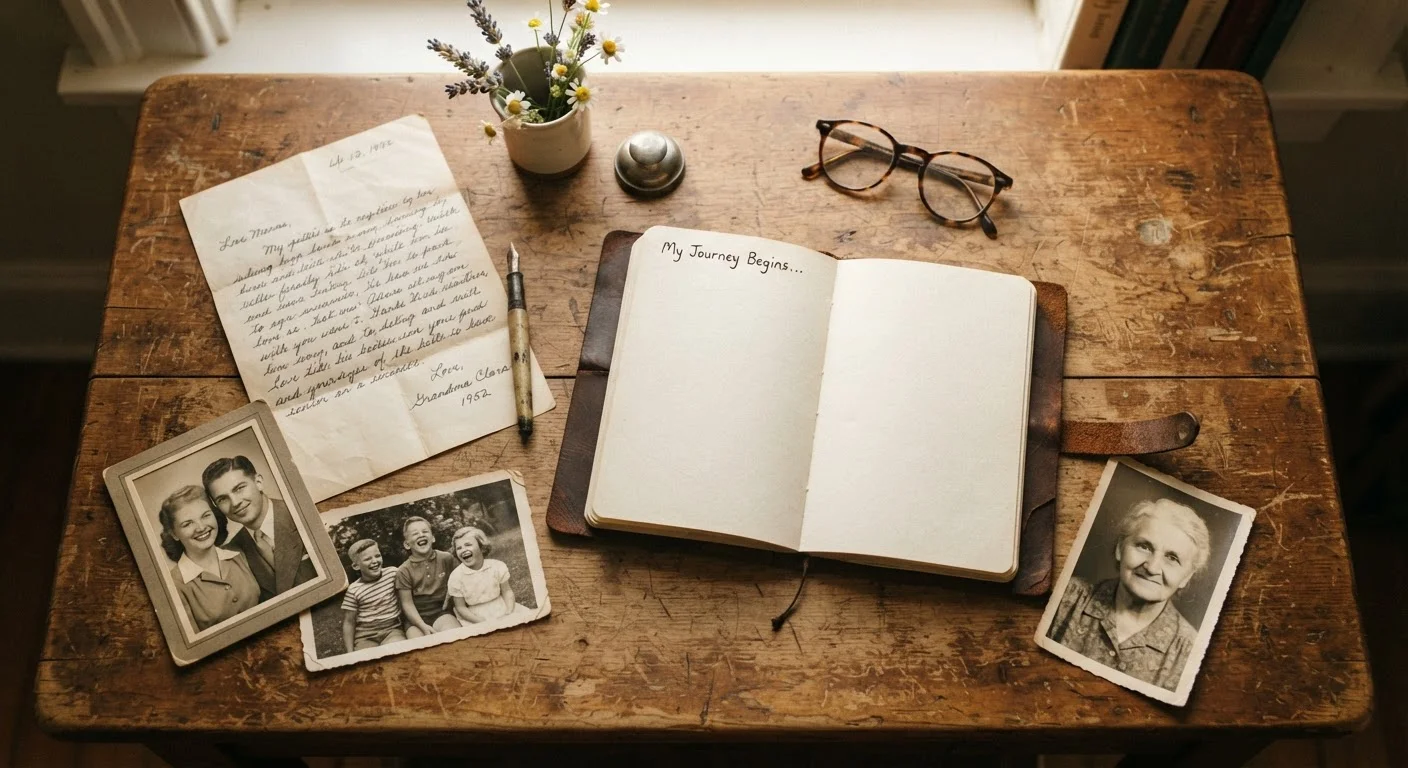
Photo: searchopenrecords editorial
—— In This Article
Key Takeaways
- Start with yourself and work backward one generation at a time — never jump ahead.
- Memory and family conversation are legitimate first sources before you touch any database.
- Physical documents in your home (certificates, letters, photos) often contain hidden genealogical data.
- Vital records, census records, and obituaries form the backbone of early public records research.
- Record both confirmed facts and unverified leads separately to keep your tree accurate.
Why Starting with Almost Nothing Is Actually Normal
Most people who begin genealogy research feel certain they're at a disadvantage because they can't name their great-grandparents or don't know where their family immigrated from. In reality, this is the most common starting position. Genealogy is a research discipline, not a memory test. Its entire methodology is designed for people who begin with fragments.
The key principle is to work from the known to the unknown — always. You anchor each new claim to something already verified before reaching further back. This isn't just good practice; it's what prevents the family trees that circulate online (many of which contain compounding errors) from contaminating your own research. For a broader orientation on the process, the roadmap for first-time genealogy researchers covers the full landscape of foundational steps.
Step One: Capture What You Already Know
Open a blank document or notebook and write down everything you know about yourself first: full legal name, date and place of birth, parents' names. Then do the same for each parent, then each grandparent — writing unknown wherever a detail is missing rather than leaving a blank. This distinction matters: a blank might mean you forgot to ask; unknown means you've acknowledged the gap and will research it.
Next, contact living relatives if possible. Older family members carry knowledge that exists nowhere in any database. Ask open-ended questions: What do you remember about your parents' hometown? Do you know when they arrived in the US? Were there siblings who moved away? Take notes verbatim and follow up on any names or places mentioned. Treat these conversations as oral history — valuable but unverified until you find a record to support them.
Make Interviews a Two-Step Process
When speaking with older relatives, record the conversation (with their permission) rather than relying on notes alone. After the interview, transcribe what was said and flag any names, dates, or places mentioned — then treat each one as a research lead to verify, not a confirmed fact. A second follow-up conversation, once you've checked some of those leads, often produces new details the first conversation didn't surface.
Step Two: Search Your Home for Physical Evidence
Before opening any genealogy database, do a thorough search of your own home and ask relatives to do the same. The documents most likely to contain genealogical gold include:
- Birth, marriage, and death certificates — these name parents, witnesses, and places of origin
- Naturalization papers and passports — often include the exact foreign town of birth
- Military records and discharge papers — name, date of birth, physical description, and next of kin
- Family bibles — many contain handwritten records of births, marriages, and deaths spanning generations
- Old photographs — check the back for written names, dates, or photographer studio locations
- Letters and postcards — return addresses and signatures can reveal unknown relatives and locations
Photograph or scan every document you find. Store digital copies in at least two locations. Physical paper degrades; a scanned image lasts indefinitely.
Step Three: Move Into Public Records
Once you've documented your starting knowledge, public records let you extend each line back further. Three record types are especially productive for beginners:
- Vital records
- Birth, marriage, and death records held by state and county offices. Availability and access rules vary by state, but many older records are publicly accessible through state archives or platforms like FamilySearch.
- U.S. Census records
- Federal censuses taken every ten years from 1790 onward list household members by name, age, and birthplace. The 1940 census is currently the most recent one publicly released. These records are free to search through the National Archives and FamilySearch.
- Obituaries
- A single obituary can name a deceased person's parents, surviving children, spouse, and hometown — effectively mapping an entire generation in one document. Our dedicated guide on tracing a family tree using obituaries walks through how to find and interpret them.
For a structured walkthrough of the full research process, see Family Tree Research: A Complete Walkthrough, which covers methodology, verification, and documentation end to end.
Primary source
A document created at the time of the event it records, such as a birth certificate issued when a baby was born. These are generally more reliable than records created later from memory.
Secondary source
A record created after the fact, often based on someone's recollection — for example, a death certificate that lists a birth year told to the attending physician decades later.
Vital records
Official government documents recording life events: births, marriages, divorces, and deaths. They are held by state or county offices and are a core tool in genealogy research.
Census record
A government count of the population taken at regular intervals, listing names, ages, birthplaces, and household relationships. U.S. federal censuses are publicly available after a 72-year privacy period.
Oral history
Family knowledge passed down verbally through generations, such as stories told by grandparents. Valuable as a research starting point, but needs to be verified against documentary evidence.
Lineage
The line of descent connecting you to your ancestors — for example, you, your parent, your grandparent, and so on back through generations.
Recording What You Find (and What You Don't)
Accurate genealogy depends on disciplined record-keeping. For every fact you add to your tree, note the source: the document type, where it's held, and when you accessed it. Keep confirmed facts and working hypotheses in separate columns or color codes. This prevents an educated guess from hardening into an assumed fact over time.
When records conflict — a census says 1887, a death certificate says 1891 — record both and note the discrepancy. Primary sources (created at the time of an event) generally outweigh secondary sources (recorded later from memory). A birth certificate created in 1887 is more reliable for a birth year than a 1930 census entry filled out by a neighbor.
Gaps and dead ends are a normal part of the process, not failures. Many records were destroyed in courthouse fires, floods, or wartime. Some populations were systematically excluded from record-keeping for long periods of history. Acknowledging these limitations honestly is part of responsible genealogical practice. For a fuller picture of what to expect as your research expands, explore the Tracing Family Roots hub for guides matched to each stage of research.
Frequently Asked Questions

Genealogy Search Editorial Team
Genealogy Search Editorial Team is the collective byline for our editorial team and contributor network. Articles published under this byline or an editorial pen name are researched, written, and reviewed according to our editorial standards for clarity, consistency, and independence before publication.
View author profile