
Building a Reliable Research Workflow for Historical Archive Searches
Consistent documentation habits and a clear search strategy prevent duplicate effort and missed records. Follow these proven practices for better results.
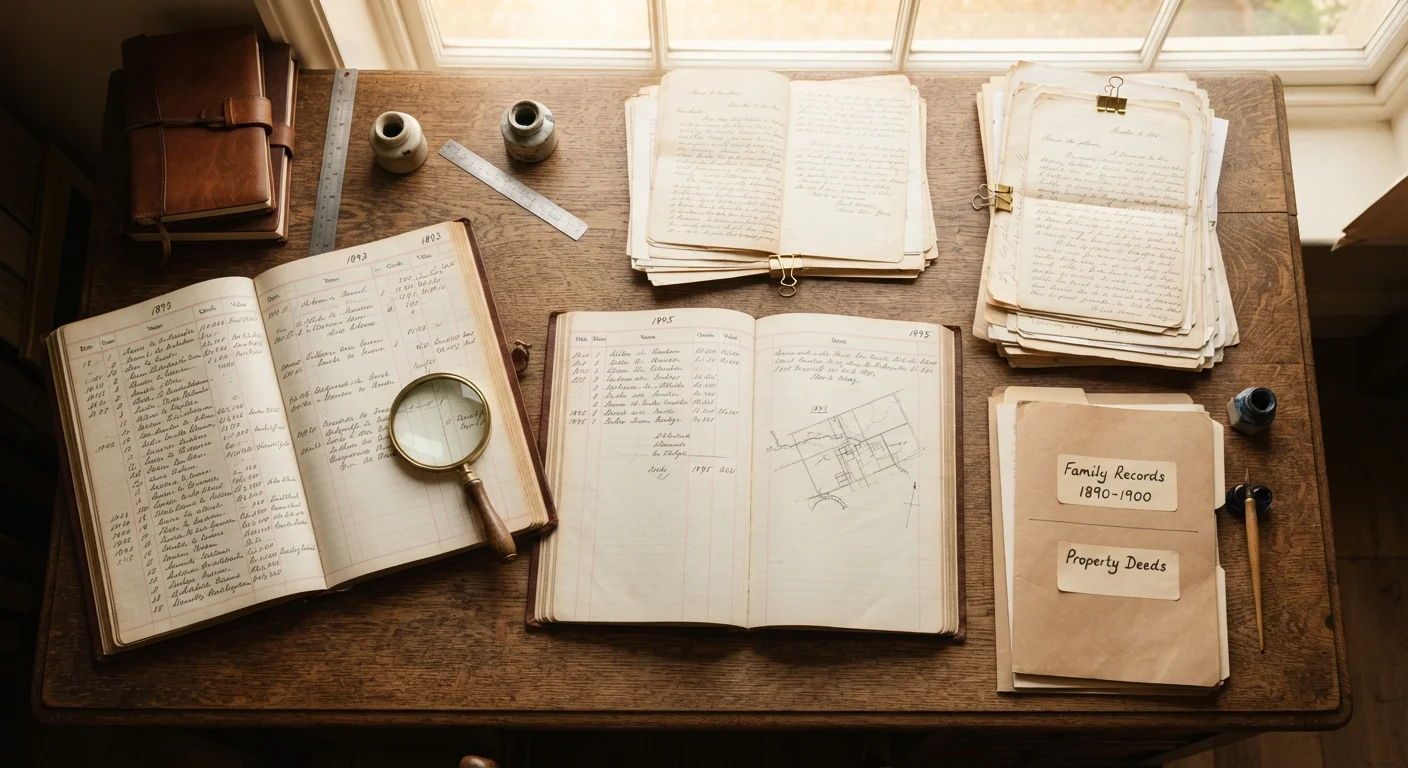
Photo: searchopenrecords editorial
—— In This Article
Key Takeaways
- Define a clear research question before opening any archive database to avoid unfocused searching.
- Document every source — including dead ends — to prevent duplicating effort across sessions.
- Cross-referencing multiple record types substantially reduces the risk of missing key evidence.
- Name spelling variations and digitization gaps are the two most common causes of missed records.
- A written research log is the single most effective tool for maintaining a credible, verifiable family tree.
Start With a Focused Research Question
The most common mistake in historical archive research is opening a database without a defined objective. Broad curiosity produces scattered results. Instead, frame each session around a single, testable question: When and where was my great-grandmother born? or Did my ancestor appear in the 1880 federal census?
A sharp question tells you which record types to prioritize — vital records, census schedules, probate files — and which jurisdictions to search. It also gives you a clear stopping point, so you know when a session has succeeded or when you need to pivot.
Before your first search, compile what you already know: full names (including maiden names), approximate dates, and counties or localities. Our preparation checklist for historical archive research walks through exactly what to gather before you open a single database.
Build a Search Strategy Across Multiple Record Types
No single record type tells a complete story. A death certificate confirms a date but may list an incorrect birthplace. A census record may give an approximated age. A church register may be the only source that names a parent. Effective researchers triangulate: they look for the same fact in at least two independent record types before treating it as established.
When your research spans vital records, court filings, land deeds, and newspaper archives simultaneously, a structured approach is essential. See our guide on building a reliable search strategy across multiple record types for a framework that scales across diverse sources.
Document Everything — Including Dead Ends
A research log is not optional. Every search session should produce a written record of what you searched, where you searched, what terms or indexes you used, and what you found — including negative results. A negative result (the record doesn't exist, the index shows no match) is evidence. Recording it prevents you from repeating the same search months later.
Good source citation is equally non-negotiable. For each document you use, record the repository, collection name, volume or roll number, date accessed, and any unique identifiers. This allows you — and anyone who inherits your research — to verify findings independently. Our companion article on documenting as you go covers citation formats and filing systems that keep a growing tree trustworthy.
Account for Name Variations and Digitization Gaps
Two obstacles derail more archive searches than any other: inconsistent name spelling and incomplete digitization. Historical clerks, immigration officers, and census enumerators recorded names phonetically or translated them from other languages. A single ancestor might appear as Mueller, Muller, Miller, and Millner across different records from the same decade.
Always search phonetic variants and common anglicizations before concluding a record doesn't exist. Many databases offer Soundex or wildcard searching — use them. If a name is common, add geographic or date filters to narrow results without eliminating valid matches.
Digitization gaps are equally important to understand. A large portion of historical records — particularly pre-1900 local records, some state archives, and many church registers — have not been digitized and exist only on microfilm or as physical documents in county courthouses and regional repositories. If a digital search returns nothing, that absence is not proof the record doesn't exist; it may simply mean you need to contact the originating institution directly.
Old handwriting compounds these challenges. Many researchers are unfamiliar with older script conventions. Our guide to reading old handwriting in historical documents provides practical techniques for deciphering archaic scripts common in genealogical records.
Review, Verify, and Refine Your Conclusions
After each research session, review what you've found before accepting any conclusion. Ask: Does this record conflict with another source? Is the information in this document primary (reported by someone with firsthand knowledge) or secondary (reported by someone who wasn't present)? A death certificate's informant may not have known the deceased's exact birthdate, making that field less reliable than the same fact recorded in a birth register.
When conflicts arise between records, don't discard either — document both, note the discrepancy, and identify a third source that might resolve it. This is the Genealogical Proof Standard in practice: a reasonably exhaustive search, complete citations, analysis of each source, and a conclusion that accounts for conflicting evidence.
For researchers working with court documents alongside vital and property records, the court record search checklist provides a parallel structured approach that reinforces the same verification habits. Consistent review cycles — not just at the end of a project, but after each session — keep your conclusions defensible and your family tree credible.

Genealogy Search Editorial Team
Genealogy Search Editorial Team is the collective byline for our editorial team and contributor network. Articles published under this byline or an editorial pen name are researched, written, and reviewed according to our editorial standards for clarity, consistency, and independence before publication.
View author profile