
Reading Old Handwriting in Historical Documents
Old script styles like Secretary Hand can be baffling. Practical techniques for deciphering faded, archaic handwriting in genealogical records.
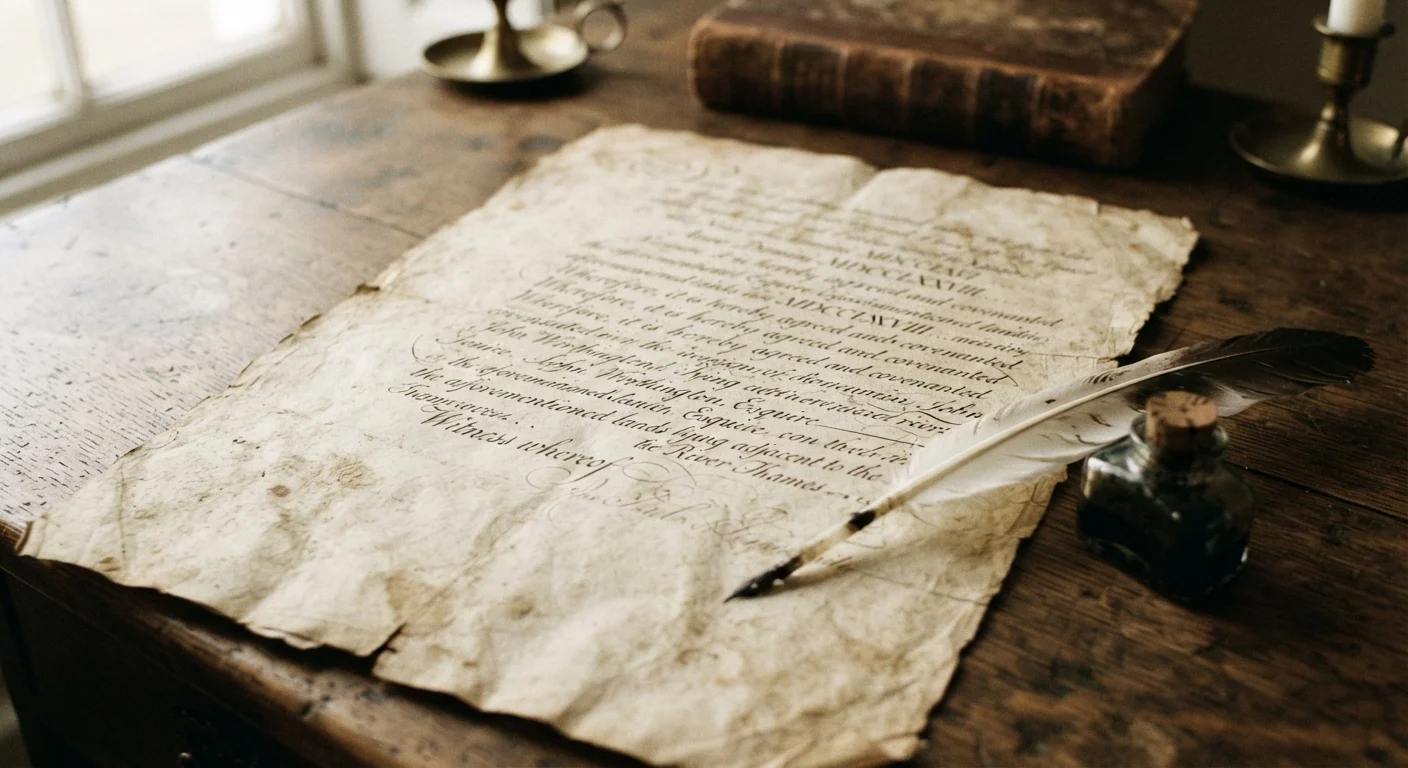
Photo: searchopenrecords editorial
—— In This Article
Key Takeaways
- Secretary Hand and other historical scripts follow consistent letter-formation rules that can be learned systematically.
- Transcribing documents word by word, then returning for a second pass, reduces misreading errors significantly.
- Alphabet guides, paleography courses, and letter-comparison charts are freely available from major archives.
- Context clues — document type, date, and region — narrow down ambiguous words and abbreviations.
- Leaving placeholders for unreadable words and revisiting them later is standard genealogical practice.
Why Old Handwriting Is So Hard to Read
When a colonial-era deed or an 18th-century church register surfaces in your research, the handwriting can look almost like a foreign language. That reaction is entirely normal. Before standardized penmanship education, clerks and scribes were trained in regional script traditions that differ dramatically from modern cursive — and from each other.
The most common script you will encounter in English-language records from roughly 1500 to 1700 is Secretary Hand, a style characterized by angular letterforms, heavy use of abbreviations, and several letters that bear no resemblance to their modern equivalents. The letter e, for example, looks like a reversed c; the long s resembles an f without a full crossbar; and u and v were often interchangeable. Later 18th- and 19th-century records tend to shift toward Copperplate and then toward the rounded Spencerian hand, each with its own quirks.
Compounding the script challenge, ink fades, paper foxes and tears, and microfilm reproduction flattens contrast. Understanding why the text is difficult helps you choose the right decipherment strategy rather than guessing blindly. For complementary insight on why even experienced researchers stumble, see Why Genealogists Misread Historical Records — and How to Avoid It.
Tools and Resources to Gather Before You Begin
Approaching a difficult document without reference materials is like solving a puzzle with no picture on the box. Assemble these before your first transcription session.
Paleography alphabet chart
Provides letter-by-letter comparisons between historical script forms and their modern equivalents, essential for identifying unfamiliar letterforms.
High-resolution document image
A zoomed digital scan allows you to enlarge specific characters without losing detail, making faint strokes visible.
Transcription worksheet
A lined document or spreadsheet where you record each word, leave placeholders for uncertain readings, and note your reasoning.
Image editing or enhancement software
Adjusting brightness, contrast, and color inversion on a scanned image can reveal ink that appears faded at normal settings.
Online paleography course or tutorial
Free courses from institutions such as the UK National Archives provide structured practice with authentic historical documents.
With those resources at hand, you are ready to work through the document methodically rather than reactively.
Step-by-Step: Deciphering the Document
Follow this process each time you encounter an unfamiliar handwritten record. Resist the temptation to skip steps — even experienced paleographers work through a document systematically.
Identify the script type and time period
Before reading a single word, determine when and where the document was created. A Virginia deed from 1680 will be in Secretary Hand; an Ohio probate record from 1850 will likely be in a later Copperplate-influenced style. This narrows which alphabet chart you need and sets expectations for common abbreviations used in that era and region.
Gather known letters from the document itself
Scan the entire document for words you can already read with confidence — names, place names, or common legal phrases like in the name of God Amen. Extract individual letters from those known words and build your own mini-alphabet for this specific clerk's hand. Every writer formed letters slightly differently, so a chart derived from the document itself is more reliable than a generic reference alone.
Transcribe word by word, left to right
Work through the document systematically. For each word, write your best reading and use square brackets with a question mark — [word?] — to flag uncertain readings. Use three underscores [___] for completely illegible words. Resist the urge to guess based on what you expect the document to say; that is one of the most common sources of transcription error.
Use context to resolve ambiguous words
Return to your flagged words and read the surrounding sentence aloud. Legal formulas, place names, and family relationships follow predictable patterns in most document types. A phrase in a will that ends with [___] of my body lawfully begotten almost certainly begins with heirs. Document-type glossaries — available from genealogical societies and archives — list the standard phrases for deeds, wills, church registers, and census schedules.
Verify uncertain readings against the original image
Once you have a complete draft transcription, return to the document image and re-examine every bracketed word. Enlarge the image and adjust contrast if needed. Compare the letterforms to your extracted alphabet from Step 2. Update your transcription with improved readings, but keep a record of what your original reading was — this audit trail is useful if you revisit the document later.
Seek a second opinion on persistent problem passages
If words remain unresolved after two full passes, share the image — not your transcription — with a paleography forum or a local genealogical society. Presenting the raw image prevents your own reading from anchoring the volunteer's interpretation. Many archives also offer staff assistance for particularly difficult documents in their collections.
Name and date variations uncovered during transcription may require additional reconciliation. The article Conflicting Names, Dates, and Spellings: Navigating Inconsistency in Old Records explains proven strategies for working through those discrepancies without losing your subject. For a broader research workflow that integrates transcription into your documentation habits, see Building a Reliable Research Workflow for Historical Archive Searches.
Applying Your Transcription to Family Research
A clean, documented transcription is the foundation for every research step that follows. Once you have a working version of the text, cross-reference names, dates, and places against records you have already collected. A baptism register entry may confirm a birth year that appears inconsistently elsewhere, or a probate inventory may name children who do not appear in census records.
Historical documents often surface in clusters: a will leads to court records, which lead to land deeds, which yield yet more handwriting challenges. Each successful decipherment builds your familiarity with a particular clerk's hand or regional script convention, making subsequent documents in the same collection faster to read.
If the document that launched your search is an obituary, the skills here transfer directly. Historical notices were handwritten before newspaper typesetting, and even printed obituaries often reference handwritten church or civil records you will need to locate next. The guides Reading an Obituary for Genealogy: A Practical Field Guide and Searching Historical Obituaries: Records from the 1800s to Mid-20th Century walk through those complementary record types in detail.

Genealogy Search Editorial Team
Genealogy Search Editorial Team is the collective byline for our editorial team and contributor network. Articles published under this byline or an editorial pen name are researched, written, and reviewed according to our editorial standards for clarity, consistency, and independence before publication.
View author profile