
Common Myths About Historical Records Access
Think all old records have been digitised? Or that sealed records are forever closed? We separate fact from fiction on archive access.
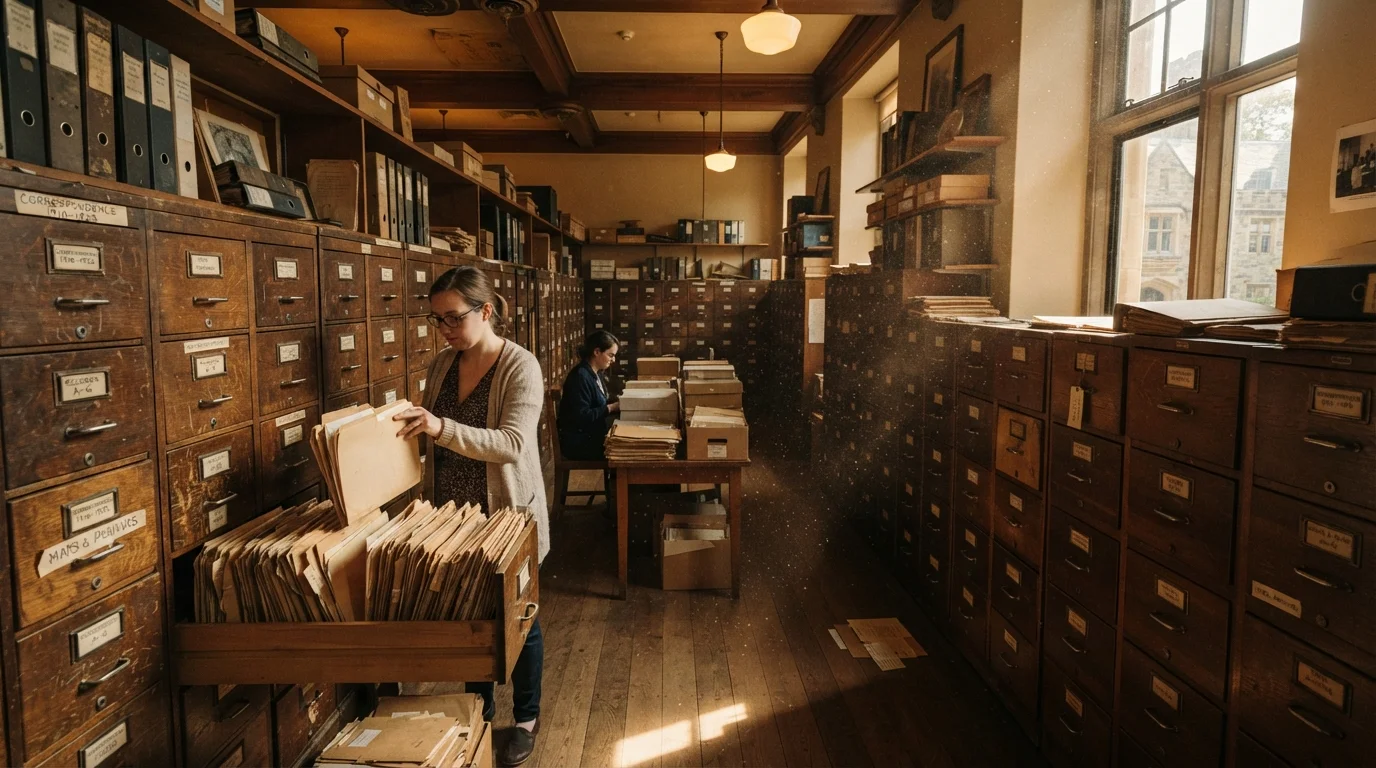
Photo: searchopenrecords editorial
—— In This Article
Key Takeaways
- Not all historical records have been digitised — physical archives remain essential for thorough genealogical research.
- Sealed records are not necessarily closed forever; many become accessible after statutory waiting periods expire.
- Free and government-run repositories often hold records that paid databases do not include.
- Conflicting information across multiple records is common and does not automatically invalidate a document.
- Local county courthouses, state archives, and libraries frequently hold records unavailable anywhere else.
Why Misconceptions About Historical Records Persist
The surge in online genealogy platforms over the past two decades has been genuinely transformative — but it has also generated a set of assumptions that can send researchers in the wrong direction. When a search bar returns no results, it is tempting to conclude the record simply does not exist. When a document is described as sealed, researchers often assume the door is permanently shut. These instincts are understandable, but they are frequently wrong.
Understanding how records are created, maintained, and made accessible requires familiarity with the legal and institutional structures behind them. The US public records framework is a patchwork of federal, state, and local systems — each with its own rules, timelines, and access procedures. Clearing up the most common myths is an essential first step before diving into any serious research project.
Myth
All historical records have been digitised and are searchable online.
Fact
Only a fraction of historical records have been digitised; vast collections remain on microfilm or in physical archives.
The perception that a quick online search will surface any historical document is one of the most persistent misconceptions in genealogical research. In reality, digitisation projects — even large-scale efforts by institutions like the National Archives and Records Administration (NARA) — have covered only a portion of available records. Many county-level vital records, probate files, land surveys, and church registers exist solely as physical documents or microfilm reels housed in state archives, libraries, or local courthouses. If an online search returns nothing, that is a signal to look harder offline, not to conclude the record never existed.
Myth
Sealed records are permanently closed and can never be accessed.
Fact
Many sealed records become accessible after legally defined waiting periods or through formal petition processes.
Sealing a record restricts access for a defined period or under specific conditions — it does not erase the record or close it permanently. Adoption records, for example, are governed by individual state laws, and several states have enacted legislation granting adult adoptees access to original birth certificates. Court records sealed to protect minor defendants may be unsealed once the subject reaches adulthood. Researchers should consult the legal framework behind US public records to understand what conditions govern each record type in their state.
Myth
Paid genealogy databases are more complete and accurate than free sources.
Fact
Free government repositories and library-affiliated databases often contain records that commercial platforms do not index.
Commercial platforms aggregate content efficiently, but their holdings depend on licensing agreements with originating institutions. A state archive may share only a subset of its collections with a commercial partner while making the full collection available through its own portal at no cost. The FamilySearch digital library, maintained by The Church of Jesus Christ of Latter-day Saints, offers a vast free repository that rivals or exceeds many paid services in certain record categories. Consulting official digital tools and government databases is always worth doing before assuming a record is unavailable.
Myth
If two historical records conflict, one of them must be forged or wrong.
Fact
Discrepancies between records are extremely common and usually reflect human error, differing informants, or recording conventions of the era.
An ancestor's age appearing differently on a census record and a death certificate does not indicate fraud. Census enumerators recorded what a household member reported on a given day; death certificates captured what a grieving informant remembered, sometimes years later. Name spellings varied because standardised orthography was not universal, and immigrants often had names anglicised by clerks. Skilled researchers treat each document as one data point and triangulate across multiple sources rather than dismissing conflicting evidence outright. For a deeper look at how obituaries present similar reliability challenges, see common myths about obituaries as historical sources.
Myth
The federal government holds all significant historical records.
Fact
Local and state-level repositories — including county courthouses, state archives, and public libraries — are often the primary custodians of the most genealogically valuable records.
NARA is indispensable for census data, military service records, and immigration documents. However, birth certificates, marriage licenses, wills, property deeds, and local court records are created and maintained at the county or state level. A researcher tracing a family in rural Appalachia or the Gulf South may find that a county courthouse holds irreplaceable documents that were never transferred to any state or federal repository. Reaching out directly to local clerks or historical societies is often the most efficient path forward.
Practical Implications for Your Research Strategy
Correcting these myths has direct consequences for how you approach a search. If you accept that digitisation is incomplete, you will build in time to contact physical repositories. If you understand that sealed records have defined review cycles, you may find it worthwhile to file a formal request rather than walking away empty-handed. And if you stop equating a paid subscription with comprehensive coverage, you will cast a wider net across free government portals and library systems.
Gaps in Digitisation Can Derail Research
Researchers who rely exclusively on online search results risk missing significant portions of the historical record. Vital records, land deeds, and probate files from rural counties — particularly those predating the 20th century — may exist only on microfilm or as original paper documents. Always verify whether a record set has been fully digitised before concluding that a document does not exist.
Researchers who run into obstacles with standard online tools often find success by shifting focus to local repositories. State archives frequently publish finding aids — inventories of their holdings — online even when the documents themselves have not been digitised. A finding aid entry is confirmation that a record exists and tells you exactly where to request it.
It is also worth revisiting sources you may have dismissed because of apparent inconsistencies. As noted above, discrepancies are the norm rather than the exception in historical documents. For related guidance on how these issues surface in death-related records, see obituary search myths that send researchers down dead ends. Similarly, finding records online provides practical tools for navigating digital databases without overstating what they contain. For a broader look at access assumptions across all record types, widely believed myths about public records access offers additional context.
Approaching historical records with accurate expectations — rather than wishful assumptions — is what separates a stalled search from a productive one. The records you need are more often accessible than they appear; they simply may require more deliberate effort to locate.

Genealogy Search Editorial Team
Genealogy Search Editorial Team is the collective byline for our editorial team and contributor network. Articles published under this byline or an editorial pen name are researched, written, and reviewed according to our editorial standards for clarity, consistency, and independence before publication.
View author profile