
Obituary Search Myths That Send Researchers Down Dead Ends
Separating fact from fiction on common beliefs about obituary availability, searchability, and what public records actually contain.
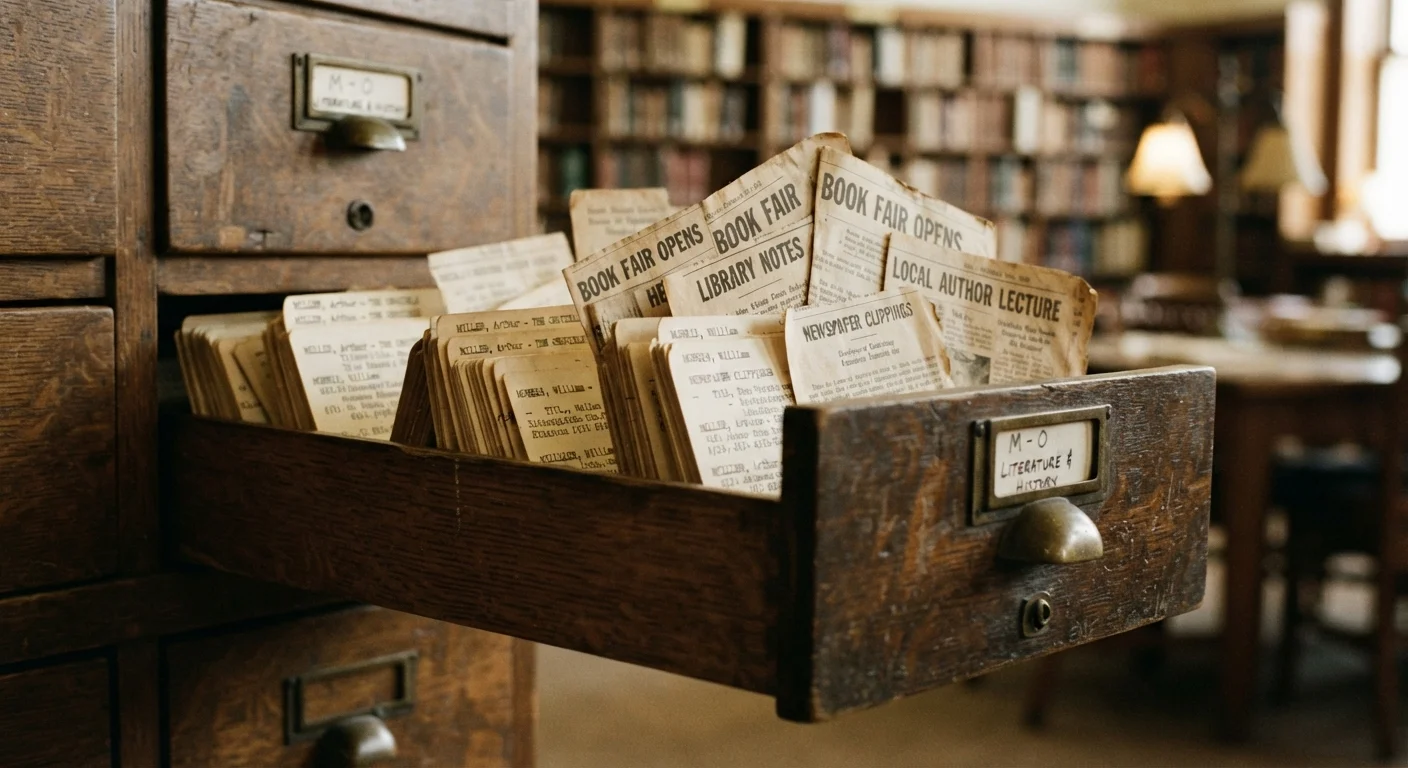
Photo: searchopenrecords editorial
—— In This Article
Key Takeaways
- Obituaries are not official government records and contain no legally verified information.
- Many obituaries were never digitized and exist only in print archives at local libraries.
- The absence of an online obituary does not mean one was never published.
- Free public sources — including library newspaper archives — can surface records commercial sites miss.
- Spelling variations and name changes are leading causes of failed obituary searches.
Why Myths About Obituary Searches Persist
Obituary research sits at an intersection of grief, family history, and public records — a combination that invites assumptions. Searchers often arrive with expectations shaped by television procedurals, outdated advice, or simple wishful thinking. The result: hours spent in the wrong places, or worse, giving up entirely on a record that does exist.
The myths below are among the most commonly held — and most consistently wrong. Correcting them won't make every search easy, but it will help you spend your time where records are actually found. For a broader look at why searches fail even when records exist, see why obituaries are harder to find than you'd expect.
Myth
If someone died, their obituary must be findable online.
Fact
Publication of an obituary has always been optional, and the majority of historical obituaries have never been digitized.
Families choose whether to publish an obituary, and many — particularly in rural communities, among lower-income households, or in earlier decades — did not. Even when an obituary was published in a local newspaper, digitization of that paper's archives may never have occurred. The Chronicling America project at the Library of Congress and many state newspaper digitization efforts cover only a fraction of historical print runs. A record's absence from any search engine result is not evidence that it was never written.
Myth
Obituaries are official government records with verified facts.
Fact
Obituaries are family-written notices, typically submitted to newspapers without fact-checking or legal verification.
Unlike death certificates — which are legal documents issued by state vital records offices and signed by a licensed physician or coroner — obituaries carry no legal authority. They are composed by grieving family members, sometimes with the assistance of funeral home staff, and published as paid or contributed notices. Ages, birth dates, survivors' names, and even the spelling of the deceased's name may contain errors. Researchers relying on obituary details alone, without cross-referencing against vital records, risk building on faulty foundations. See common misconceptions about what obituaries are required to include for more on this distinction.
Myth
Searching by full name is the most reliable way to find an obituary.
Fact
Name variations, nicknames, and spelling inconsistencies are a leading cause of failed searches.
Surnames change through marriage, anglicization of immigrant names, or simple clerical error. A woman who spent her adult life under a married name may have been published under her birth name, a nickname, or even a middle name her family used privately. Searching only under a single spelling of a name — especially with uncommon or phonetically complex surnames — frequently misses records that exist under alternate forms. Effective searchers build a list of variants before beginning and run multiple queries. This problem mirrors broader genealogical pitfalls described in common myths about ancestry research.
Myth
Commercial genealogy sites have the most complete obituary collections.
Fact
Free public sources — especially library newspaper archives — often hold records that commercial platforms have not licensed or indexed.
Commercial genealogy platforms have invested significantly in digitization, but their collections reflect the newspapers and archives they have been able to license — a subset of what exists. State historical societies, public library consortia, and newspaper publishers themselves often maintain separate digital archives or physical collections. Many county libraries provide free access to ProQuest Historical Newspapers or similar products through library card login. Checking the local library in the county where the person died is a step that routinely uncovers records that no commercial search returned.
Myth
Obituaries always name all immediate family members.
Fact
Who is named — and who is omitted — reflects family decisions, not any legal requirement or editorial standard.
There is no universal standard governing what an obituary must include. Estranged relatives are frequently omitted. Children from prior marriages may not appear. Same-sex partners were routinely excluded in earlier decades. A person who died without close surviving family may have an obituary with little biographical detail at all, or none published. Researchers who expect survivor lists to be complete and accurate will sometimes draw incorrect conclusions about family structure. For a fuller treatment of this limitation, see what obituaries can and cannot tell you about a person's life.
Myth
If a death was recent, finding the obituary online should be straightforward.
Fact
Even recent obituaries may be behind paywalls, restricted to print, or never published at all.
Many newspapers have shifted obituary publication to subscription-only digital access, meaning that even a notice published last month may not be freely visible in a general web search. Some families choose memorial websites hosted by funeral homes, which may be taken down after a period of time. Others publish notices in print editions only. A recent death does not guarantee that any obituary is publicly accessible online — and a search that returns no results should prompt a direct inquiry to local funeral homes or the newspaper's obituary desk rather than an assumption that no notice was published.
Where the Evidence Actually Points
Once you move past common misconceptions, a clearer picture of obituary research emerges. Success depends less on any single database and more on understanding how records were created, stored, and — sometimes — never preserved at all. Local public libraries remain among the most underutilized resources: many hold microfilm or print newspaper runs that predate digital archives by decades.
~20%
Historical US newspapers estimated to be digitized
Researchers at the Library of Congress have noted that digitized newspaper collections represent a small fraction of the total historical print record in the United States.
50+
State newspaper digitization programs active in the US
Most states participate in the National Digital Newspaper Program or maintain independent digitization initiatives, though coverage varies widely by region and time period.
Death certificates issued by state vital records offices are the closest thing to an official death record in the United States — but they are separate documents from obituaries entirely. When an obituary doesn't surface through any channel, alternative records can fill the gap, including cemetery registers, funeral home files, and probate court documents.
Understanding what obituaries do and don't record is equally important. They are written by families — sometimes under time pressure and emotional strain — which affects both their content and their accuracy. Our companion piece on what an obituary actually records and what it leaves out walks through those limitations in detail. For sharper research habits that account for all of this, see proven obituary research habits.

Obituary Search Editorial Team
Obituary Search Editorial Team is the collective byline for our editorial team and contributor network. Articles published under this byline or an editorial pen name are researched, written, and reviewed according to our editorial standards for clarity, consistency, and independence before publication.
View author profile