
Why Genealogists Misread Historical Records — and How to Avoid It
Transcription errors, naming conventions, and calendar changes trip up even experienced researchers. Here's what goes wrong and how to stay accurate.
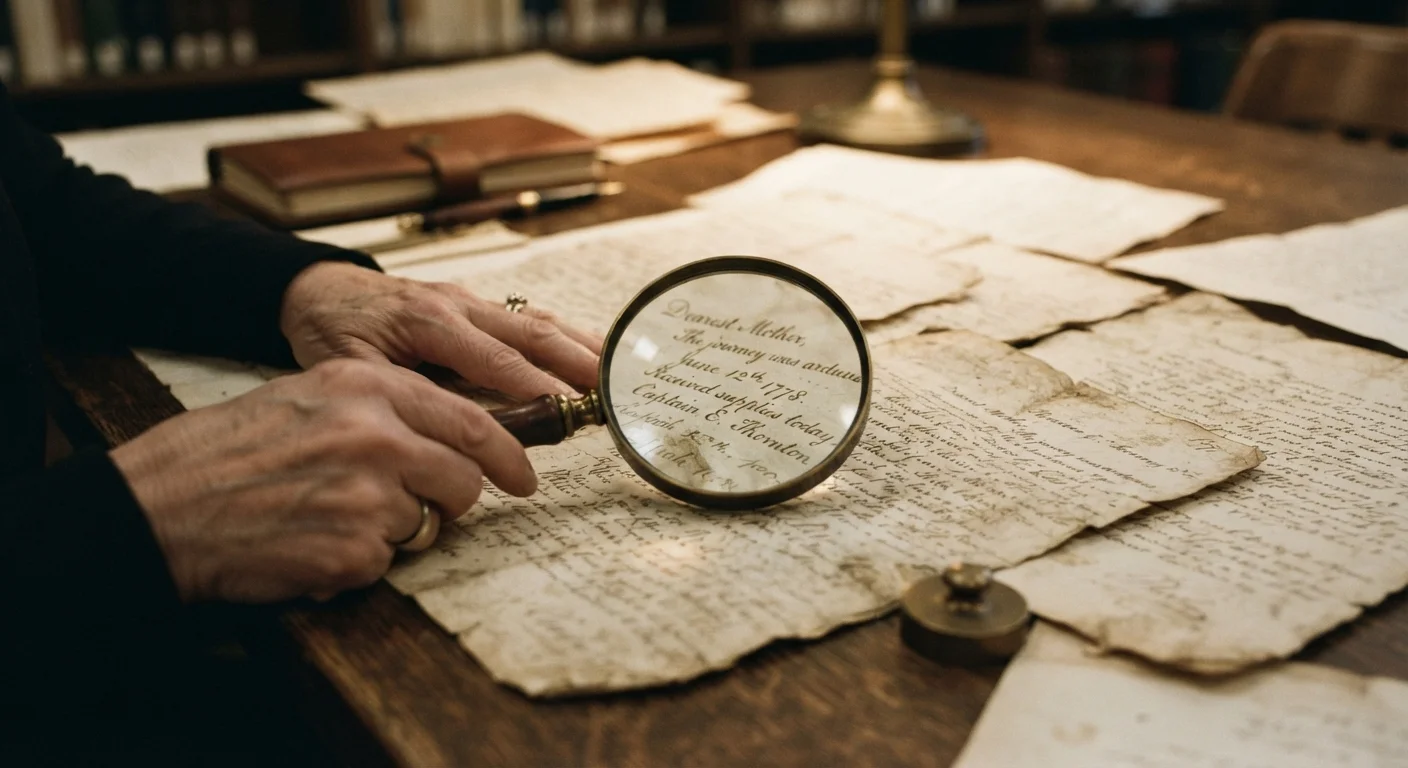
Photo: searchopenrecords editorial
—— In This Article
Key Takeaways
- Transcription errors in digitized indexes are common and can cause ancestors to appear missing from records.
- Historical naming conventions — nicknames, patronymics, and spelling variations — frequently trip up modern researchers.
- Calendar reforms mean dates in old records may not align with the modern Gregorian calendar without conversion.
- Trusting a single source without cross-referencing is one of the most consequential mistakes in genealogical research.
How Misreading Happens — and Why It Matters
Historical records were created by fallible humans under real-world pressures: a county clerk recording an unfamiliar immigrant surname phonetically, a census enumerator guessing at ages, a church register damaged by damp before anyone photographed it. When researchers encounter these records today — often through digitized indexes rather than original images — multiple layers of potential error stack up between the original event and the modern reader.
The consequences are real. A misread name can attach your family line to a completely different family. A misunderstood date can displace an ancestor by decades. Understanding the most common failure points allows you to build habits that keep your research on solid ground. See our guide to navigating inconsistency in old records for a deeper look at these challenges.
Common Mistakes and How to Avoid Them
The mistakes below appear consistently across genealogical research at every skill level. Recognizing them in your own workflow is the most effective form of error-proofing.
Accepting an index transcription as the definitive record without checking the original document image.
Why it happens: Digitized indexes are convenient and searchable, which makes them feel authoritative. Many researchers stop at the index entry rather than tracing it back to the original scan.
Assuming a name was always spelled the same way it appears in one record.
Why it happens: Modern readers expect consistent spelling, but standardized orthography is a relatively recent convention. Clerks spelled names as they heard them, and immigrants often adapted names to local languages.
Conflating two different individuals who share a name, region, and approximate birth year.
Why it happens: Common names were genuinely common. In communities where naming patterns repeated across generations, multiple men named Johann Schmidt or Mary Sullivan could live in the same county simultaneously.
Treating Old Style (Julian) calendar dates as if they were New Style (Gregorian) calendar dates.
Why it happens: Britain and its colonies did not adopt the Gregorian calendar until 1752, and different European countries made the switch at different times. Researchers unaware of this convert dates incorrectly or misplace events by days or even years.
Relying on a single secondary source — such as a published family history or an online family tree — without tracing its underlying citations.
Why it happens: Published genealogies and collaborative online trees feel like finished research. They are actually aggregations of other people's conclusions, each carrying its own potential errors.
Misreading archaic handwriting and recording the wrong name, date, or place.
Why it happens: Letter forms in 17th- and 18th-century script differ substantially from modern cursive. The letters f and s, u and n, and cl and d are particularly prone to misreading without training.
For a broader look at reasoning errors that affect all public records work — not just genealogy — see our article on assumptions that lead people to misread public records.
Building Habits That Protect Your Research
Individual mistakes are correctable; ingrained habits prevent them from recurring. A few practices make a measurable difference:
- Always view the original image. Index entries are finding aids, not primary sources. Whenever a record has been digitized, locate and examine the original scan or microfilm frame before drawing conclusions.
- Record your sources at the moment of discovery. Researchers who note where they found something — including the specific database, collection name, and record type — can return to verify and are less likely to conflate two different individuals.
- Search for corroborating records. A birth year that appears in a census, a death certificate, and a church baptism register simultaneously is far more reliable than one appearing in a single source.
- Learn the script styles relevant to your research geography. German Kurrent, English Secretary Hand, and Scandinavian Gothic handwriting each have letterforms that consistently fool modern readers. Our guide to reading old handwriting in historical documents covers practical deciphering techniques.
~30%
Estimated index transcription error rate in some collections
Genealogical researchers and archivists have noted that volunteer-transcribed indexes in certain collections carry error rates that can affect roughly one in three entries, particularly for non-English surnames.
11 days
Days lost in Britain's 1752 calendar reform
When Britain adopted the Gregorian calendar in September 1752, eleven days were removed from the calendar, meaning dates in records on either side of that transition must be interpreted carefully.
If your research has hit a wall — an ancestor who simply vanishes from the record trail — misreading is often a contributing factor. Our article on why your ancestor seems to disappear before 1900 walks through the most common barriers, including transcription errors and name changes.

Genealogy Search Editorial Team
Genealogy Search Editorial Team is the collective byline for our editorial team and contributor network. Articles published under this byline or an editorial pen name are researched, written, and reviewed according to our editorial standards for clarity, consistency, and independence before publication.
View author profile