
Eight Types of Records That Genealogists Overlook — and Why They're Worth Checking
Beyond births and marriages, historical records like land deeds, military drafts, and church registers can fill critical gaps in a family tree.
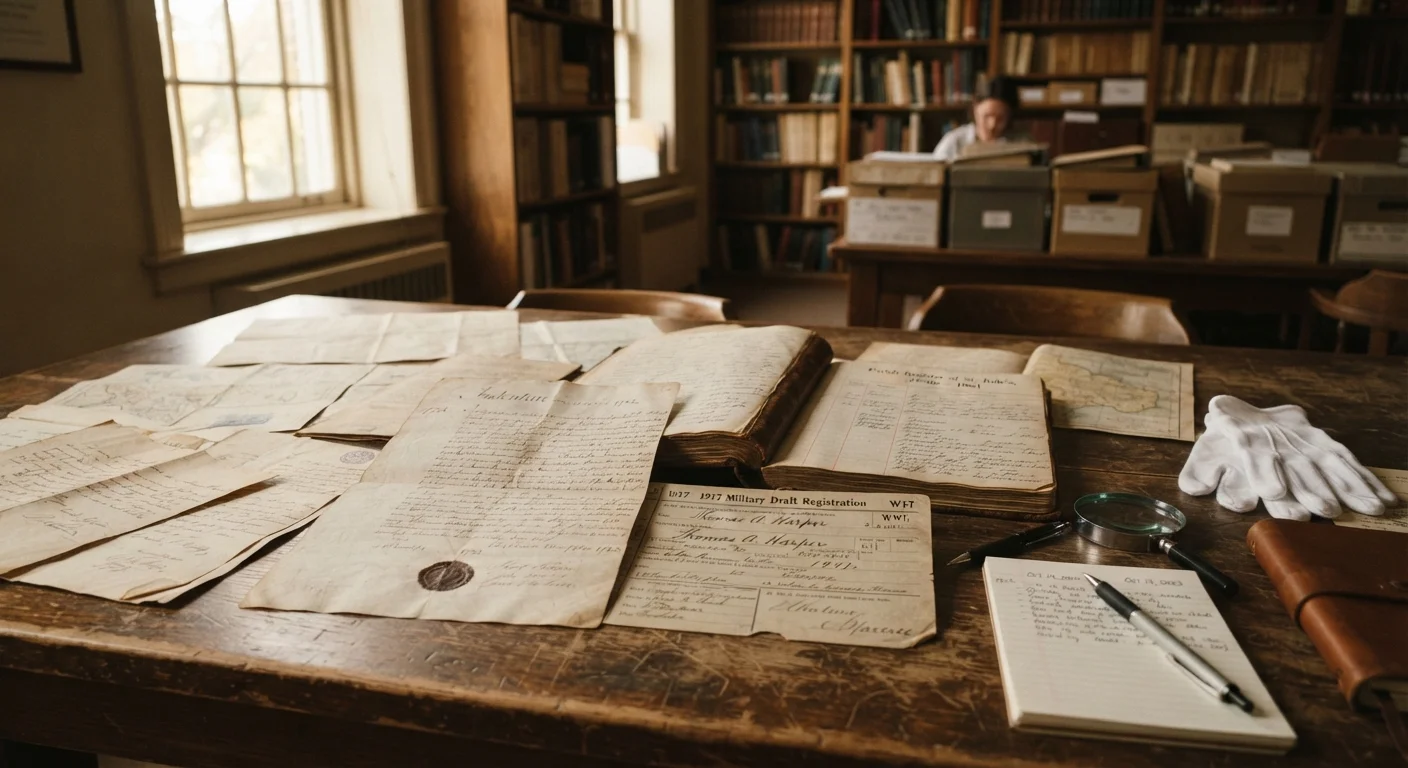
Photo: searchopenrecords editorial
—— In This Article
Key Takeaways
- Land deeds, draft registrations, and church registers routinely contain family details absent from birth and marriage certificates.
- Many underused record types are freely accessible through government archives, state historical societies, and digitized collections.
- Cross-referencing multiple overlooked sources helps break through common genealogical brick walls.
- Name variations, migration gaps, and missing vital records are often resolved through tax lists, probate files, and apprenticeship records.
Why Standard Records Leave Gaps
Most genealogy beginners start — and sometimes stop — with birth certificates, marriage licenses, death records, and federal census returns. These are the right foundations, and the public records every family tree researcher should know about is a useful place to understand them. But standard vital records and census rolls have real limitations: they were created at specific moments in time, they record only what a clerk thought to ask, and they are subject to transcription errors, record loss, and coverage gaps that can bring a line of research to a complete stop.
The eight record types below are frequently overlooked — sometimes because researchers don't know they exist, sometimes because they're harder to find online, and sometimes because their genealogical value isn't immediately obvious. Each one has the potential to answer questions that birth and marriage certificates simply cannot.
Land Deeds and Property Records
County deed books record every transfer of real property, and they frequently name wives, adult children, and neighbors — all of whom may be relatives. Grantee and grantor indexes allow you to trace an ancestor's movements across counties or states as they bought and sold land. A deed might also reveal an ancestor's literacy (did they sign or make their mark?), their economic standing, and exact parcel boundaries that help you locate a homestead on a modern map. The complete guide to tracing ancestors through land records covers how to read and use these documents in detail.
Deed books frequently name wives, adult children, and neighbors who may all be relatives.
Military Draft Registrations
The World War I draft registration cards (1917–1918) and World War II draft cards (1942) together cover tens of millions of American men — including many who never served. Each card typically records full name, exact birth date and birthplace, occupation, employer, nearest relative, and a physical description. For researchers whose ancestors had common names or left few paper trails, these physical descriptors alone can help distinguish two men of identical names in the same county.
WWI and WWII draft cards cover millions of men who never served — recording birthplaces, relatives, and physical descriptions.
Church Registers and Parish Records
Before civil vital registration became standard across U.S. states (a process not complete until the early twentieth century), churches were the primary keepers of baptism, marriage, and burial records. Lutheran, Catholic, Methodist, and other denominational registers often predate courthouse records by decades. They may also note godparents, witnesses, and the congregation a family transferred from — clues that can point directly to an ancestral village. The historical record types every family researcher should know provides context on how church records fit into a broader research strategy.
Church baptism and burial records frequently predate courthouse vital registration by decades.
Probate Files and Estate Inventories
A probate file does far more than distribute an estate — it names heirs, establishes family relationships, and can surface children who moved away or married under different names. Estate inventories itemize household goods room by room, giving researchers a vivid picture of how an ancestor actually lived. Guardianship records within probate files are especially valuable for tracing minor children after a parent's death, sometimes revealing a remarriage or a child who was taken in by relatives.
Estate inventories name heirs and reveal family relationships that vital records rarely capture.
Tax Lists and Assessment Rolls
Annual tax records exist for many U.S. localities from the colonial period onward and appear consistently even in decades when census records were lost (Virginia's 1890 census, for example, is almost entirely gone). Tracking an ancestor through consecutive tax lists documents when they arrived in a county, when sons came of taxable age (a rough birth-year indicator), and when the household disappeared — suggesting death, migration, or sale of property. These lists are often held at state archives and are increasingly available through digitization projects.
Tax lists can pinpoint arrival and departure dates in a county when census records have gaps or losses.
Naturalization Records
For immigrant ancestors, the naturalization paper trail spans multiple documents: a declaration of intention ("first papers"), a petition for citizenship, and a certificate of naturalization. Filed in any court of record — federal, state, or local — these papers often include birthplace, arrival date, port of entry, and the names of witnesses (frequently relatives or neighbors). Pre-1906 naturalizations, handled before the federal government centralized the process, can be found in county courthouse deed books or court minute books rather than in centralized federal collections.
Pre-1906 naturalizations were filed in local courts — not federal collections — making them easy to miss.
Apprenticeship and Indenture Records
Apprenticeship agreements, often recorded in county court minute books, document children placed with a tradesman to learn a craft — a common arrangement in eighteenth and nineteenth-century America. These records typically name the child's parent or guardian, the trade, the length of service, and the master's obligations. Orphan court records in some states formalized similar arrangements and can reveal the fate of children whose parents died young, filling gaps that no census or vital record addresses.
Orphan court and apprenticeship records document children whose parents died early — a gap no census fills.
Fraternal and Ethnic Society Records
Organizations such as the Odd Fellows, Freemasons, Sons of Italy, and various immigrant aid societies kept detailed membership applications, death benefit records, and meeting minutes. These files often include birth dates, birthplaces, occupations, and next-of-kin designations that mirror the detail found in government records — but for populations that may have been undercounted or misrecorded in official sources. Ethnic newspapers published by these communities are another underused source, printing obituaries that rival funeral home records in genealogical richness. The hidden genealogical data points in obituaries article explains what to look for in these notices.
Fraternal society death benefit files often include birthplaces, occupations, and next-of-kin details.
Building a More Complete Picture
Working through this list doesn't mean abandoning the familiar record types — it means layering less obvious sources on top of them. When a census record gives you a name and age but no birthplace, a naturalization declaration may supply the missing village. When vital records don't exist for a particular county and era, church registers and tax lists fill the void. Lesser-known record sources that genealogists often overlook explores additional avenues worth pursuing once you've worked through the eight types above.
Digitization Gaps Are Still Common
Not every record type described here has been fully digitized. Many land deed books, church registers, and local court minutes remain only on microfilm or as physical volumes in county courthouses and state archives. When an online search returns nothing, consider contacting the relevant repository directly or consulting the record repositories worth knowing beyond the usual genealogy databases for guidance on where else to look.
Genealogical research is fundamentally about building a case from converging evidence. The historical records access resources available through official archives, state historical societies, and established genealogical organizations give researchers the tools to do exactly that — without relying solely on what has been digitized and indexed for mainstream databases.
Cross-Reference to Confirm Relationships
No single record type is definitive on its own. When a land deed names a possible relative or a probate file lists an unfamiliar heir, search tax lists, church registers, and draft cards from the same time period to corroborate the connection. Building a cluster of overlapping evidence is the standard genealogical method for confirming family relationships.

Genealogy Search Editorial Team
Genealogy Search Editorial Team is the collective byline for our editorial team and contributor network. Articles published under this byline or an editorial pen name are researched, written, and reviewed according to our editorial standards for clarity, consistency, and independence before publication.
View author profile