
Tracing Immigrant Ancestors: Ports, Passenger Lists, and Naturalisation Papers
If your family crossed a border, immigration records may be the bridge to the homeland. Learn what documents exist and how to locate them.
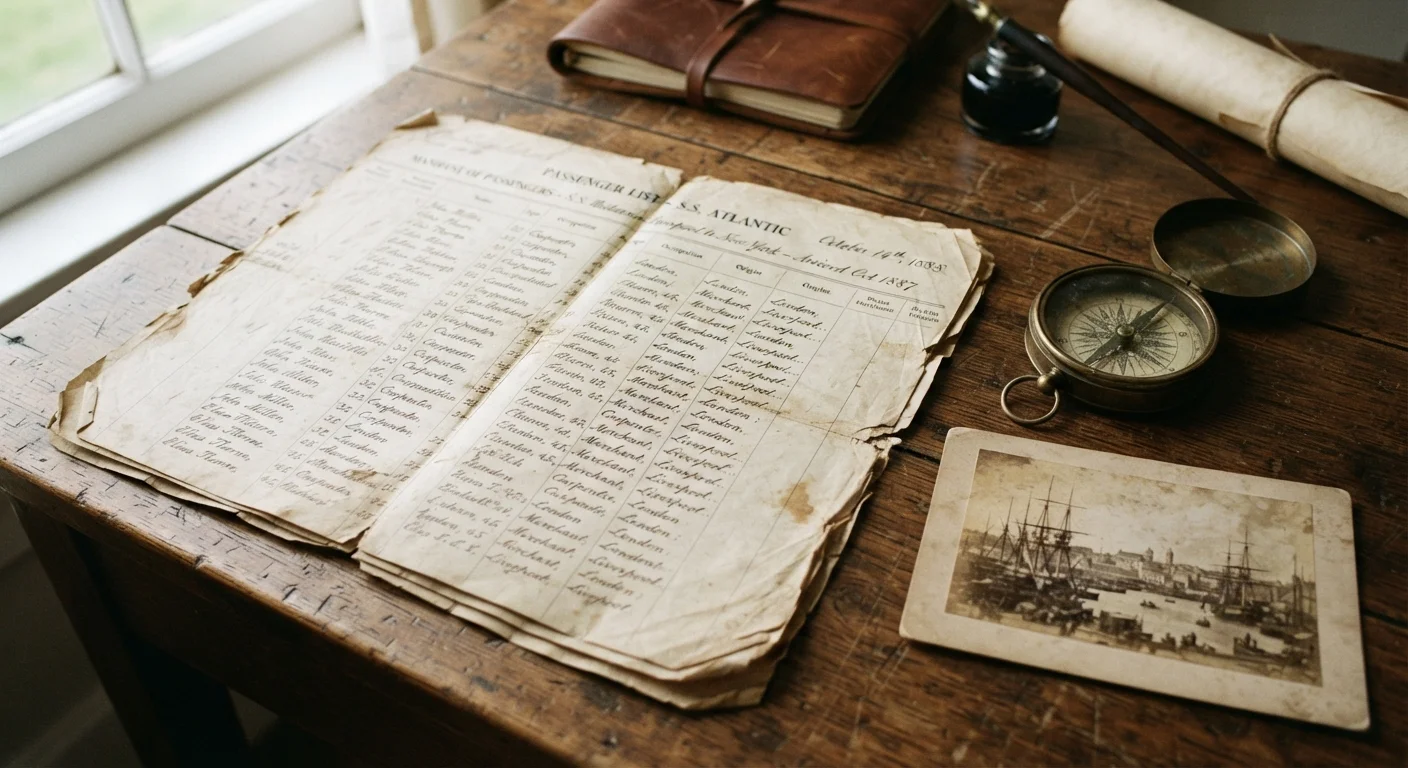
Photo: searchopenrecords editorial
—— In This Article
Key Takeaways
- Passenger lists, port records, and naturalisation papers together form the core paper trail for immigrant ancestors.
- NARA, FamilySearch, and Ellis Island databases offer free access to millions of digitised immigration records.
- Name spelling variations and anglicisation are the most common obstacles when searching immigrant records.
- Naturalisation papers often reveal the exact town of origin, a detail rarely found in census or vital records.
- Searching arrival and naturalisation records together significantly increases the chance of a successful identification.
Why Immigration Records Are a Genealogical Goldmine
For families with immigrant roots, the paper trail created at the border is often the most information-dense resource available. Unlike many civil records that capture only names and dates, immigration and naturalisation documents were designed to verify identity — meaning officials recorded physical descriptions, contacts abroad, occupations, and exact places of origin. A single post-1906 passenger manifest can move your research from a vague country of origin to a specific village, sometimes within a single afternoon.
The challenge is knowing which record sets exist, how they are organised, and where to find them. The Historical Records Access hub provides a broad map of the archival landscape. This guide focuses specifically on the immigration and naturalisation paper trail and how to follow it step by step.
Cross-Reference Arrival Date with Census Records
Once you have a suspected arrival year from a passenger list, cross-check it against the nearest US federal census. Census records from 1900 onward asked respondents to report their year of immigration and number of years in the country — a useful confirmation or correction when two people share similar names.
What You Will Need Before You Start
Effective searching depends on entering databases with enough information to distinguish your ancestor from thousands of people with similar names. Spend time on preparation — it reduces dead ends significantly.
What you will need
NARA Online Catalog (archives.gov)
Provides access to finding aids, microfilm rolls, and some digitised passenger lists held by the National Archives.
FamilySearch.org
Free platform hosting millions of indexed immigration and naturalisation records, including pre-Ellis Island arrivals.
Ellis Island Foundation Database (libertyellisfoundation.org)
Searchable index of over 65 million immigrants processed at Ellis Island between 1892 and 1957.
Ancestry Library Edition (via public library)
Available free through many public library systems; provides access to indexed passenger manifests and naturalisation files.
Step-by-Step: Finding Your Ancestor's Records
Collect everything you already know
Before opening any database, gather what your family already holds: old letters, naturalization certificates, religious records, or family Bibles. Note full names, approximate birth years, and any place names — even fragments like a remembered village name are valuable. Record contradictions too; multiple data points help you evaluate conflicting records later.
Identify the likely port of entry
Port of entry determines which record set to search first. Between 1892 and 1957, New York's Ellis Island processed the majority of European arrivals. Earlier arrivals, particularly pre-1890, came through Baltimore, Boston, Philadelphia, New Orleans, and Castle Garden in New York. Immigrants from Asia or the Pacific often arrived via San Francisco or Seattle. If you do not know the port, a broad search on FamilySearch or the NARA catalog using the immigrant's name and approximate decade will often surface the correct record set.
Search passenger lists and ship manifests
Passenger lists — also called ship manifests — are the first document most immigrants generated in the United States. Pre-1906 lists recorded basic information: name, age, nationality, and destination. Post-1906 manifests expanded dramatically, often recording the immigrant's last residence abroad, a contact person in their home country, physical description, and the name of a US relative or friend they were joining. Search the Ellis Island Foundation database for 1892–1957 arrivals, FamilySearch for broader date ranges, and NARA for records not yet online. See how to interpret these documents for detailed guidance on reading manifest fields.
Locate naturalisation papers
Naturalisation was typically a two-step process: a Declaration of Intent (sometimes called 'first papers') filed shortly after arrival, followed by a Petition for Naturalisation filed years later. The Declaration of Intent is particularly valuable — it often records the exact town or village of birth, which is rarely found in any other US record. Before 1906, naturalisation could occur in any court with jurisdiction; records are scattered across federal, state, and local courts. After 1906, the Bureau of Immigration and Naturalization standardised the process, and NARA holds copies of most post-1906 files. Search NARA's Naturalization Records collection and FamilySearch's United States Naturalization Records index. For deeper context on what these documents contain, see what historic naturalisation papers reveal.
Bridge the gap with complementary records
If passenger lists and naturalisation files are missing or inconclusive, turn to supporting records. Federal censuses from 1900, 1910, 1920, and 1930 recorded immigration year and citizenship status. Death certificates sometimes list country of birth or parents' birthplaces. Obituaries for immigrant ancestors frequently reference ethnic communities, home-country parishes, or surviving relatives abroad — see using obituaries to research immigrant ancestors for guidance on what they can and cannot tell you. Church records from ethnic parishes (Polish Catholic, German Lutheran, Greek Orthodox, etc.) often preserved village-of-origin data long after civil records went silent.
Follow the trail across borders
Once you have confirmed an exact origin location from a naturalisation paper or manifest, the research shifts overseas. Each country maintains its own archive system — civil registration, church registers, military conscription rolls, and emigration permit records vary significantly by nation and region. A confirmed home village is the key that unlocks foreign archives. For a structured approach to international record systems, see ancestry research across borders. FamilySearch's wiki also provides country-specific research guides as a free starting point.
Name Variations Can Break Your Search
Immigrant names were frequently misspelled, phonetically approximated, or deliberately anglicised by port officials, census enumerators, or the immigrants themselves. Always search for phonetic variants, shortened forms, and common alternate spellings before concluding a record does not exist. Most major databases include Soundex or wildcard search tools specifically to address this problem.
Interpreting What You Find — and What's Missing
Records rarely tell a complete story on the first pass. A manifest entry might give you a last-known address abroad but an unreadable village name. A naturalisation petition might be missing its accompanying Declaration of Intent because the two documents were filed in different courts. Approach each find as a partial piece of a larger puzzle.
If you locate a record but cannot read the handwriting or interpret an abbreviation, FamilySearch's Research Wiki and the detailed guide to reading immigration and naturalisation documents explain standard fields and common notations. When records are genuinely absent, consider that your ancestor may have entered the country through a lesser-documented port, arrived before systematic record-keeping began, or used a different name at different stages of their life. Adjusting your search strategy — rather than concluding the records do not exist — usually yields results.

Genealogy Search Editorial Team
Genealogy Search Editorial Team is the collective byline for our editorial team and contributor network. Articles published under this byline or an editorial pen name are researched, written, and reviewed according to our editorial standards for clarity, consistency, and independence before publication.
View author profile