
When the Records Run Out: Research Strategies for Pre-1800 Ancestry
Modern databases only go so far. Explore the alternative sources — church registers, probate courts, land grants — that help trace ancestry before civil registration.
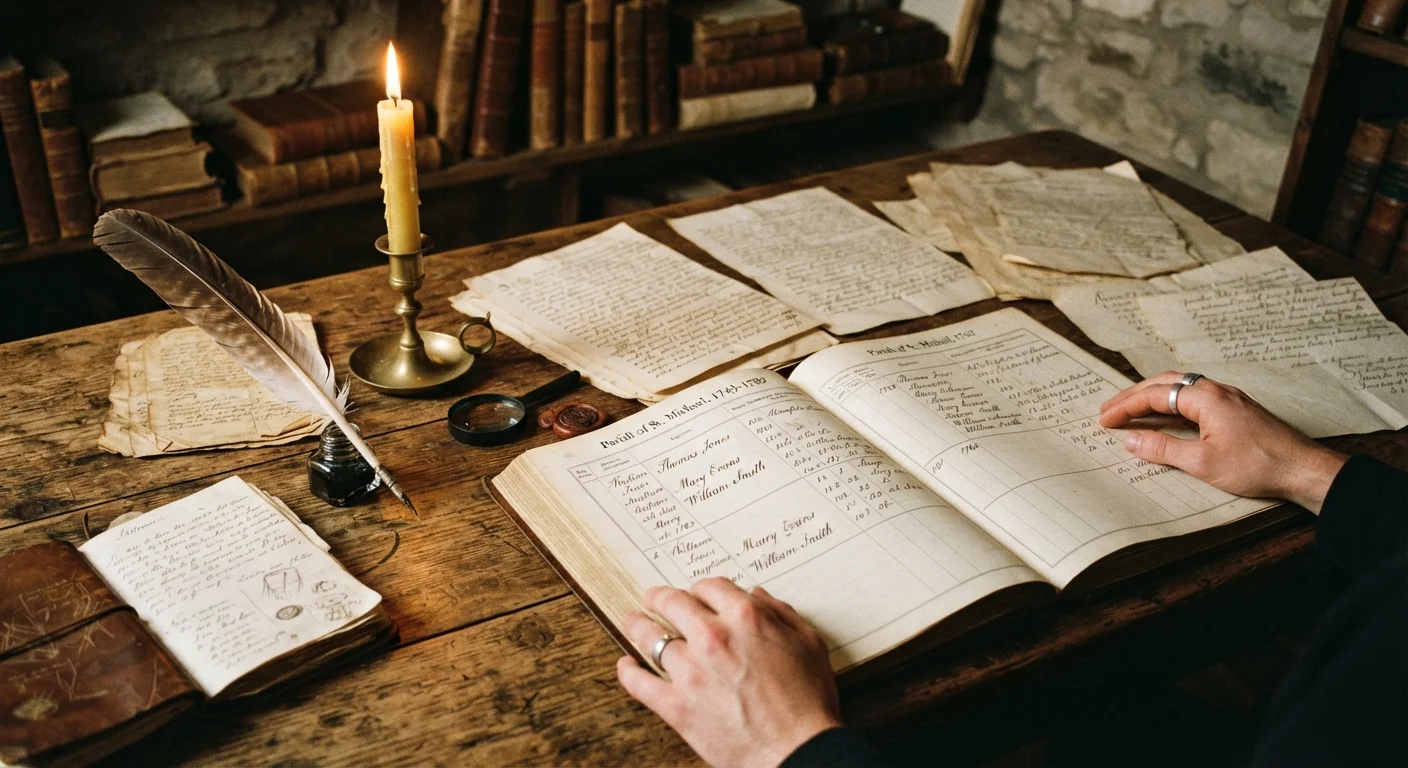
Photo: searchopenrecords editorial
—— In This Article
Key Takeaways
- Civil registration in the U.S. began in the mid-to-late 1800s, so earlier ancestry requires alternative record types.
- Church registers, probate records, and land grants are the most reliable substitutes for pre-1800 vital records.
- Name spelling variations and record gaps are normal — flexible search terms are essential.
- County and state archives, not just online databases, hold critical colonial-era documents.
- Working backward one generation at a time prevents compounding errors in early research.
Why the Standard Approach Stops Working Before 1800
Most people begin genealogy research using census records and digitized vital records — tools that work well back to roughly the mid-1800s. But civil registration of births, marriages, and deaths was not standardized across U.S. states until the late nineteenth century, and in many places not reliably enforced until the early twentieth. Push your research before that threshold and the familiar databases thin out rapidly.
This doesn't mean records don't exist — it means the types of records change entirely. Pre-1800 research is fundamentally a document-substitution exercise: you replace the vital records you can't find with the cluster of sources that colonial-era communities actually generated. Understanding which substitutes carry the most genealogical weight is the foundation of effective early American research. For researchers whose lines cross national boundaries, the guide to international record systems addresses what happens when the trail leads overseas.
Embrace Name Spelling Variations
Before standardized spelling, clerks recorded names phonetically. A single ancestor might appear as 'Schmidt,' 'Schmitt,' or 'Smith' across different documents. Always search multiple spellings and use wildcard characters where repositories allow them. Soundex-based searches, available in many archive catalogs, group phonetically similar surnames together and can surface records you'd otherwise miss.
Step-by-Step: Extending Your Research into the Colonial Era
The steps below move from the familiar to the unfamiliar, always working backward one generation at a time. Skipping generations or building forward from a speculative connection are the most common errors in pre-1800 research — both can introduce ancestors who aren't actually yours. The lesser-known record sources guide complements these steps with additional document types worth considering at each stage.
Establish your earliest documented ancestor
Before pushing into the 1700s, confirm exactly where your paper trail ends. Gather every document you have for your earliest known ancestor — census records, death certificates, marriage bonds — and note the latest confirmed birth year and location. This anchor point tells you which colony or territory to search and which record types were active during that person's lifetime.
Search colonial church registers
In the absence of government-issued birth and death certificates, churches were the de facto record-keepers. Anglican (later Episcopal), Quaker, Dutch Reformed, Lutheran, Catholic, and Presbyterian congregations all maintained registers of baptisms, marriages, and burials. Identify the dominant denomination in your ancestor's region and locate the relevant parish archives. Many colonial church records have been transcribed by genealogical societies and deposited at state archives or historical societies.
Work probate and estate records
Wills and probate inventories frequently name spouses, children, grandchildren, and neighbors — providing the family relationships that vital records would otherwise supply. Colonial probate records are held by county courts and are among the best-surviving pre-1800 document types. Search the county where your ancestor died, keeping in mind that county boundaries shifted considerably between 1700 and 1800. Cross-reference with the historical records access hub for repository guidance by state.
Trace land grants and deed chains
Land transactions are among the most consistently recorded events in colonial America, and they often reveal family relationships indirectly. Deeds frequently name adjacent landowners, and chains of property transfer can link fathers to sons across generations. Head-of-household grants, warrant books, and rent rolls from proprietary colonies are especially rich sources. For a detailed methodology, see tracing ancestors through land and property records.
Consult tax lists and militia musters
Colonial tax lists — tithables in Virginia, for example — appear as early as the 1640s and provide annual snapshots of who lived in a given county. When a young man's name first appears on a tithable list, you gain an approximate birth year. Militia musters serve a similar purpose and sometimes note place of origin. Many of these records are held at state archives and are increasingly available through less familiar record repositories that most researchers overlook.
Account for immigrant origins and foreign records
Many pre-1800 American lines lead quickly to immigrant ancestors whose records lie entirely in another country. Once you identify an immigrant ancestor, shift your research strategy to the country of origin. German church books, Scottish Old Parochial Records, and Irish civil registration predecessors each follow different preservation patterns. The guide to ancestry research across international record systems covers how to navigate these transitions effectively.

Genealogy Search Editorial Team
Genealogy Search Editorial Team is the collective byline for our editorial team and contributor network. Articles published under this byline or an editorial pen name are researched, written, and reviewed according to our editorial standards for clarity, consistency, and independence before publication.
View author profile