
Lesser-Known Record Sources That Genealogists Often Overlook
Beyond birth certificates and census data, land deeds, military pension files, and church records can fill critical gaps in your family history.
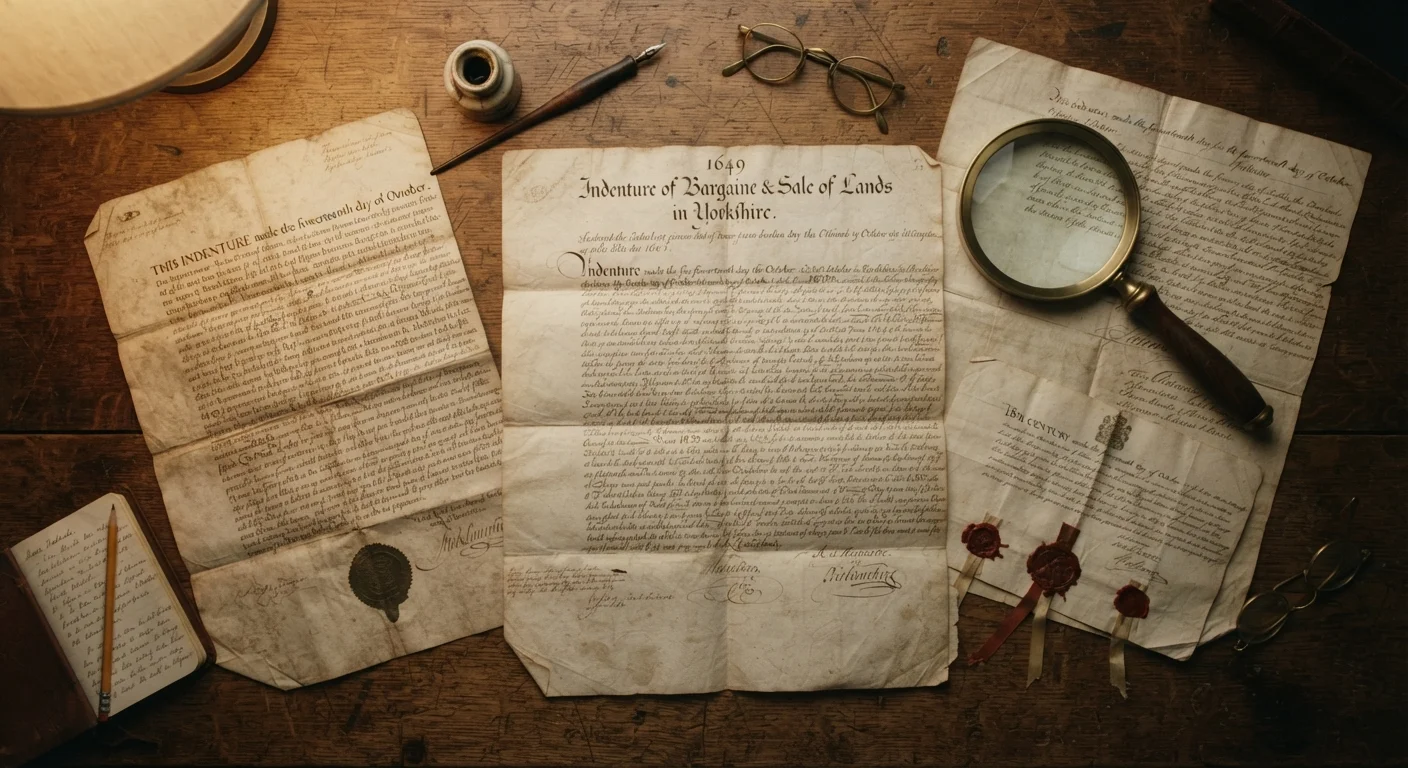
Photo: searchopenrecords editorial
—— In This Article
Key Takeaways
- Land deeds, military pension files, and church records often reveal details that vital records omit entirely.
- Probate court files frequently name relatives not mentioned in any other surviving document.
- Ethnic and religious community archives hold records that never entered government repositories.
- Naturalization papers and passenger manifests can bridge gaps between Old World and New World ancestry.
- Tax lists are especially valuable when census records are missing or destroyed for a given year.
Why the Standard Sources Leave Gaps
Most genealogists begin — reasonably — with birth certificates, marriage licenses, census records, and death certificates. These vital records form the backbone of family research, but they have well-documented limitations. State-level civil registration in the U.S. didn't become widespread until the late nineteenth century, and even then compliance was uneven. Fires, floods, and bureaucratic gaps eliminated entire county collections. For many ancestors — particularly those who were enslaved, itinerant, or simply poor — official vital records were never created at all.
The researchers who break through brick walls are usually those who know where else to look. The record sources below are underused not because they're obscure, but because most guides don't explain how to find and read them. Each one can supply names, dates, relationships, and locations that no birth certificate ever captured. See our broader guide to historical archives and documents for an orientation to the repositories that hold many of these sources.
Military Pension and Bounty Land Warrant Files
Pension applications filed after the Revolutionary War, War of 1812, and Civil War are among the richest genealogical documents ever created by the federal government. A widow applying for her late husband's pension was often required to prove her marriage — sometimes decades after the fact — by submitting sworn affidavits, family Bible pages, or statements from neighbors. The resulting files can run dozens of pages and contain birth dates, birthplaces, marriage information, children's names, and migration details found nowhere else. The National Archives holds the originals; many have been digitized and are accessible through NARA's online catalog.
Pension widow affidavits frequently contain family Bible entries and neighbor testimony found nowhere else.
Land Deeds and Grantor-Grantee Indexes
Every time an ancestor bought or sold land, the transaction was recorded at the county courthouse — often decades before a state began requiring birth registrations. Deeds name the parties, describe the property boundaries using adjacent landowners as markers (which can identify relatives or neighbors), and sometimes include the seller's place of origin. Grantor-grantee indexes at county recorder offices allow you to search by name across all transactions in a given period. This source is particularly valuable for tracing record types that genealogists routinely overlook, since land ownership cut across nearly all social classes in early America.
Deed boundary descriptions often name adjacent landowners who turn out to be the seller's own relatives.
Probate Court Records
When someone died with — or even without — a will, county probate courts administered the estate. The resulting file may include the will itself, an inventory of every household item with assigned values, receipts signed by heirs, and guardianship records for minor children. Intestate (no-will) proceedings are especially useful because the court was required to identify all legal heirs, sometimes naming siblings, cousins, or in-laws who appear in no other source. Probate records are held at county courthouses and are frequently indexed in state archives. Probate files are one of several sources that routinely surface family details official vital records miss.
Intestate probate proceedings required courts to name every legal heir — a built-in family reconstruction tool.
Church Registers and Denominational Archives
Before civil registration, churches recorded baptisms, marriages, and burials for their congregations. Lutheran, Catholic, Methodist, Quaker, and Jewish communities each maintained their own registers, and many predate U.S. government record-keeping by a century or more. Beyond the basic vital events, church records may note sponsors, witnesses, or the home parish of immigrants — details that can anchor a transatlantic search. Denominational archives (such as those maintained by the Presbyterian Historical Society or the American Jewish Archives) hold collections that never entered public repositories. Our guide to vital records versus church records explains how to navigate both systems together.
Church registers often predate U.S. civil registration by a century and note witnesses who link families together.
Tax Lists and Assessment Rolls
Annual tax records are a chronological backbone for tracking ancestors through time and space. Because they were compiled every year, they can pinpoint when someone arrived in a county, when they accumulated or lost property, and when they disappeared from a jurisdiction — usually due to death or migration. Tax lists are invaluable as a substitute when census records no longer exist; the 1890 U.S. census, for example, was largely destroyed by fire, making state and county tax rolls for that decade especially important. Most pre-twentieth-century tax records are held at state archives or county courthouses, and many Southern states' records have been microfilmed by genealogical societies.
Tax lists track year-by-year presence in a county — invaluable when census records have been destroyed.
Naturalization Papers and Passenger Manifests
For ancestors who immigrated to the United States, the paper trail created at entry and naturalization can be extraordinary. Post-1906 naturalization petitions required the applicant to supply a precise birthplace, birth date, physical description, occupation, and the names of witnesses who vouched for their character. Earlier declarations of intent ("first papers") were filed in virtually any court and are less standardized, but still document presence and intent. Passenger manifests after 1895 increasingly include the immigrant's last residence, destination contact, and — critically — the name and address of a relative being joined in America. The process of tracing family roots for immigrant ancestors almost always runs through these federal records.
Post-1906 naturalization petitions required a precise birthplace and named character witnesses — a research windfall.
Putting It All Together
No single record source tells a complete story. The goal is triangulation: using multiple independent sources to confirm the same fact, or to surface details that any one source leaves silent. When you combine a military pension file with a land deed and a church register entry, you often get a fuller picture of an ancestor's life than a birth certificate alone could ever provide.
Start With the County, Not the Database
Many of the most valuable overlooked records — deeds, probate files, tax rolls — have not been digitized and exist only at county courthouses or state archives. Before concluding that a record doesn't exist, contact the relevant county recorder, circuit court clerk, or state archives directly. A brief written inquiry often uncovers holdings that no online index reflects. The repositories beyond standard genealogy databases guide can help you identify where to direct those requests.
If you're hitting walls in the pre-1800 period, the research strategies for pre-1800 ancestry outlined in our related guide are particularly relevant — many of the same record types discussed here extend back to the colonial era. And for a deeper dive into one of the most powerful overlooked sources, our complete guide to land and property records walks through deed interpretation step by step.

Genealogy Search Editorial Team
Genealogy Search Editorial Team is the collective byline for our editorial team and contributor network. Articles published under this byline or an editorial pen name are researched, written, and reviewed according to our editorial standards for clarity, consistency, and independence before publication.
View author profile