
The Complete Roadmap to Locating Obituaries Online and Off
A comprehensive guide covering every reliable method for finding obituaries — from newspaper archives and funeral homes to public databases and libraries.
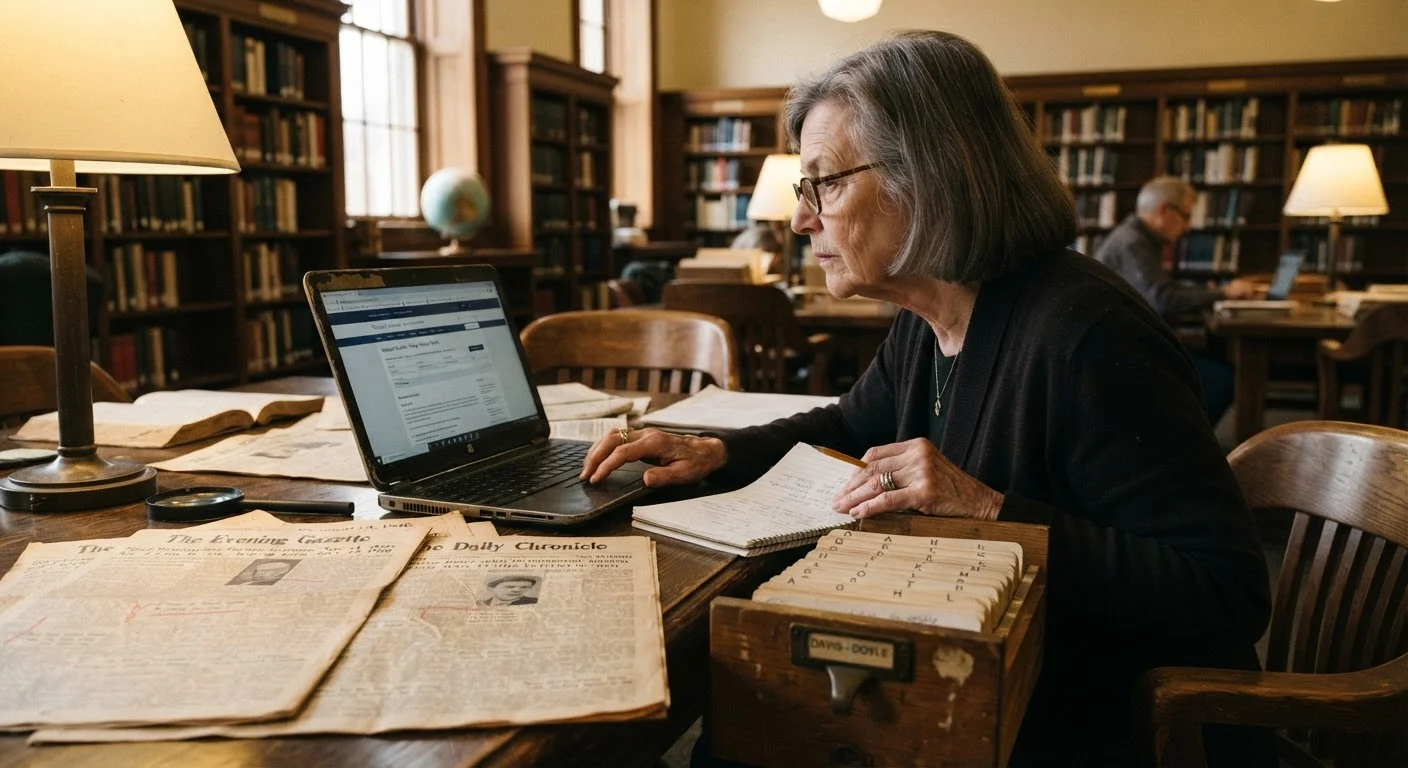
Photo: searchopenrecords editorial
—— In This Article
Key Takeaways
- No single source holds every obituary — successful searches layer multiple resource types.
- Newspaper archives, both digital and physical, remain the most consistently detailed obituary source.
- Funeral homes and cemetery offices often hold records that never appeared in print.
- Public libraries provide free access to subscription newspaper databases most people can't afford alone.
- Cross-referencing death certificates with obituaries helps verify dates, names, and relationships.
Why Obituary Searches Require Multiple Sources
Obituaries were never collected in one centralized place. They were published by newspapers, filed by funeral homes, recorded in church registers, and sometimes only preserved in the memory of a community. That decentralized reality means any search strategy that relies on a single resource will inevitably miss records.
Whether you're grieving and need confirmation of a loved one's passing, tracing a family tree, or verifying a public record, the most reliable approach is layered. Each source type — newspapers, funeral homes, libraries, and online databases — covers a different slice of history and geography. Understanding what each holds, and what it doesn't, saves significant time and frustration.
For researchers using obituaries as a window into family history, our genealogy-focused starting guide offers complementary context on reading these records critically once you find them.
When searching historical newspaper archives, try searching the surname alone combined with the city name rather than a full name — many older obituaries used initials or common nicknames that won't match a full-name search.
Digitized newspaper text is often produced by optical character recognition (OCR), which introduces errors in unusual names. Broader searches catch records that a precise name query would miss.
Contact the county clerk's office in the county where the person died — many counties maintain indexes of death notices from local papers as part of their historical records programs, separate from vital statistics.
County clerk offices are frequently overlooked in favor of state-level archives, but their local collections can bridge gaps between newspaper archives and official death certificates.
Newspaper Archives: The Richest Starting Point
For most of the 20th century, newspapers were the primary publisher of obituaries. Local papers printed notices submitted by families or written by staff, often including birth dates, surviving relatives, military service, occupation, and funeral details — biographical detail that appears nowhere else in the public record.
Digital archives have made pre-1990s newspapers far more searchable than ever before. Platforms maintained by university libraries and state historical societies frequently offer free or library-card-gated access to digitized back issues. The Library of Congress's Chronicling America project, for example, covers hundreds of US newspapers from 1770 through 1963 at no cost.
For more recent obituaries, most major newspapers maintain searchable online archives on their own websites, though access policies vary. Some charge per article; others provide free archives going back several years. When a paywall blocks access, the same content is often available free through your local public library's digital subscriptions.
When searching, try name variations — nicknames, maiden names, and middle names all appeared in historical notices. Searching the approximate death year plus a one- to two-year buffer accounts for delayed notices and anniversary tributes.
Funeral Homes and Cemetery Records
Funeral homes are often overlooked as a research source, but they maintain detailed internal records for every service they arrange. These records typically include the full legal name, date and place of death, next of kin, and sometimes biographical notes used to prepare the service. Many funeral homes post obituaries directly to their websites, where they may remain accessible for years.
Calling or emailing a funeral home directly — particularly one in the town where the person died — is a legitimate and often productive approach, especially for deaths before widespread internet archiving. Staff are generally willing to confirm basic details even if they cannot share full records.
Cemetery offices hold complementary information. Interment records note exact burial dates, plot locations, and sometimes a next-of-kin contact from the time of burial. Some cemeteries have digitized portions of their records; others require an in-person or written request. Findagrave.com, a volunteer-run database, has crowdsourced burial information for millions of US graves and can help you identify which cemetery to contact.
Public Libraries, State Archives, and Historical Societies
Public libraries sit at the intersection of free access and rich archival holdings. Most library systems subscribe to newspaper database services — such as Newspapers.com or ProQuest Historical Newspapers — that would cost hundreds of dollars annually for an individual. Your library card unlocks these resources at no charge, either in-branch or remotely.
Beyond digital subscriptions, many libraries maintain physical clipping files — folders organized by surname containing obituaries cut from local papers over decades. These clipping files, often held in a library's local history or genealogy room, are invisible to any search engine and represent a genuine hidden resource.
State archives and historical societies hold church records, county death registers, and newspaper collections that complement what libraries offer. They can be especially valuable for research predating 1900, when newspaper coverage was inconsistent and funeral home records sparse. Our in-depth look at public archives and libraries as obituary research hubs covers how to navigate these institutions step by step.
Online Databases and Free Public Resources
Several free, publicly accessible databases aggregate obituary and death record information from multiple source types. The Social Security Death Index (SSDI), maintained as a public record, lists deaths reported to the Social Security Administration since the 1930s and includes name, birth date, death date, and last known ZIP code — a reliable confirmation tool even when it doesn't link directly to an obituary.
Genealogy platforms like FamilySearch.org, operated by The Church of Jesus Christ of Latter-day Saints, provide free access to death indexes, vital records transcriptions, and some digitized newspaper collections. These are particularly strong for historical research.
For a curated overview of no-cost resources available today, our guide to reliable free obituary sources walks through each platform's strengths and limitations without requiring any paid subscription.
State vital records offices can confirm deaths through official death certificate requests, which provide legal verification of dates and locations — useful when an obituary alone isn't sufficient for legal or administrative purposes.
Combining Sources for a Complete Picture
The most successful obituary searches treat each source as one piece of a larger puzzle. Start with the most accessible resource — an online newspaper archive or a funeral home website — then use what you find to guide the next step. A death date from the SSDI points you to the right newspaper issue. A funeral home name from an online notice tells you which records office to call.
Cross-referencing matters for accuracy too. Obituaries written by families occasionally contain errors in dates or spellings, while death certificates reflect the information provided at the time of filing. When details conflict, holding both documents alongside each other clarifies which is likely correct.
For researchers ready to refine their approach beyond the basics, our article on proven obituary research habits distills techniques used by experienced genealogists. And once you've located records, the reading obituaries hub offers guidance on extracting and interpreting everything a notice contains.
Patience and systematic note-taking transform what can feel like an overwhelming search into a manageable, rewarding process — one that often surfaces not just a date, but a fuller sense of the person you're looking for.

Obituary Search Editorial Team
Obituary Search Editorial Team is the collective byline for our editorial team and contributor network. Articles published under this byline or an editorial pen name are researched, written, and reviewed according to our editorial standards for clarity, consistency, and independence before publication.
View author profile