
Reliable Free Sources for Finding Obituaries Without a Subscription
A curated overview of trustworthy, no-cost resources — from library portals to funeral home archives — for locating obituary records.
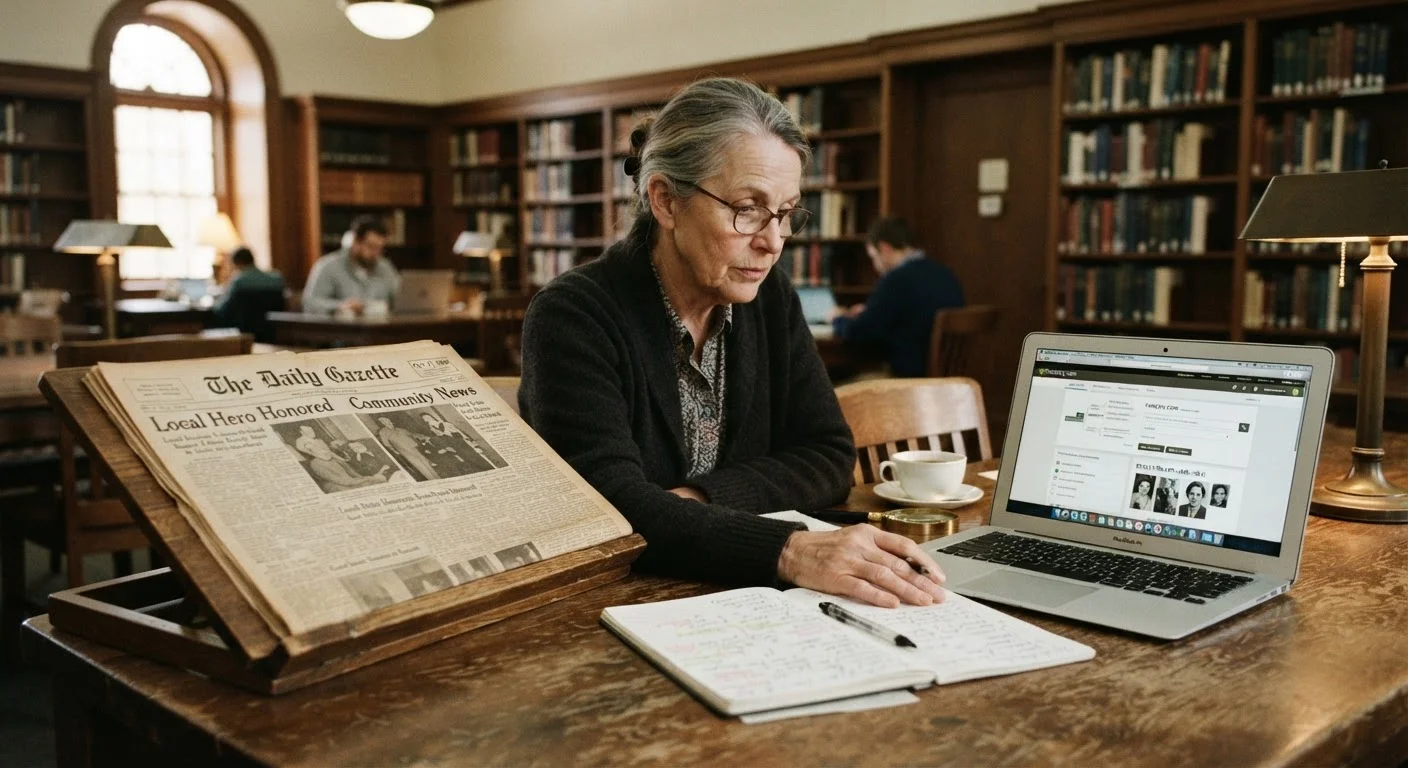
Photo: searchopenrecords editorial
—— In This Article
Key Takeaways
- Public libraries offer free access to historical newspaper archives that include millions of obituaries.
- Funeral home websites frequently publish recent obituaries at no cost and without registration.
- State vital records offices and the Social Security Death Index are legitimate no-cost starting points.
- Cemetery databases and genealogical societies hold records that can supplement or replace missing obituaries.
- Combining multiple free sources increases the likelihood of finding what you need.
Why Free Sources Are Often Enough
When someone we love passes — or when we're tracing a family line across generations — the instinct is often to reach for a paid database and assume it holds the fullest picture. In reality, the most authoritative obituary records in the United States were published in local newspapers, recorded by funeral homes, and preserved by public institutions that remain freely accessible today. The challenge isn't availability; it's knowing which doors to knock on.
This guide walks through the most dependable no-cost sources for locating obituaries, whether you're searching for someone who died last month or a century ago. For a broader strategic overview, see the complete roadmap to locating obituaries online and off — it complements the specific resources listed here.
Your Public Library's Digital Newspaper Archive
Most US public library systems provide cardholders with free access to newspaper archive platforms such as ProQuest Historical Newspapers, Newspapers.com (library edition), or GenealogyBank through library partnerships. These platforms aggregate millions of digitized newspaper pages, and obituaries — often the richest biographical records available — appear throughout them.
Log in with your library card number at your library's website, navigate to the databases or research tools section, and search by name, date range, and state. If your own library's collection is thin, many state libraries offer statewide digital access to any resident, sometimes without even requiring a visit.
Your library card may already unlock millions of digitized obituaries at no extra cost.
Funeral Home Websites
Funeral homes routinely publish obituaries on their own websites as a service to grieving families, and most of these listings are completely free to read without creating an account. Because families submit the text directly, these obituaries tend to be detailed and personally written.
If you know approximately where the deceased lived or died, search for funeral homes in that city or county and browse their obituary or memorial pages. Many homes archive listings going back a decade or more. A general web search combining the person's name with the city and "funeral home" or "obituary" often surfaces these pages quickly.
Funeral home listings are family-authored, free to read, and often the most personally detailed records available.
The Social Security Death Index (SSDI)
The Social Security Death Index is a federally compiled record of deaths reported to the Social Security Administration, covering millions of Americans who died from the 1930s onward. It does not include an obituary text, but it provides confirmed death dates, last known ZIP codes, and Social Security numbers — details that anchor further research and verify identity.
The SSDI is searchable for free through several genealogical platforms including FamilySearch.org, which does not require a subscription. It is particularly useful for narrowing down a timeframe or location before hunting for the corresponding newspaper obituary.
The SSDI confirms key facts about a death and helps pinpoint when and where to search for a full obituary.
FamilySearch.org
Operated by The Church of Jesus Christ of Latter-day Saints, FamilySearch is a nonprofit genealogical database offering free access to an enormous collection of historical records — including indexed obituaries, death certificates, and cemetery records from across the United States. No subscription is required; a free account is all that is needed.
Beyond its own indexed records, FamilySearch links to partner collections and digitized microfilm from county courthouses, historical societies, and churches. For researchers tracing family history through obituaries, it is one of the most comprehensive free tools available. It connects naturally with the broader use of obituary records in family history research.
FamilySearch provides free access to millions of historical obituaries and death records from a trusted nonprofit source.
State and County Vital Records Portals
Every US state maintains a vital records office that issues official death certificates. While certified copies typically carry a fee, many state portals offer a free index search — meaning you can confirm that a death record exists and retrieve basic details like the full name, date, and county of death without paying.
From there, contacting the local county clerk or historical society may yield access to the corresponding newspaper obituary at little or no cost. This route is especially effective for deaths that occurred before widespread internet archiving, roughly pre-2000.
State vital records index searches are often free and can anchor a search for the corresponding newspaper obituary.
Find A Grave and BillionGraves
These two cemetery documentation projects are free to search and contain memorial pages for tens of millions of individuals buried across the United States. Volunteers photograph headstones and attach family-submitted biographical information, which frequently includes obituary text or links to published obituaries.
Even when no obituary text is attached, the burial date, location, and family connections listed on these pages can direct you to the right newspaper, county, or funeral home. Both platforms accept user-submitted corrections and additions, making the records increasingly complete over time.
Cemetery memorial platforms often link directly to obituaries or supply the location details needed to find one.
Chronicling America and Other Digitized Historical Newspaper Projects
The Library of Congress hosts Chronicling America, a free, publicly funded archive of digitized American newspapers spanning roughly 1770 to 1963. Searching it costs nothing and requires no account. Coverage varies by state and decade, but for deaths in the late nineteenth and early twentieth century, it is among the most authoritative free sources available.
State humanities councils, university libraries, and local historical societies often run parallel digitization projects covering their own regional papers. Checking the digital collections page of a state's historical society or land-grant university library can uncover locally digitized papers that national platforms have missed.
Chronicling America is a fully free Library of Congress resource covering millions of historical newspaper pages, including obituaries.
When Free Sources Fall Short
Even the best free resources have gaps. Small-town papers from the early twentieth century may not be digitized. Funeral homes sometimes remove older listings. The comparison of free versus paid obituary sources can help you decide when it makes sense to go further. And if no obituary surfaces at all, don't stop there — death records and civil documents can fill the gap in ways that are often just as informative.
Combine Sources for Better Results
No single free resource covers everything. Starting with a library newspaper archive, cross-referencing against FamilySearch, and then checking a local funeral home website gives you three independent angles on the same record. When one source is missing a death, another often fills the gap. Keep a simple log of which sources you've checked and what each returned — it prevents duplicate effort and makes it easier to hand off research to a family member.
Libraries deserve special recognition as research hubs. Their physical collections — microfilm, local history rooms, newspaper clipping files — hold records that have never been digitized. The role of public archives and libraries as obituary research hubs is a subject worth exploring on its own.

Obituary Search Editorial Team
Obituary Search Editorial Team is the collective byline for our editorial team and contributor network. Articles published under this byline or an editorial pen name are researched, written, and reviewed according to our editorial standards for clarity, consistency, and independence before publication.
View author profile