
Public Archives and Libraries as Obituary Research Hubs
Discover how public libraries, state archives, and historical societies hold obituary records that aren't available anywhere online.
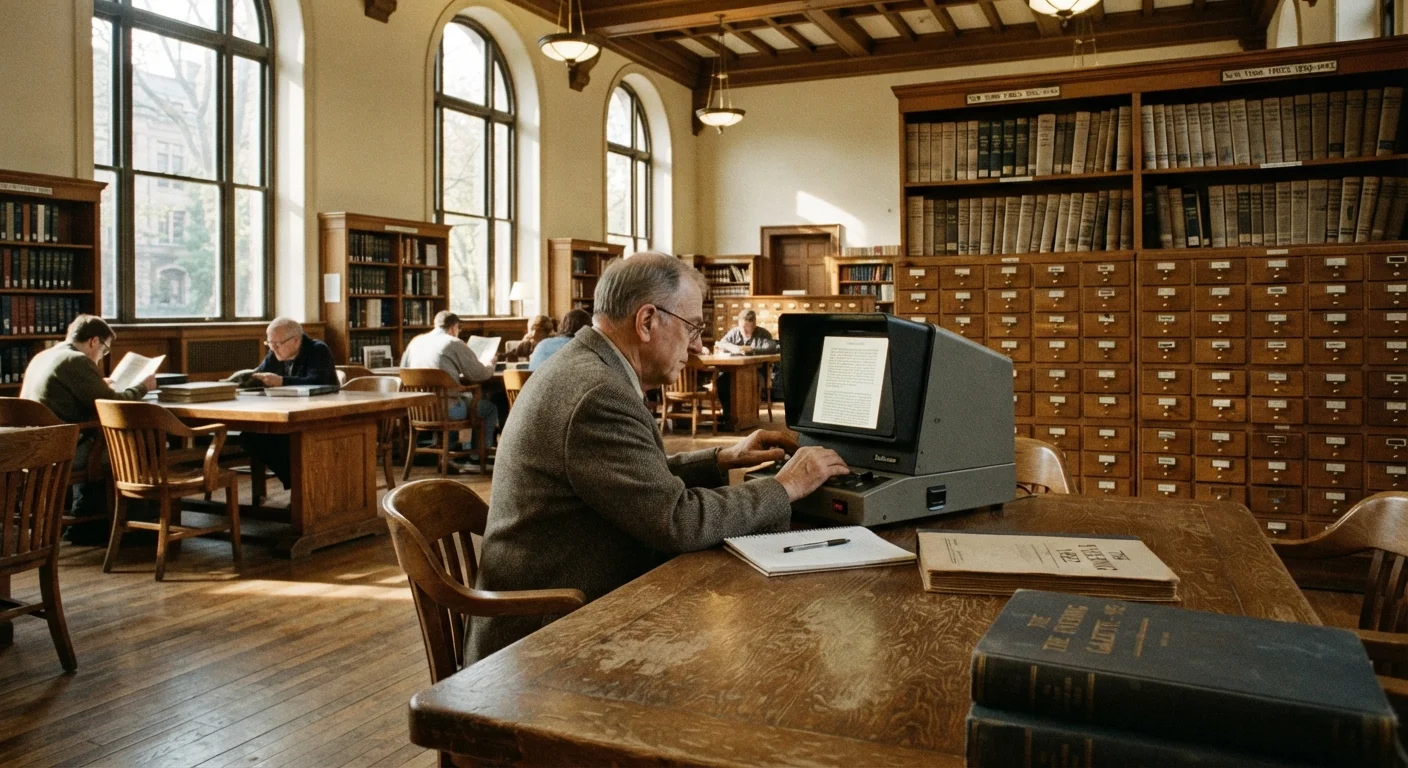
Photo: searchopenrecords editorial
—— In This Article
Key Takeaways
- Many obituaries — especially older ones — exist only in physical library and archive collections, not online.
- Public libraries often provide free access to digitized newspaper databases unavailable through general internet searches.
- State archives and historical societies hold death notices, local histories, and vertical files alongside official vital records.
- Librarians and archivists are trained research partners who can guide you to holdings you wouldn't find independently.
- A written request to a remote archive can sometimes retrieve an obituary without requiring an in-person visit.
Why Physical Repositories Still Matter
The impulse to begin every search online is understandable, but it leads many researchers to a frustrating dead end. Commercial genealogy platforms and free search engines index only a fraction of the historical record. For obituaries published before the 1990s — and especially those from small regional newspapers — the paper itself, sitting on a library shelf or wound onto a microfilm reel, may be the only copy that survives.
Public libraries, state archives, and historical societies collectively hold millions of pages of newspapers, local histories, church bulletins, and family files that were compiled over generations by dedicated librarians and volunteers. These holdings represent an irreplaceable layer of the public record. As you map out your research strategy, understanding what each type of institution offers — and how to access it — can save significant time and frustration.
For a broader look at how physical and digital sources compare, see our comparison of newspaper archives and genealogy databases.
Public Libraries: Your First and Most Accessible Stop
Public libraries are often underestimated as research tools. Beyond their physical newspaper collections, many branch libraries subscribe to digitized archive services — ProQuest Historical Newspapers, GenealogyBank, and Newspapers.com Library Edition among them — that patrons can access free with a library card, including remotely from home.
The real depth, however, lies in the physical stacks. Larger central library systems maintain:
- Microfilm collections of local and regional newspapers, sometimes spanning more than a century
- Vertical files — folders of clipped obituaries, death notices, and biographical notices organized by surname or subject
- Local history rooms staffed by librarians who specialize in regional genealogy and know the collection intimately
Librarians in these departments are trained research partners, not just catalog administrators. Describing your research question clearly — including the person's full name, approximate dates, and geographic area — helps them point you toward holdings that aren't indexed anywhere online.
Contact Before You Travel
Before making an in-person visit to any archive or historical society, call or email ahead to confirm that the specific collection you need is accessible, not under conservation, and that the reading room is open to the public. Many institutions operate on limited hours or require appointments. A brief inquiry can save you an unnecessary trip and help staff prepare materials in advance.
For additional no-cost strategies, our guide on reliable free sources for finding obituaries covers complementary approaches beyond the library.
State Archives and Historical Societies
State archives function as the official custodians of government records. While their primary holdings are vital records — death certificates, birth registrations, marriage licenses — many also maintain newspaper indexes, mortality schedules from historic censuses, and registers compiled before standardized death certificates were required. These pre-registration records sometimes contain death notices or burial information that functions much like an obituary.
Historical societies fill a different but equally important niche. County and regional societies routinely hold donated family papers, church records, cemetery transcriptions, and decades of clipped newspaper obituaries organized into surname files. Some have developed their own finding aids — printed or online indexes — that tell you exactly which issue of which newspaper carried a specific death notice.
If your research spans multiple states or covers the period before modern records, see our article on when to search national versus state archives to choose the right starting point.
~7,600
Public library systems operating across the US
According to the American Library Association, the United States has approximately 17,000 public library outlets, served by roughly 7,600 library systems — each a potential access point for local historical records.
56
State and territorial archives in the US
Each US state and territory maintains at least one official archive responsible for preserving government records, many of which include historical vital records and newspaper-related indexes.
Thousands
Local and county historical societies nationwide
The Federation of Genealogical Societies estimates there are thousands of genealogical and historical societies across the country, many maintaining unique clipping files and surname indexes not duplicated elsewhere.
These repositories pair naturally with other public records. Death certificates, probate files, and census schedules each add context to what an obituary suggests. Our overview of public records that complement obituary research explains how to use them together.
Accessing Older and More Obscure Records
Obituaries from the nineteenth and early twentieth centuries require a different approach than a standard database search. Newspapers from this period are often available only on microfilm, and many were published in languages other than English — particularly in communities with strong German, Scandinavian, Polish, or Italian immigrant populations. Ethnic church archives and fraternal organization records sometimes carried death notices that mainstream newspapers never published.
Finding these records typically involves:
- Identifying which newspapers served the community where the person lived
- Locating which library or historical society holds those issues
- Contacting the institution to confirm holdings and arrange access or a copy request
Our dedicated guide on searching historical obituaries from the 1800s to mid-20th century walks through these strategies in detail. Similarly, record repositories beyond standard genealogy databases highlights lesser-known institutional sources worth contacting.
Once you locate an obituary, knowing how to read it carefully matters just as much as finding it. Our guide to reading obituaries explains how to extract family relationships, dates, and geographic clues that point toward the next record to search.
Frequently Asked Questions

Obituary Search Editorial Team
Obituary Search Editorial Team is the collective byline for our editorial team and contributor network. Articles published under this byline or an editorial pen name are researched, written, and reviewed according to our editorial standards for clarity, consistency, and independence before publication.
View author profile