
When No Obituary Exists: Alternative Paths for Tracing a Deceased Relative
Not every death was marked by a published obituary. Explore the public records and archives that can fill the gap when standard obituary searches come up empty.
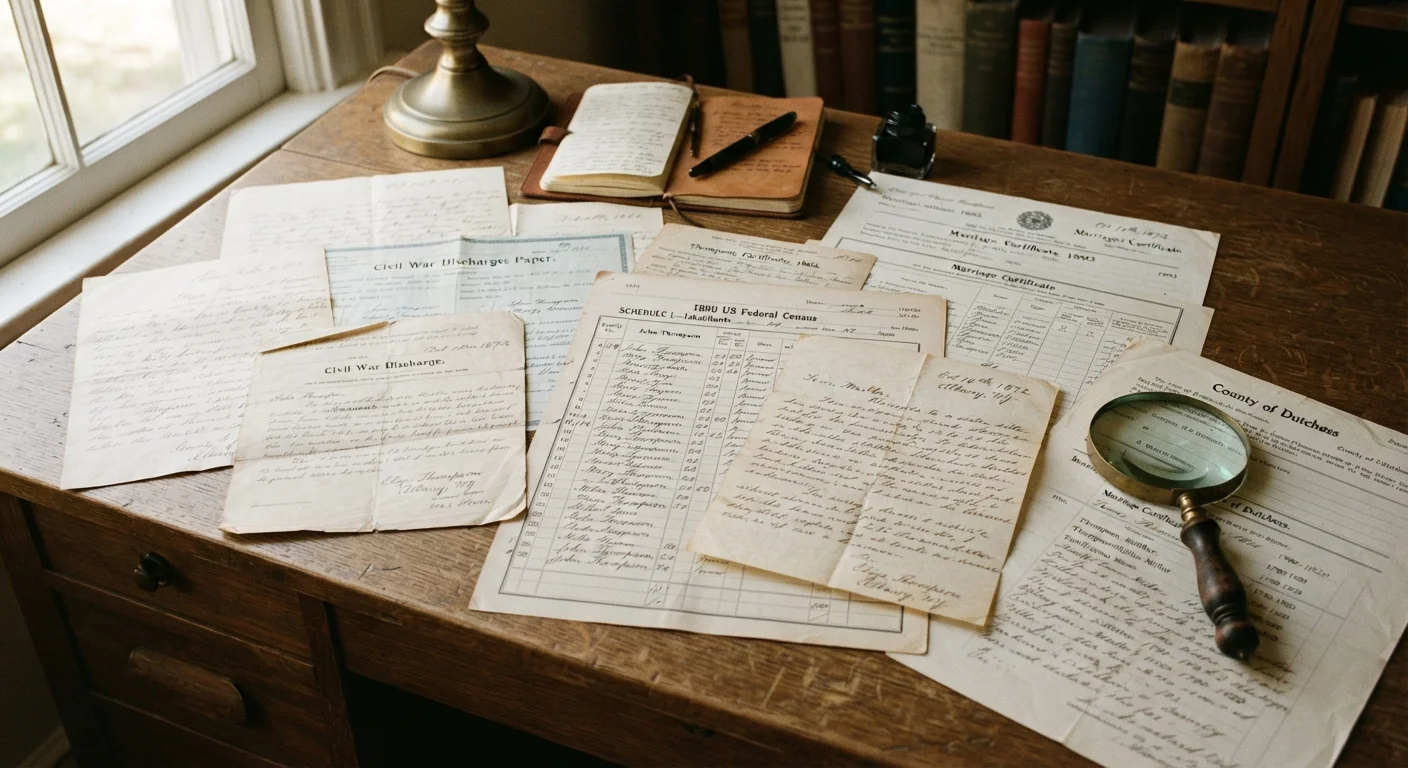
Photo: searchopenrecords editorial
—— In This Article
Key Takeaways
- Published obituaries were never universal — many deaths, especially before 1950, went unannounced in newspapers.
- Death certificates, census records, probate files, and cemetery registers can substitute for a missing obituary.
- Vital records held by county or state offices are often the most reliable starting point for confirming a death.
- Military service records and Social Security Death Index entries frequently surface individuals with no published obituary.
- Cross-referencing multiple record types builds a fuller picture than any single source alone.
Why Obituaries Are Often Absent
It's easy to assume that everyone who has died left behind a published obituary — but that assumption can quietly derail a family history search. Obituaries are not legal documents. They are notices, typically submitted voluntarily by a family to a local newspaper or funeral home, and their publication has always depended on cost, geography, cultural practice, and family circumstances.
For much of the nineteenth and early twentieth centuries, only deaths of prominent community members reliably made the papers. Rural families, immigrants navigating a new country, individuals who died in poverty or without surviving relatives, and those lost to epidemics or war often left no newspaper notice at all. Even in more recent decades, families sometimes chose private services with no public announcement.
Understanding this gap is the first step toward working around it. If your search on general obituary databases returns nothing, that silence is informative — but it is not the end of the road.
What You Need Before You Start
Before diving into alternative records, gather everything you already know about the person. Even partial information dramatically narrows the search space and prevents you from confusing your relative with someone of the same name.
What you will need
Once you have these basics assembled, you are ready to move systematically through the record types most likely to confirm the death and fill in surrounding context.
Step-by-Step: Tracing a Deceased Relative Without an Obituary
The following steps move from the most legally authoritative records toward supplementary sources. Work through them in order where possible, but be prepared to loop back — a detail uncovered in step four may unlock a record you could not find in step two.
Request the Death Certificate
A state-issued death certificate is the single most authoritative confirmation of a death. It typically records the date, place, and cause of death; the deceased's age and birthplace; the informant's name; and the place of burial or disposition. In the United States, death certificates are filed with the vital records office of the state where the death occurred.
For deaths before a state began mandatory registration (most states had full registration by the 1930s, some earlier), you may need to check county-level records instead. The NCHS maintains a directory of where to obtain vital records for each state, and many state archives have digitized older death registers.
Search the Social Security Death Index
The Social Security Death Index (SSDI) is a publicly available database compiled from Social Security Administration records of deceased beneficiaries. It typically includes the person's name, birth date, death date, last known zip code, and the state where the Social Security number was issued. The SSDI is searchable through several genealogy platforms and covers deaths primarily from the 1960s onward, though some earlier records exist.
Keep in mind that the SSDI only includes individuals who had a Social Security number and whose death was reported to the SSA — it is not a comprehensive national death registry.
Check Federal Census Records
Census records do not record deaths, but they establish that a person was alive at a given point in time and place. By comparing successive census years, you can narrow the window in which a death likely occurred. If someone appears in the 1920 census but not in 1930, and a spouse is listed as widowed, that narrows the search significantly.
US federal census records are held by the National Archives and Records Administration (NARA). Census records from 1950 and earlier are publicly accessible; more recent records remain restricted under privacy law.
Consult Probate and Court Records
When a person died owning property, a probate case was typically opened in the county where they resided. Probate files can be extraordinarily detailed, naming heirs, listing assets, and sometimes including letters or affidavits that describe family relationships. They also establish an approximate date of death with legal precision.
Probate records are held by county courts — often the surrogate's court, probate court, or circuit court depending on the state. Many older probate records have been microfilmed and are accessible through state archives or genealogy libraries.
Search Military Service and Pension Records
If the deceased served in the US military, service and pension records held by NARA can be invaluable. Pension application files in particular are rich with personal detail — they often include statements about the veteran's health, marriage, children, and place of residence near the end of life. Records from the Civil War era through World War II are especially well-preserved and widely digitized.
Burial records from the National Cemetery Administration document veterans interred in national cemeteries and are freely searchable online through the Nationwide Gravesite Locator.
Check Cemetery and Funeral Home Records
Cemetery records — sexton's logs, burial registers, and lot-ownership files — often predate formal death registration and can confirm a death, approximate date, and occasionally cause. Many rural and church cemeteries have been indexed by local genealogical societies and transcribed to online databases.
Funeral home records, where the business still operates or has donated its archives to a historical society, can include the full death notice, the names of those who arranged the service, and sometimes a copy of the death certificate. Contact the county historical society or state archives to ask whether local funeral home records have been preserved.
For guidance on extracting the maximum genealogical value from any document you do locate — including the indirect information buried in census entries and probate files — see our practical field guide to reading records for genealogy.
When the Trail Goes Cold
Even with a thorough multi-source search, some individuals remain difficult to trace. Common reasons include name changes (particularly among immigrants or women who remarried), clerical errors in original records, and records destroyed in courthouse fires or floods. County courthouses in the American South, for example, lost significant records during and after the Civil War.
If you reach an impasse, consider contacting the county historical or genealogical society where the person is believed to have lived. These volunteer-run organizations often maintain local indexes not available online. Church membership rolls, school district records, and local cemetery associations are similarly underused and can surface individuals absent from every digitized database.
Document Every Dead End
Genealogical standards recommend recording not just what you found, but where you looked and found nothing. A note that reads 'Searched [county] death registers 1910–1925, no entry found' is a legitimate research finding. It prevents future duplication and signals to other researchers — including your future self — where the gap in the record actually lies.
If an obituary still eludes you but you have found corroborating records, consider that the absence itself is now documented. Recording what you searched, when, and what you found is sound genealogical practice — it prevents duplicated effort and honestly represents the limits of the historical record. For a broader framework on what to do when an obituary simply does not exist, our related guide on alternative records that fill the gap covers additional document types in depth.

Obituary Search Editorial Team
Obituary Search Editorial Team is the collective byline for our editorial team and contributor network. Articles published under this byline or an editorial pen name are researched, written, and reviewed according to our editorial standards for clarity, consistency, and independence before publication.
View author profile