
Common Misconceptions About What Obituaries Are Required to Include
Many readers assume obituaries are official records with verified facts. They're not — and understanding the distinction matters for research.
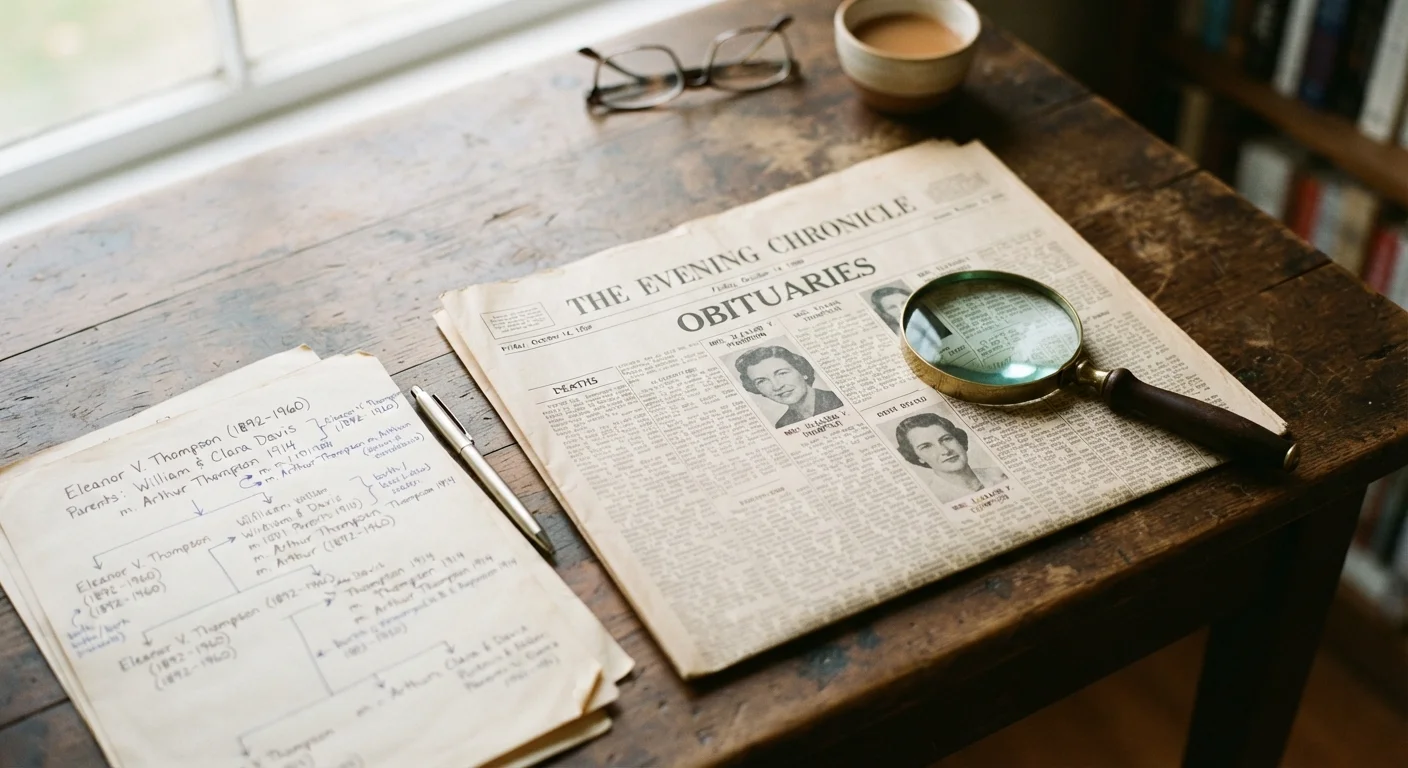
Photo: searchopenrecords editorial
—— In This Article
Key Takeaways
- Obituaries are not official government records and contain no legally verified information.
- No law requires families to publish an obituary at all, let alone include specific details.
- Errors in obituaries are common, often introduced by grieving families under deadline pressure.
- Death certificates — not obituaries — are the authoritative legal record of a person's death.
- Genealogists should treat obituaries as leads, then verify details through primary source documents.
Why the Obituary-as-Official-Record Myth Persists
When we encounter information in print — whether in a newspaper, on an archival website, or in a genealogy database — there's a natural tendency to trust it. Obituaries occupy an unusual space: they feel official because they mark a significant legal event (death), yet they are produced entirely outside any government process. This tension is at the root of some of the most persistent misconceptions researchers carry into obituary searches.
Understanding what obituaries are — voluntary family tributes, not certified public records — changes how you evaluate and use them. They remain genuinely valuable sources for family history research, but their value lies in the leads they provide, not in the authority they carry. The Obituaries & Family History hub offers a broad foundation for using these records wisely.
Myth
Obituaries must include the person's exact date of birth and death by law.
Fact
There is no legal requirement in the United States mandating what an obituary must contain — or even that one be published at all.
Many people assume obituaries function like official forms with required fields. In reality, an obituary is a voluntary piece of writing — usually composed by a family member or funeral home — and submitted to a newspaper or online platform as the family sees fit. Some include precise birth dates; others list only a year, a decade, or no birth information at all. The decision rests entirely with whoever writes and submits the notice. For a fuller picture of what these documents actually are, see our guide to obituary records.
Myth
Every death is recorded in a published obituary that can be found online.
Fact
A large proportion of deaths never result in a published obituary, and many that were published have not been digitized or indexed online.
Publishing an obituary costs money when placed in a print newspaper, and not every family chooses — or is able — to do so. Deaths among people without close family, those in financial hardship, or those where families prefer privacy may never be publicly memorialized in this form. Even when obituaries were published in regional or community papers, digitization of archives remains incomplete. Researchers should supplement obituary searches with death certificates, Social Security Death Index entries, and cemetery records. Our article on what obituaries can and cannot tell you examines these gaps in depth.
Myth
The facts in an obituary have been verified by the newspaper or the funeral home.
Fact
Neither newspapers nor funeral homes typically fact-check obituary content; they publish what the family submits.
This misconception leads many researchers to treat obituary details as confirmed truth. In practice, newspapers function as publishers of submitted text, and funeral homes act as intermediaries. Dates, spellings of names, survivor lists, and biographical details all originate with the family — and families writing under grief and time pressure make mistakes. Misspelled maiden names, transposed birth years, and omitted or incorrectly named survivors are well-documented patterns. The reasons obituaries get facts wrong range from simple memory errors to deliberate omissions.
Myth
An obituary is the same as a death notice.
Fact
Death notices and obituaries are distinct formats with different purposes, lengths, and typical content.
A death notice is a brief, standardized announcement — often just a few lines — confirming that a person has died and providing basic details such as the name, date, and funeral arrangements. An obituary is a longer narrative tribute that may include biographical history, family relationships, career highlights, and personal remembrances. Both appear in newspapers and online memorial platforms, and both are submitted by families or funeral homes, but conflating the two can cause researchers to misunderstand what information they should expect to find. See our explainer on the difference between a death notice and a full obituary for a detailed breakdown.
Myth
If an obituary lists surviving relatives, that list is complete and accurate.
Fact
Survivor lists reflect what the family chose — or remembered — to include at the time of writing, and may be incomplete or contain errors.
Families sometimes omit estranged relatives, stepchildren, or half-siblings — whether intentionally or simply because the relationship was not top of mind during a difficult moment. In other cases, names are misspelled or relationships are labeled incorrectly (e.g., a grandchild listed as a niece). For genealogical research, survivor lists are best treated as clues pointing toward living relatives rather than as a definitive family tree. Cross-referencing with census records, marriage indexes, and vital records will produce a more accurate picture. Our resource on what obituaries record and leave out explores these limitations further.
What Researchers Should Do Instead
None of this means obituaries should be dismissed. On the contrary, a well-written obituary can compress decades of biographical detail into a single document — names, places, occupations, religious affiliations, and family connections that would otherwise take hours to reconstruct from scattered records. The key is knowing how to use them.
Obituaries Are Not Official Records
Obituaries are composed by families or funeral homes and published voluntarily — they carry no legal authority. For verified facts such as exact date of death, cause of death, or legal name, researchers must consult the official death certificate or other primary records. Relying solely on obituary content for genealogical or legal purposes can lead to significant errors.
Treat every obituary detail as a research hypothesis. A birth year mentioned in an obituary gives you a target range to search in census records. A hometown mentioned in passing becomes a location to check for land deeds or church records. A survivor's name suggests a marriage record to locate. Approached this way, even an obituary full of minor inaccuracies becomes a productive starting point.
For searches that keep hitting dead ends, our article on obituary search myths that derail researchers addresses the assumptions that most often cause researchers to look in the wrong places. And if you want to understand how historical context shapes what you find — or don't find — common myths about obituaries as historical sources is worth reading alongside this piece.
Cross-Check Before You Conclude
When an obituary provides a birth year, maiden name, or place of origin, treat that detail as a starting point — not a confirmed fact. Obituaries written in grief, often under a 24- to 48-hour deadline, are among the record types most prone to well-intentioned inaccuracies. Always corroborate key details using census records, vital records, or other primary sources before drawing conclusions in your research.
The Finding Obituaries hub can help you locate records across newspapers, digital archives, and public databases — with realistic guidance on what each source type is likely to contain.

Obituary Search Editorial Team
Obituary Search Editorial Team is the collective byline for our editorial team and contributor network. Articles published under this byline or an editorial pen name are researched, written, and reviewed according to our editorial standards for clarity, consistency, and independence before publication.
View author profile