
Historical Obituaries vs. Modern Ones: How the Format Has Changed Over Time
19th-century death notices look nothing like today's tributes. Explore how obituary conventions evolved and what that means for researchers.
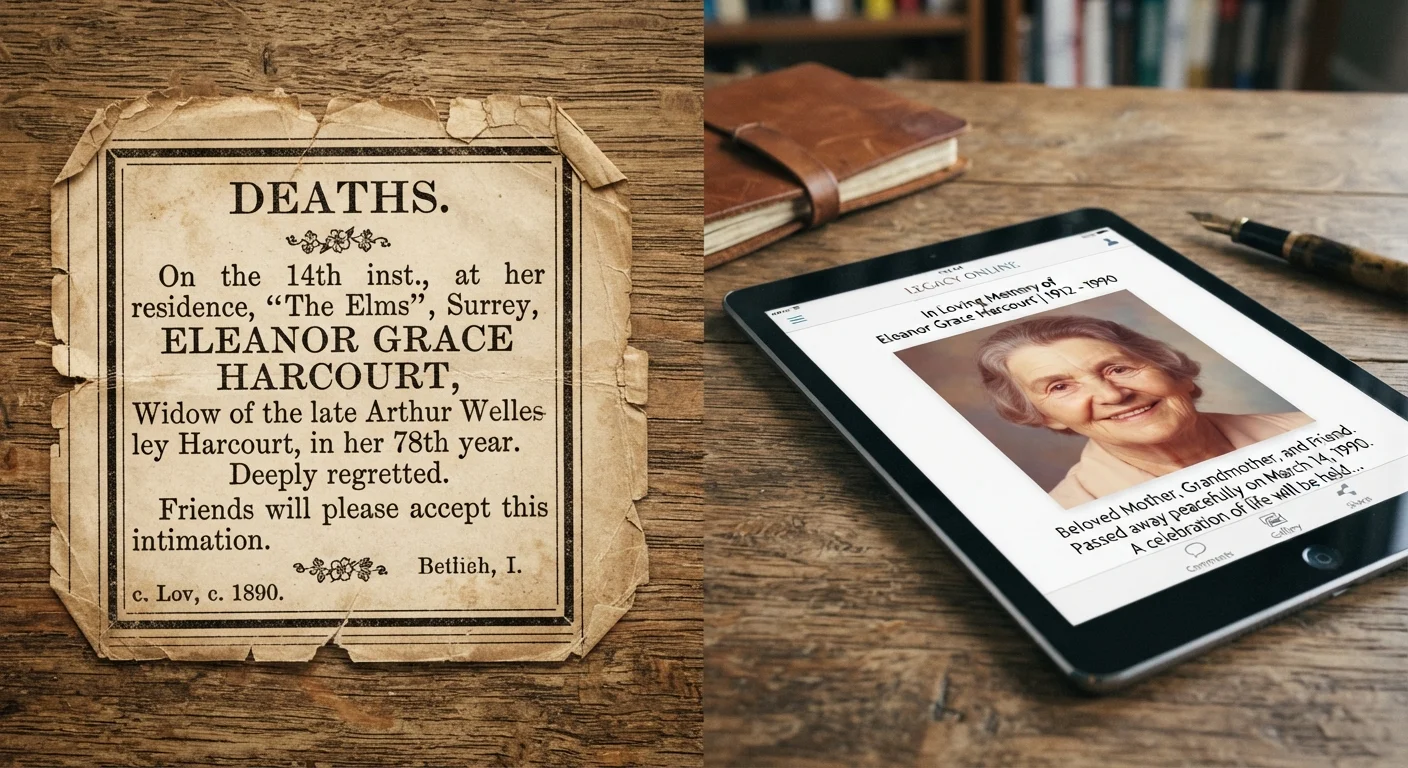
Photo: searchopenrecords editorial
—— In This Article
Key Takeaways
- Historical obituaries prioritized factual brevity; modern ones emphasize personal narrative and celebration of life.
- Pre-1950 death notices often omitted women's first names, listing them only as wives or mothers.
- Modern obituaries frequently name survivors, hobbies, and career achievements not found in older formats.
- Language conventions shifted from formal, third-person announcements to warm, first-person-style tributes.
- Both formats carry genealogical value, but researchers must adjust their expectations and search strategies accordingly.
What Historical Obituaries Looked Like
Pick up a microfilmed newspaper from the 1880s and the death notices look almost unrecognizable today. They were compact — sometimes a single dense paragraph, occasionally just two sentences — and written in a register that reads more like a legal announcement than a personal tribute. Space in print newspapers was expensive, and brevity was a practical necessity.
The typical 19th-century obituary recorded: the full name of the deceased (usually male), the date and sometimes cause of death, the names of surviving children (sons by name, daughters often by husband's surname), the church affiliation, and the funeral arrangements. Women were routinely listed as "wife of" or "mother of" rather than by their own given names — a convention that creates real challenges for genealogists trying to reconstruct female lineages.
Language was formal and distancing. Phrases like "departed this life," "called to his eternal rest," or "leaves to mourn his loss" were standard. Emotion was implied through religious framing rather than personal anecdote. For researchers, this means reading historical obituaries requires understanding their social conventions, not just their content. You can explore how those conventions evolved over the decades in our guide to obituaries across generations.
| Criterion | Historical Obituaries (Pre-1950) | Modern Obituaries (Post-1980) |
|---|---|---|
| Typical length | 1–3 short paragraphs | 300–600+ words |
| Tone | Formal, third-person, religious | Warm, narrative, personal |
| Cause of death | Often stated plainly | Frequently omitted or softened |
| Women named individually | Rarely — listed by husband's name | Standard practice |
| Survivors listed | Immediate family only | Extended family, friends included |
| Personal details (hobbies, career) | Rarely included | Commonly featured |
| Primary publication | Local newspaper | Newspaper and/or funeral home site |
| Genealogical strengths | Dates, lineage, church, community | Biography, extended kin, maiden names |
How Modern Obituaries Transformed the Form
By the late 20th century, the obituary had become something quite different: a biography, a eulogy, and a community announcement rolled into one. The shift was gradual, accelerating through the 1970s and 1980s as funeral homes began offering obituary-writing assistance and as social norms around grief became more expressive.
A contemporary obituary routinely runs several hundred words. It typically opens with the deceased's full name, age, and date of death, then moves into a narrative of their life — where they grew up, their education, career, marriage, children, grandchildren, hobbies, and defining character traits. Cause of death is now commonly omitted or softened. Survivors are named extensively, including siblings, in-laws, and close friends.
This richness is genuinely useful for researchers. A single modern obituary might confirm three generations of family connections, identify a hometown, or reveal a maiden name that unlocks a whole new branch of records. But the narrative form also introduces new imperfections — details shaped by grieving families, omissions born of estrangement, and occasional factual errors. Understanding what any obituary includes and what it leaves out is critical, and our piece on what an obituary actually records addresses this directly.
What This Means for Genealogical Research
When you're moving across time in your family research, the shift in obituary conventions is something to build into your strategy. Searching for an ancestor who died in 1910 requires different skills and different sources than researching someone who died in 1995. Both eras leave documentary traces, but they demand that you calibrate your expectations.
For pre-1950 records, accepting that information will be sparse and gendered is the starting point. Cross-referencing with census records, church registers, and city directories can fill gaps that a short death notice leaves open. Our resource on searching historical obituaries outlines the specific archives and digitization projects that can help.
For more recent records, the challenge shifts to verification rather than retrieval — modern obituaries are abundant but variable in accuracy. It also helps to understand the source: a newspaper obituary and a funeral home obituary follow different conventions and have different editorial oversight. Our comparison of newspaper versus funeral home obituaries explains those distinctions clearly.
Both formats, read with appropriate context, are invaluable. For a broader grounding in what obituary records contain and why they matter as public documents, see our foundational overview of obituary records explained. Whether you're grieving or researching — or both — understanding the document in front of you makes every search more purposeful.

Obituary Search Editorial Team
Obituary Search Editorial Team is the collective byline for our editorial team and contributor network. Articles published under this byline or an editorial pen name are researched, written, and reviewed according to our editorial standards for clarity, consistency, and independence before publication.
View author profile