
Newspaper Obituaries vs. Funeral Home Obituaries: Understanding the Difference
Not all obituaries are created equal. See how source and format affect the detail, accuracy, and availability of the information inside.
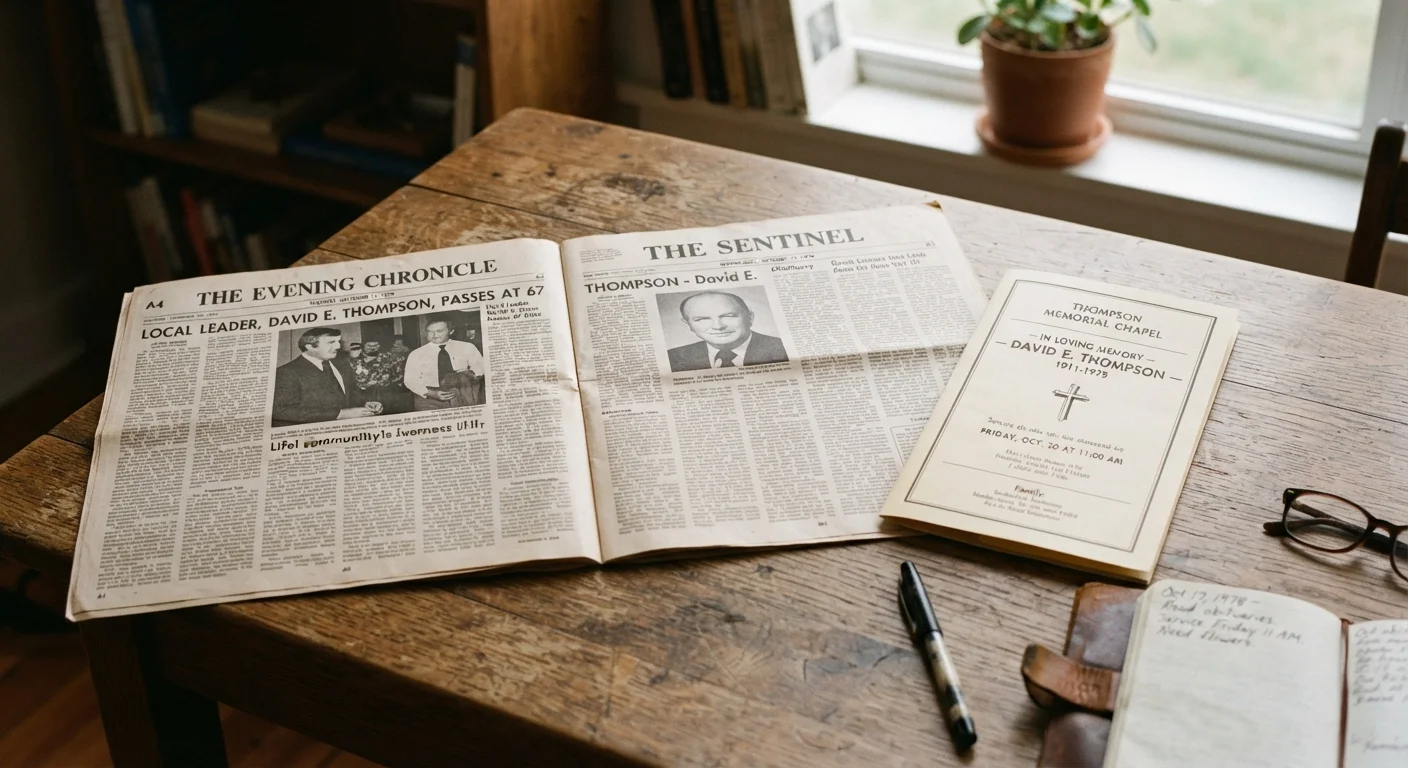
Photo: searchopenrecords editorial
—— In This Article
Key Takeaways
- Newspaper obituaries are edited for space and style, which can omit personal details families consider important.
- Funeral home obituaries are typically written by the family, making them richer in personal narrative but variable in accuracy.
- Newspaper archives offer broader historical reach, while funeral home websites often host recent records not indexed elsewhere.
- Both sources can contain errors and should be cross-referenced with official vital records for genealogical work.
- Understanding each source's origin helps researchers interpret the language and evaluate the reliability of what they find.
Where Each Obituary Originates
The single most important thing to understand about obituaries is that they are not official government documents — they are composed accounts, and who composes them shapes everything about what they contain. Knowing the origin of a given obituary helps you read it more critically and search for it more effectively.
Newspaper obituaries have historically been submitted by families or funeral homes and then reviewed, condensed, and published by a newspaper's editorial staff. Some papers also write their own obituaries for notable community figures. Because column space carries a cost — in print, families often paid per word or per line — newspaper obituaries tend to be concise. Details that didn't fit the format were cut. For historical context on how this has evolved, see how obituary formats have changed over time.
Funeral home obituaries, by contrast, are typically written by or closely with the deceased's family and posted to the funeral home's website — sometimes also distributed to newspapers. Without word-count pressure, these accounts tend to run longer and can include personal anecdotes, full lists of survivors, and service logistics. For a deeper look at what funeral home websites specifically offer researchers, see using funeral home websites to find obituary records.
How Format and Language Differ
Format follows function. Newspaper obituaries traditionally open with the deceased's full name, age, and date of death — a journalistic structure that prioritizes identifiable facts. The language tends to be relatively formal and third-person, even when warmly written. Survivors are often listed in a standardized sequence (spouse, children, grandchildren), and cause of death may or may not be included depending on family wishes and editorial policy.
Funeral home obituaries are far less standardized. Families may choose a narrative structure, a chronological life story, or a poetic tribute — and many blend all three. This freedom produces obituaries that feel more personal and often preserve details — a loved one's humor, their career path, their religious community — that a word-limited newspaper notice would omit. For context on what each type typically records and where both fall short, the article what an obituary actually records and what it leaves out is a useful companion read.
| Criterion | Newspaper Obituaries | Funeral Home Obituaries |
|---|---|---|
| Author | Family/funeral home, edited by newspaper | Family, with funeral home assistance |
| Length & detail | Typically concise; space-limited | Variable; often longer and more personal |
| Editorial review | Yes — newspaper staff may edit | Minimal to none |
| Historical availability | Strong; archives go back centuries | Limited to late 1990s onward |
| Searchability | Well-indexed in many databases | Varies by site; not always indexed |
| Service details | Sometimes included; often brief | Usually comprehensive |
| Cost to publish | Families typically paid per word/line | Often bundled with funeral services |
Neither format is inherently more accurate. Newspaper editors may catch inconsistencies, but they also sometimes introduce new ones. Family-written accounts reflect what the family knew and chose to share — which may differ from vital records in ways that matter to genealogical researchers.
Availability, Archiving, and Searchability
For genealogical research, where you find an obituary matters as much as what it says. Newspaper obituaries — particularly those published before the internet era — exist in physical archives, microfilm collections, and increasingly in digitized newspaper databases. Many public libraries provide free access to newspaper archive platforms, and some historical societies have indexed local obituaries independently.
Funeral home obituaries are almost entirely a digital-age phenomenon. Most funeral homes did not maintain public-facing websites until the late 1990s or early 2000s, so records before that window rarely exist in this format. Today, many funeral home tributes are hosted indefinitely — or at least for several years — on the funeral home's own site, though some are removed after a period. Aggregator sites that compile funeral home content can help bridge gaps, though coverage is uneven. See newspaper archives vs. genealogy databases for obituary research for a fuller picture of where different obituary types tend to live.
For researchers balancing cost against coverage, free vs. paid obituary sources outlines what each access model typically provides.
Obituaries Are Not Official Records
Neither newspaper nor funeral home obituaries carry the legal weight of a death certificate, which is issued by a state vital records office. For genealogical verification — especially for immigration paperwork, estate matters, or formal family history documentation — always seek the official certificate alongside any obituary. Obituaries complement official records; they don't replace them.
Genealogical Value: Strengths and Gaps
Both source types carry genuine research value — and both carry characteristic blind spots. Obituary records explained provides a strong grounding in what these documents can and cannot confirm as part of a broader public records strategy.
Newspaper obituaries are often more reliably indexed and cross-referenced in genealogical databases, making them easier to discover during broad searches. Their standardized structure also makes it straightforward to extract key facts — names, dates, locations — quickly. However, they may omit maiden names, stepchildren, estranged relatives, or details families chose to keep private.
Funeral home obituaries, because they are family-authored, may name relatives a newspaper account would exclude — second marriages, half-siblings, or extended family from another country. But they may also reflect family decisions about what to include or omit, and factual details (birth years, hometowns) occasionally differ from official records. For researchers comparing what these two source types offer side by side in a genealogical context, newspaper obituaries vs. funeral home records for genealogists goes deeper on that question.
Used together — and cross-checked against death certificates, census records, and other vital documents — both forms of obituary become considerably more reliable than either is alone.

Obituary Search Editorial Team
Obituary Search Editorial Team is the collective byline for our editorial team and contributor network. Articles published under this byline or an editorial pen name are researched, written, and reviewed according to our editorial standards for clarity, consistency, and independence before publication.
View author profile