
Where Address Data Actually Comes From
Voter rolls, property records, court filings — explore the real sources behind address lookup results and why they sometimes conflict.
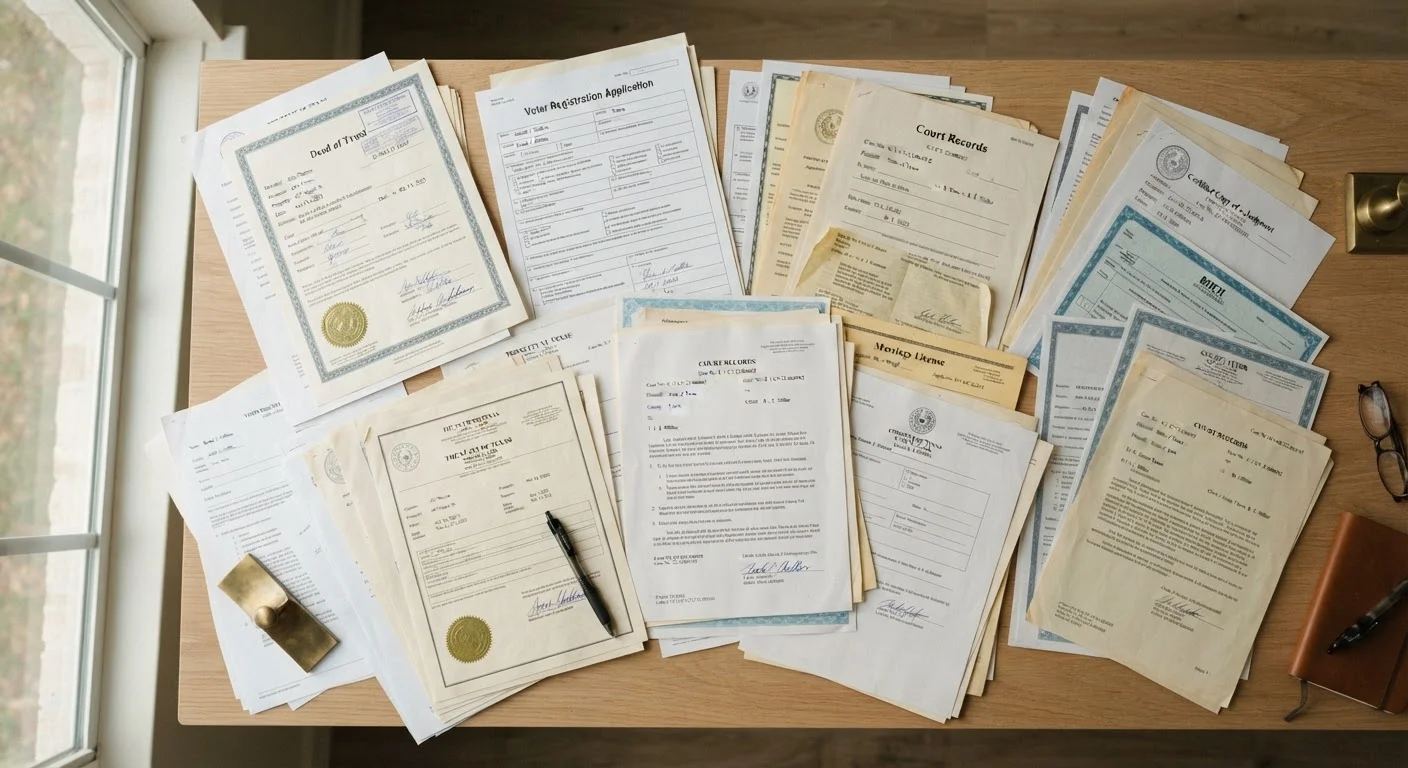
Photo: searchopenrecords editorial
—— In This Article
The Upstream Sources: Where Address Data Originates
When an address lookup tool returns a result, that result didn't materialize from thin air. It was compiled from a layered network of public and semi-public records, each maintained by a different institution on a different schedule. Understanding those upstream sources helps explain both what lookups can reliably surface and why they sometimes contradict each other.
The most common source categories include:
- County property and assessor records — When real estate changes hands, the transaction is recorded at the county level. Assessor databases tie a parcel to an owner name and mailing address, making them among the most structurally reliable address sources for homeowners. They are, however, updated only when a transaction or assessment occurs.
- Voter registration rolls — Most states maintain publicly accessible voter rolls that include a registrant's name, address, and sometimes age or party affiliation. These are refreshed before elections and pruned of inactive voters periodically, but the lag between a person moving and their registration updating is often measured in months.
- Court filings and civil records — Lawsuits, judgments, liens, and bankruptcy filings all capture addresses at the time of filing. Because parties are required to provide a service address, these records can be particularly useful — but they reflect where someone lived at the time of legal action, not necessarily today.
- Utility and postal change-of-address data — USPS change-of-address (COA) notifications feed into many commercial data pipelines. When someone submits a mail forwarding request, that signal propagates through licensed data channels relatively quickly compared to government rolls.
- Business filings and professional licenses — Secretary of state databases and licensing boards often list a registrant's address. These are especially relevant when someone operates a business from their home.
For a structured breakdown of each record type, see The Public Records Behind an Address: Property Deeds, Voter Rolls, and More.
How Data Aggregators Stitch It Together
Most address lookup tools are not querying government databases in real time. Instead, they license data from aggregators — companies that ingest records from dozens of sources, normalize them into a unified format, and index them by name, phone, and location. This aggregation layer is what makes fast, broad lookups possible, but it also introduces friction.
Aggregators assign confidence scores and apply deduplication logic to decide which address is most likely "current" for a given individual. When two sources disagree — say, a voter roll shows one city and a court filing shows another — the aggregator's algorithm determines which record wins. Those decisions are not always visible to the end user.
This is why address lookup tools are better described as probabilistic than authoritative. They surface the most statistically likely address based on the available record mosaic, not a guaranteed ground truth.
Similar dynamics shape other lookup categories. The public data behind reverse phone lookups follows the same aggregation model, with carrier records and ported number data creating comparable reliability tensions.
For a direct comparison of how different source types stack up, Address Lookup Across Different Record Sources: A Side-by-Side View offers a practical breakdown.
Why Conflicts Arise — and What to Do About Them
Conflicting results across address lookup tools are not a sign of fraud or error per se — they are an expected feature of a system built from asynchronous, independently maintained public records. A person who moved six months ago may still appear at their old address in voter rolls while the USPS change-of-address signal has already updated commercial aggregators. Both records are technically accurate snapshots taken at different moments.
Common conflict scenarios include:
- Renters vs. owners — Property records capture the owner of record, not necessarily a current tenant. A renter will rarely appear in assessor data at their address.
- Recent movers — Government rolls lag behind moves by weeks to months. Aggregators dependent on those rolls inherit the same delay.
- Common name collisions — When multiple individuals share a name, record-linkage algorithms can inadvertently merge address histories across different people.
These issues are explored in depth in Why Address Lookup Results Are Sometimes Wrong. When address data informs identity verification — such as in a background check context — Address History on a Background Check explains how screeners cross-reference multiple sources to improve accuracy.
For researchers tracing historical residences, Historical Records Access provides guidance on archival sources that predate modern aggregator databases.
Address Lookup Results Reflect Snapshots, Not Live Data
No consumer-facing address lookup tool queries government databases in real time. Results represent the most recent data that was licensed, ingested, and processed by an aggregator — a cycle that may take days, weeks, or longer depending on the source. Always treat a lookup result as a starting point for verification, not a final answer.

People Search Editorial Team
People Search Editorial Team is the collective byline for our editorial team and contributor network. Articles published under this byline or an editorial pen name are researched, written, and reviewed according to our editorial standards for clarity, consistency, and independence before publication.
View author profile