
How to Identify a Phone Number Type Before Running a Lookup
Knowing whether a number is a landline, mobile, or VoIP line upfront helps set realistic expectations for what a lookup will return.
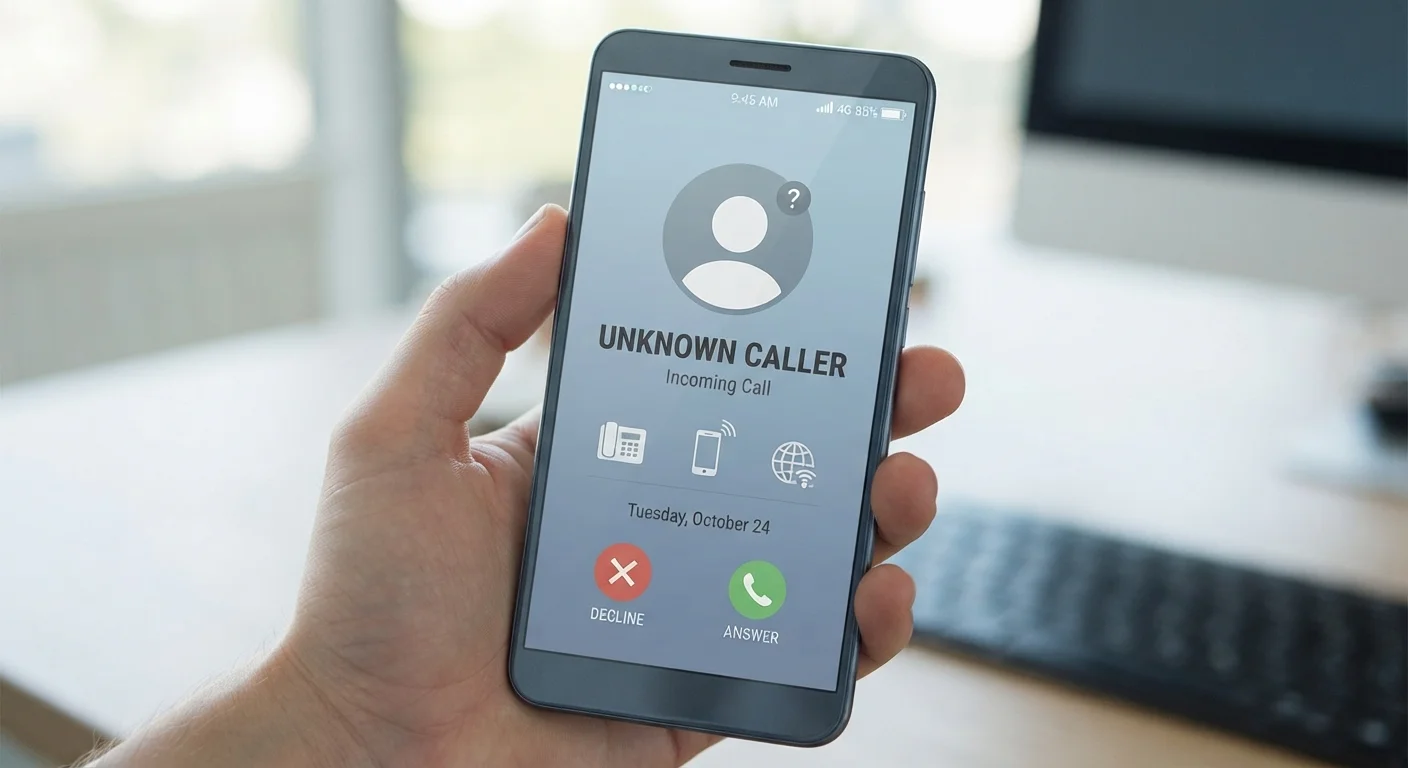
Photo: searchopenrecords editorial
—— In This Article
Key Takeaways
- Landline, mobile, and VoIP numbers leave very different data trails in public records databases.
- Free carrier lookup tools can classify a number type before investing time in a full reverse lookup.
- VoIP numbers are often the hardest to trace because they require minimal registration.
- Knowing the number type upfront helps you interpret lookup results accurately.
- Area codes can hint at a number's origin but are not definitive classification tools.
Why Number Type Matters Before You Search
Not every phone number leaves the same paper trail. Whether a number is a landline, a mobile line, or a VoIP (Voice over Internet Protocol) number determines how much verifiable data exists about it in public and carrier records — and therefore what a reverse lookup can realistically return.
Landlines are registered through regulated local exchange carriers and have historically been subject to strict subscriber record-keeping requirements. Mobile numbers involve wireless carriers with somewhat more variable data availability. VoIP numbers, which are provisioned over the internet, often require minimal registration and can be issued, reassigned, or abandoned with little identity verification attached.
Running a lookup without knowing the number type first can lead to misread results. A thin or inconclusive result from a VoIP number may look like a tool failure when it actually reflects a fundamental data limitation. Understanding the distinction is the first step toward smarter searching. For background on how each type behaves differently in lookup systems, see understanding phone number types.
Carrier / Line-Type Lookup Tool
Queries telecom databases to classify a number as landline, mobile, or VoIP before you run a full reverse lookup.
Reverse Phone Lookup Service
Searches public records and aggregated data once you know the number type and want subscriber or owner details.
NANP Area Code Reference
North American Numbering Plan resources help you identify the geographic region originally assigned to a number prefix.
How to Classify a Number — Step by Step
What you will need
Write down the full 10-digit number
Before anything else, record the complete number including the area code. Partial numbers or numbers missing the leading digit cannot be reliably classified. If the call appeared on your phone's recent-call list, tap the number to copy it exactly as dialed — including any country code prefix like +1 for US numbers.
Check the area code for geographic clues
The North American Numbering Plan (NANP) assigns area codes to specific geographic regions. Looking up the area code can tell you whether the number was originally issued in a particular state or city. However, this is only a starting clue — numbers are routinely ported across carriers and geographic regions, and VoIP providers can assign virtually any area code regardless of where the account holder is located.
Use the area code as context, not as a definitive classification. A 646 prefix might suggest New York City historically, but it could belong to a VoIP line operated from anywhere in the country.
Run the number through a carrier line-type lookup
Several telecom data providers offer free or low-cost tools that query the underlying carrier database — specifically the LNP database — to return the current line type. The result will typically report one of three categories:
- Landline — a traditional wireline number tied to a physical address through a regulated local exchange carrier
- Mobile — a number assigned to a wireless carrier and associated with a SIM-based device
- VoIP — a number routed over internet infrastructure, often with minimal registration requirements
This classification step takes under a minute and fundamentally shapes how you should interpret any subsequent lookup results. For a deeper explanation of what each classification means for traceability, see what each number type actually tells you.
Interpret what the line type means for lookup depth
Once you have a classification, calibrate your expectations accordingly:
- Landline numbers are the most traceable. Regulated carriers are required to maintain accurate subscriber records, and landline data is well-represented in public records aggregators.
- Mobile numbers offer moderate traceability. Carrier data exists, but wireless subscriber records have stronger privacy protections than landline records, and prepaid mobile numbers may carry limited registration data.
- VoIP numbers are the least reliably traceable. Many VoIP services require only an email address to provision a number, leaving little verifiable identity data in public databases.
Understanding these distinctions prevents you from misreading a thin result as a sign of a bad lookup tool — it may simply reflect the inherent data limitations of the number type. The article on how registration rules vary across number types covers this in detail.
Run your reverse phone lookup with adjusted expectations
Now that you know the number type, proceed with a reverse phone lookup using a reputable public records tool. Enter the full number and review the results through the lens of what you already know. A landline result returning a name and address is expected. A VoIP result returning only a carrier name or provider is also expected — and does not necessarily indicate the tool failed.
If the line type came back as mobile or VoIP and results are sparse, consider whether the number matches known patterns of spam or scam activity before drawing conclusions about the owner's identity. For more on why results vary, see why lookups return different results for different number types.
What to Do When Results Are Incomplete
Sparse results are common with VoIP and prepaid mobile numbers, and they don't always mean a dead end. If your lookup returns only a carrier name or a general provider, consider these additional steps:
- Search the number in quotes using a general web search to surface any community-reported fraud or spam complaints.
- Check whether the number appears in robocall complaint databases maintained by federal and state consumer protection agencies.
- Note the VoIP provider name if returned — some providers are disproportionately associated with spoofed or disposable numbers used in scam campaigns.
For a deeper look at how reverse lookup tools handle each number category, see how reverse lookup handles landline, mobile, and VoIP numbers differently.
Carrier Name Can Be a Useful Signal
When a line-type lookup returns a VoIP provider name — such as a well-known internet telephony platform — that alone is meaningful context. Numbers provisioned through certain providers are disproportionately used for temporary or anonymous communication. Treat this as a flag worth noting, not a verdict, when reviewing lookup results.

Phone Lookup Editorial Team
Phone Lookup Editorial Team is the collective byline for our editorial team and contributor network. Articles published under this byline or an editorial pen name are researched, written, and reviewed according to our editorial standards for clarity, consistency, and independence before publication.
View author profile