
Phone Number Portability and What It Means for Lookup Accuracy
When people switch carriers or move, numbers get ported. Discover how number portability affects the reliability of phone lookup data.
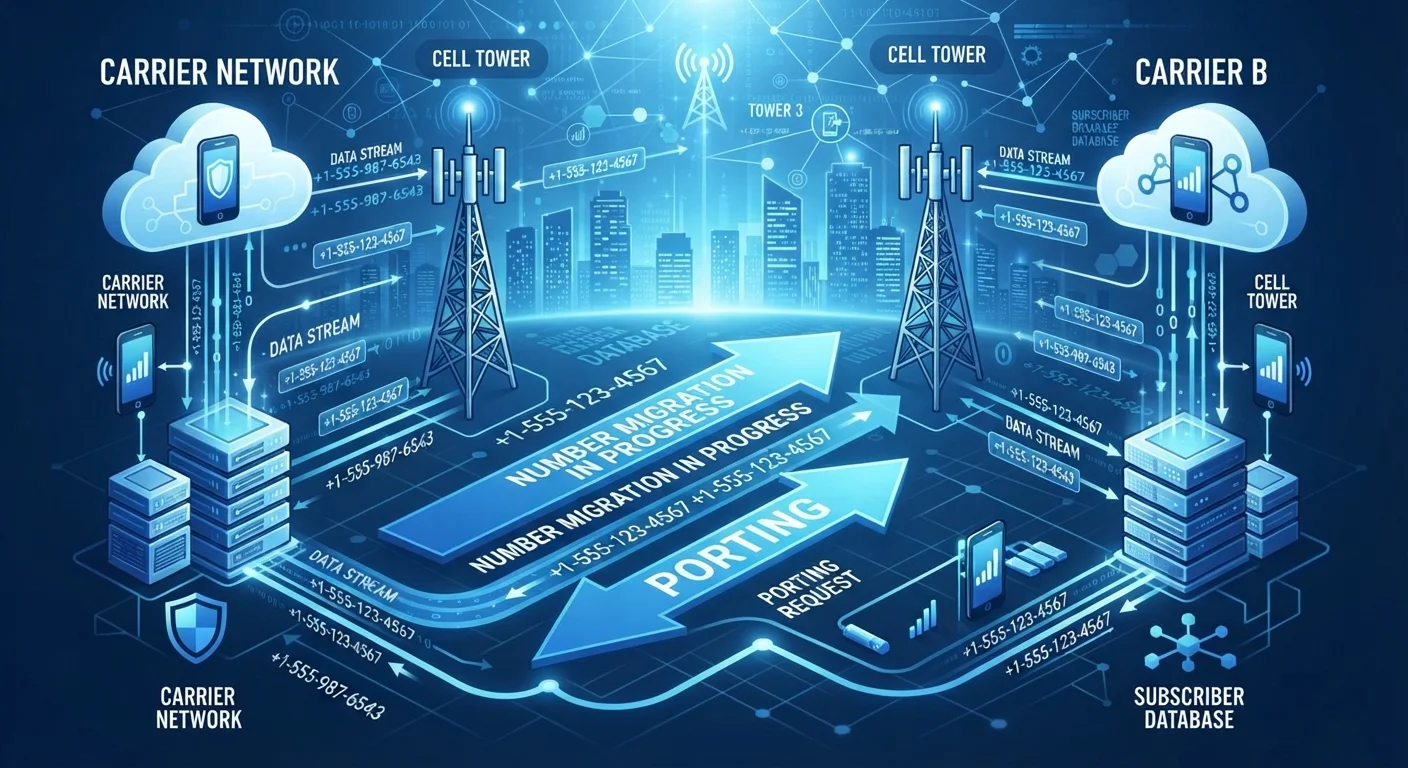
Photo: searchopenrecords editorial
—— In This Article
Key Takeaways
- A phone number can be ported across carriers and service types while keeping the same digits.
- Porting breaks the original link between a number and its issuing carrier's registration data.
- Lookup databases often lag behind real-time NPAC records, creating accuracy gaps.
- VoIP numbers are the hardest to trace because they carry fewer mandatory registration requirements.
- Landlines that are ported to mobile or VoIP often retain stale geographic data in older databases.
- Cross-referencing multiple public record sources improves lookup reliability for ported numbers.
How Portability Disrupts the Number-to-Owner Link
When the FCC mandated local number portability (LNP) in 1996, the goal was consumer choice. The practical result was that a phone number is no longer a stable identifier of who issued it or where the subscriber lives. Every time a number moves — from one mobile carrier to another, or from a landline to a VoIP service — the foundational data that lookup databases rely on gets partially severed.
Originally, a phone number's three-digit area code and three-digit exchange (NXX) pointed to a specific geographic region and carrier. Lookup tools used this structure to anchor identity data. Portability dismantled that assumption. Today, the only authoritative real-time source for current carrier assignment is the NPAC, and most consumer-facing lookup tools do not have direct, live access to it.
For users trying to identify an unknown caller, this means results can reflect where a number started rather than where — or with whom — it currently exists. See our guide to phone number types for broader context on how different number categories behave in lookups.
How Number Type Affects Post-Porting Traceability
Not all ported numbers become equally difficult to trace. The destination service type matters considerably.
~900M
Ported numbers active in the U.S.
The NPAC has processed nearly 900 million cumulative porting transactions since local number portability was introduced, reflecting decades of carrier switching.
30–60 days
Typical database sync lag after porting
Third-party lookup databases often take weeks to reflect a completed port, during which carrier and subscriber data may be inaccurate.
40%+
U.S. adults who have ported a number at least once
Consumer surveys consistently show that a large portion of mobile users have switched carriers while keeping their number, contributing to widespread data fragmentation in lookup tools.
Landline to mobile: When a traditional landline number is ported to a mobile carrier, registration data typically carries over and is refreshed by the new carrier's subscriber records. The transition is relatively clean for lookup purposes, though geographic data tied to the original exchange may persist in older databases.
Mobile to mobile: Porting between mobile carriers is the most common scenario. Name and address data usually follows the subscriber if they update their account information, but gaps appear during the transition window — sometimes spanning several weeks in third-party databases.
Any type to VoIP: This is the most disruptive path for lookup accuracy. VoIP providers face fewer mandatory registration requirements than traditional carriers. When a number lands at a VoIP service, the subscriber's identity data may not be collected or shared in standardized formats, leaving lookup tools with little to display. Our article on how landline, mobile, and VoIP numbers handle reverse lookup differently explains the underlying mechanics in more detail.
What This Means When You Run a Lookup
When you search an unfamiliar number through a reverse phone lookup tool, the result you see reflects the quality and recency of the database behind it — not necessarily the current state of that number's ownership. A few practical realities follow from this:
- Stale carrier labels are common on recently ported numbers. The tool may correctly identify a number but misattribute it to the previous carrier.
- Geographic data can be misleading. Area codes no longer reliably indicate location after porting. A number with a Chicago area code may belong to someone who has lived in Arizona for years.
- Blank or thin results on a number often signal a VoIP line, a recently ported number, or a prepaid account — none of which carry robust registration trails. See our comparison of landline vs. mobile numbers in public records for how these gaps differ by type.
Getting More Reliable Results on Ported Numbers
When a lookup returns sparse or inconsistent information, consider it a signal rather than a dead end. Thin results often indicate a VoIP line or a recently ported number — both of which carry fewer registration footprints. Cross-referencing the number against other public records sources, such as address lookup tools or people-search databases, can surface context that a single phone lookup misses.
Understanding these limitations doesn't make lookup tools useless — it makes their results interpretable. Cross-referencing results against other public records sources, and noting when carrier or location data seems inconsistent with other context clues, is the most reliable approach available to general users.
Registration Rules and Their Downstream Effect on Data
The variation in data quality after porting ultimately traces back to registration requirements — or the lack thereof. Traditional mobile carriers and landline providers in the U.S. must collect verified subscriber information to comply with E911 regulations, which require accurate address data for emergency dispatch. That obligation creates a data trail.
VoIP services operate under a lighter regulatory framework. While they are required to provide some form of E911 coverage, the address verification process is less standardized and more self-reported. When a number ports into this environment, the lookup ecosystem loses a key source of reliable identity data.
Our article on how registration rules vary across number types walks through exactly how these regulatory differences shape the data available to lookup tools. Understanding those rules helps set realistic expectations when a search returns partial or outdated information — which, for ported numbers, is more often the rule than the exception.
Frequently Asked Questions

Phone Lookup Editorial Team
Phone Lookup Editorial Team is the collective byline for our editorial team and contributor network. Articles published under this byline or an editorial pen name are researched, written, and reviewed according to our editorial standards for clarity, consistency, and independence before publication.
View author profile