
Prepaid vs. Postpaid Phone Numbers: Traceability Differences Explained
Prepaid phones often have less registered owner data than postpaid plans. Learn how billing type influences what a phone lookup can find.
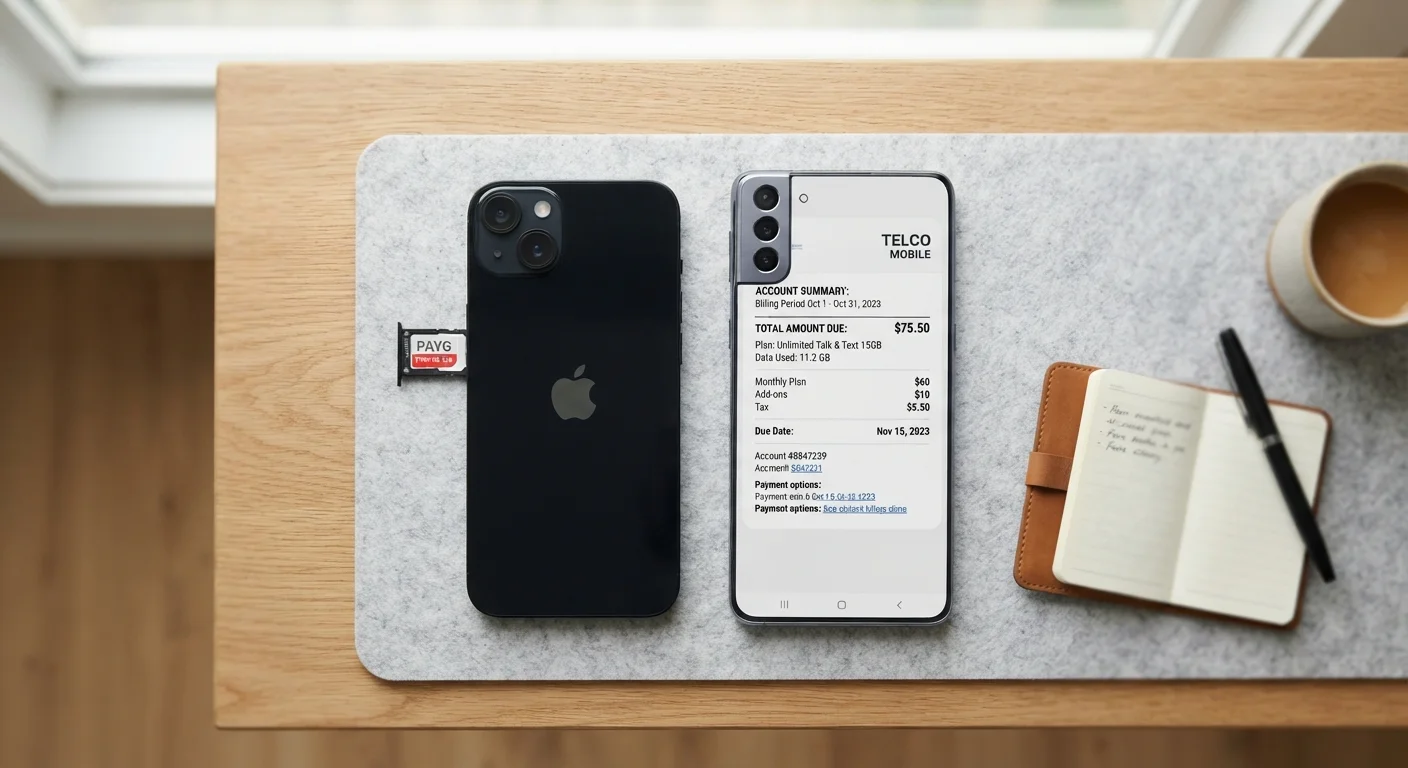
Photo: searchopenrecords editorial
—— In This Article
Key Takeaways
- Postpaid accounts require verified identity at sign-up, creating a stronger public records trail.
- Prepaid numbers can often be activated with little or no personally identifiable information.
- Reverse phone lookups typically return less owner data for prepaid numbers than for postpaid lines.
- The Prepaid Phone Law (Safe Connections Act provisions) has pushed carriers toward more registration, but gaps remain.
- Billing type is one of several factors — alongside number type — that shapes lookup result quality.
Why Billing Type Matters for Phone Traceability
When you run a reverse phone lookup, the quality of results depends heavily on how much subscriber data was collected when a number was activated. That data collection is directly tied to the billing relationship — and prepaid and postpaid plans operate very differently in this regard.
Postpaid service requires a contract. Carriers collect the subscriber's full name, address, Social Security number or government-issued ID, and payment information before activating the line. This creates a verified identity record that, in many cases, becomes accessible to data aggregators and public record databases over time.
Prepaid service, by contrast, has historically required far less at activation. In many cases, a buyer could purchase a SIM card or handset with cash, activate it online using only a ZIP code, and begin making calls — all without supplying a verifiable name or address. This structural difference is the core reason why prepaid numbers tend to produce thinner or empty results in phone lookup tools.
To understand how these traceability differences fit into the broader landscape of number types, see our guide on VoIP, landline, and mobile number traceability.
Head-to-Head: Registration, Data, and Lookup Results
The table below summarizes how prepaid and postpaid plans compare across the dimensions most relevant to public records traceability.
| Criterion | Prepaid | Postpaid |
|---|---|---|
| Identity verification at activation | Minimal or none historically | Required (name, ID, address) |
| Credit check required | No | Typically yes |
| Subscriber data in carrier records | Often sparse or absent | Comprehensive |
| Likely reverse lookup result | Carrier name only, or blank | Name, address, carrier |
| Number reassignment frequency | High (short hold periods) | Lower (longer-term accounts) |
| Regulatory registration trend | Increasing under new rules | Long-established requirement |
One point worth emphasizing: even postpaid numbers are not universally traceable. A lookup tool's results depend on whether the carrier shares subscriber data with third-party aggregators, how long a number has been active, and whether the subscriber has opted out of data sharing. That said, the structural advantage of verified identity at activation makes postpaid numbers significantly more likely to return usable results.
For a broader comparison of how mobile numbers stack up against landlines — another dimension of traceability — see our article on landline vs. mobile numbers in public records.
The Regulatory Shift: Prepaid Registration Requirements
The anonymity historically associated with prepaid phones has not gone entirely unaddressed by regulators. The U.S. has moved toward greater prepaid accountability through legislation. The Safe Connections Act, enacted in 2022, and related FCC rulemaking have required carriers to collect more identifying information from prepaid customers, particularly for certain program-subsidized devices.
Prepaid Registration Rules Are Evolving
U.S. regulations around prepaid phone registration have tightened in recent years, particularly for phones distributed through federal assistance programs. However, these rules apply prospectively — numbers activated before stricter requirements took effect are not retroactively registered. Expect continued inconsistency in prepaid data availability across different carriers and activation periods.
However, regulatory change is gradual and uneven. Implementation timelines vary by carrier, and prepaid lines purchased before rule changes took effect may still carry sparse registration data in existing databases. This means that a lookup performed today on an older prepaid number may still return little to no owner information — not because the tool is ineffective, but because the underlying record was never created.
For a quick-reference overview of how prepaid numbers compare to all other major number categories in terms of data footprint, the phone number categories and their data footprints guide is a useful companion resource.
What This Means When You're Running a Lookup
Understanding billing type helps set realistic expectations when you search an unknown number. If a reverse lookup returns only a carrier name and a general geographic region — but no subscriber name or address — a prepaid number is a likely explanation. This is not a failure of the lookup tool; it reflects the absence of verified registration data at the source.
Conversely, if a number returns a full name, address history, and associated records, a postpaid account is the more probable origin. Postpaid numbers tend to accumulate a richer data trail over time because the subscriber identity is anchored to billing records, credit checks, and service agreements.
Keep in mind that number reassignment also affects results. Carriers regularly recycle prepaid numbers — sometimes within weeks of deactivation — which can cause lookup results to reflect a previous user rather than the current one. Postpaid numbers are typically held longer, though reassignment still occurs.
If you're new to interpreting phone lookup results across number types, understanding phone number types provides a solid foundation. And for anyone researching an address alongside a phone number, address lookup tools can help cross-reference residential information.
This article is for general informational purposes only. Phone lookup results vary based on data availability and are not guaranteed to identify any specific individual. Always use public records tools responsibly and in accordance with applicable law.

Phone Lookup Editorial Team
Phone Lookup Editorial Team is the collective byline for our editorial team and contributor network. Articles published under this byline or an editorial pen name are researched, written, and reviewed according to our editorial standards for clarity, consistency, and independence before publication.
View author profile