
Toll-Free Numbers in Public Records: How They Work and Who Owns Them
Toll-free numbers follow different registration rules than standard lines. Learn how ownership is recorded and what lookups can typically reveal.
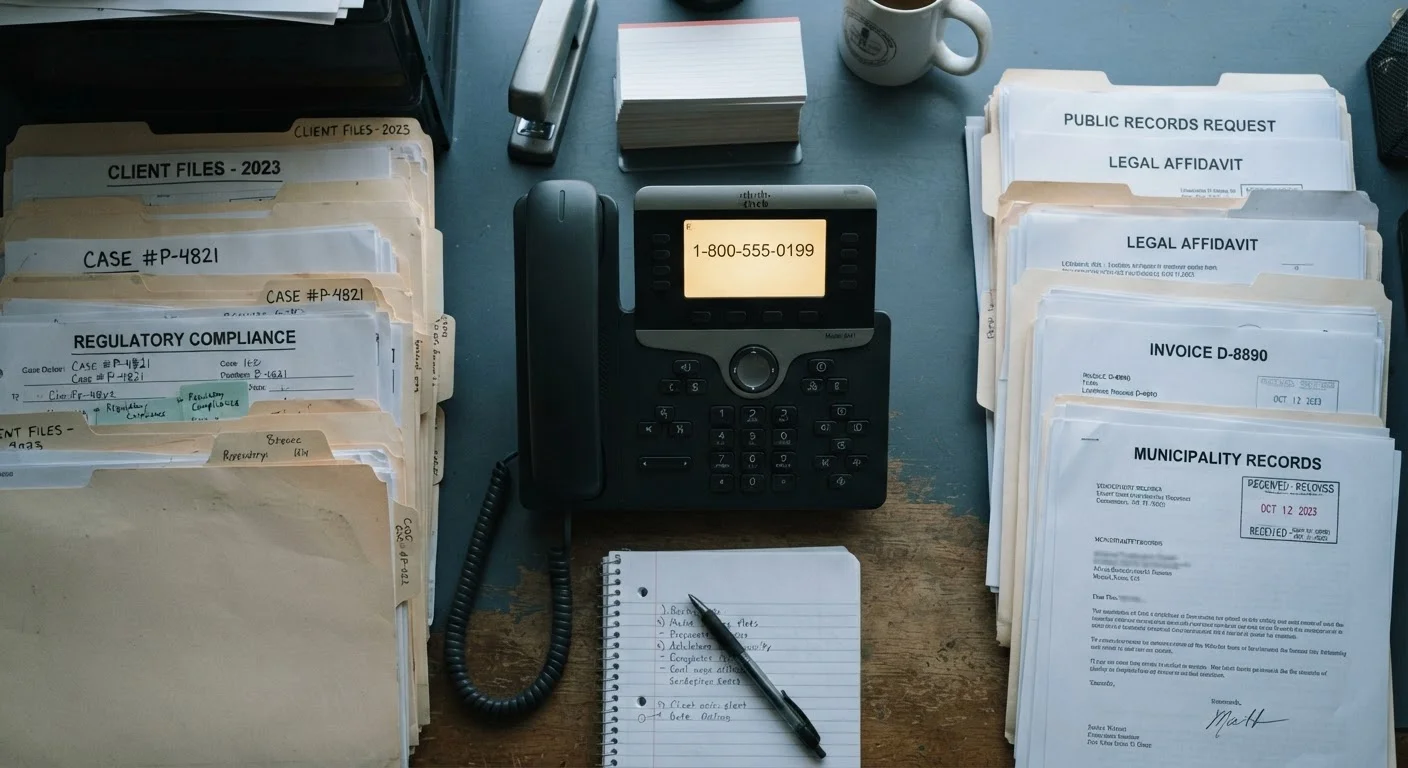
Photo: searchopenrecords editorial
—— In This Article
Key Takeaways
- Toll-free numbers are registered through a centralized FCC-overseen system, unlike standard landlines or mobile numbers.
- The subscribing business or entity — not a carrier — is the recorded owner in the toll-free registry.
- Ownership details vary in accessibility; many are identifiable through public-facing business records rather than carrier data.
- Toll-free numbers can be reassigned between subscribers, which complicates historical tracing.
- Reverse phone lookups on toll-free numbers often return business name data rather than individual contact information.
How Toll-Free Numbers Are Assigned and Tracked
Toll-free numbers operate under a registration framework that is fundamentally different from the systems used for standard landlines or mobile numbers. In the United States, the Federal Communications Commission (FCC) oversees toll-free numbering policy, and a centralized database called SMS/800 serves as the authoritative record of every active toll-free number and the Responsible Organization (RespOrg) managing it.
A RespOrg is a certified intermediary — often a telecom carrier or specialized number management company — that reserves and administers toll-free numbers on behalf of subscribers. The subscriber, typically a business or government agency, is the actual "owner" of record. This structure means ownership data in the toll-free ecosystem is tied to organizational entities rather than individual consumers, which has direct implications for what any lookup can reveal.
Unlike a landline, which is geographically assigned to a specific local exchange and carrier, a toll-free number carries no inherent geographic signal. It can be routed to any underlying phone line — a landline, a mobile, or a VoIP endpoint — at the subscriber's direction. This routing flexibility makes toll-free numbers particularly common for businesses operating across multiple states. For a broader look at how different number types compare, see our phone number categories and data footprints guide.
What Public Records Typically Reveal About Toll-Free Subscribers
Because toll-free numbers are overwhelmingly registered to businesses, nonprofits, and government bodies, the public records trail they leave looks quite different from that of a personal mobile or residential landline.
800+
Distinct toll-free prefixes active in the US
The FCC has authorized multiple toll-free prefixes (800, 888, 877, 866, 855, 844, 833) as demand for numbers has grown, with additional prefixes planned.
~40M
Toll-free numbers in the SMS/800 database
The SMS/800 system manages tens of millions of active and reserved toll-free numbers on behalf of US subscribers, according to the database administrator Somos, Inc.
700+
Certified RespOrgs managing toll-free numbers
Hundreds of FCC-certified Responsible Organizations are authorized to reserve and administer toll-free numbers, ranging from major carriers to specialized number brokers.
When a company registers a toll-free number, it does so through a RespOrg using its legal business name and contact information. That business, in turn, is often registered with state authorities, the IRS, and various licensing bodies — all of which generate public records. So while the SMS/800 database itself is not freely searchable by the general public, the subscriber's identity can frequently be inferred through:
- State business registrations — Corporations and LLCs typically file contact numbers with secretaries of state.
- Federal regulatory filings — Companies in regulated industries (finance, healthcare, transportation) often list toll-free numbers in FCC, SEC, or other agency records.
- Court documents — Litigation records commonly include a business's toll-free contact line.
- Government contractor databases — Federal procurement records routinely capture toll-free numbers for vendors.
For individuals researching an unfamiliar toll-free number, what public records can and cannot tell you about tracing an unknown number is worth reviewing to set realistic expectations.
Traceability Compared: Toll-Free vs. Landline and Mobile
Understanding toll-free traceability is clearest when set alongside the other main number types. Landlines have historically been the most traceable — they are geographically anchored, tied to a local exchange carrier, and often appear in legacy directory databases. Our public records trail behind a landline number covers that ecosystem in depth.
Mobile numbers occupy a middle ground: they are carrier-registered to an individual, but porting, prepaid options, and privacy protections mean the public records footprint is thinner than for landlines. The landline vs. mobile numbers in public records comparison illustrates these distinctions clearly.
Toll-free numbers are distinct in that their traceability is organizationally rather than geographically or individually anchored. A lookup is likely to surface a company name or industry, but not a home address or individual's identity. The key risk for researchers is number reassignment — a toll-free number transferred from one business to another can produce outdated or conflicting data across different record sources.
Verify Before You Call Back
If a toll-free number lookup surfaces a business name, always retrieve that business's contact number independently from its official website before calling back. Caller ID spoofing can make a fraudulent call appear to originate from a legitimate company's toll-free line. Cross-referencing two independent sources significantly reduces the risk of engaging with an impersonator.
Practical Guidance for Looking Up a Toll-Free Number
If you receive a call from an unfamiliar toll-free number, a layered approach typically yields the most reliable identification:
- Search the number directly in a general search engine. Businesses often list their toll-free numbers on websites, press releases, and directories that are indexed publicly.
- Check the FTC's Do Not Call registry complaint database, which documents toll-free numbers that have generated consumer complaints — useful for flagging potential scam operations.
- Consult state business registries if a company name surfaces; confirming active registration status adds a credibility check.
- Use a reverse phone lookup tool that aggregates public and commercial data. For toll-free numbers, these tools are most reliable at returning a business name or category rather than individual contact details. Our reverse phone lookup resource explains how such tools work and where their data originates.
One important caution: scammers sometimes spoof toll-free numbers belonging to legitimate companies. A search that returns a real business name does not automatically confirm the caller was that business. If in doubt, hang up and call the organization back using a number sourced independently from its official website.
Frequently Asked Questions

Phone Lookup Editorial Team
Phone Lookup Editorial Team is the collective byline for our editorial team and contributor network. Articles published under this byline or an editorial pen name are researched, written, and reviewed according to our editorial standards for clarity, consistency, and independence before publication.
View author profile