
How Name Variations and Typos Affect Public Record Search Results
Spelling differences, nicknames, and data-entry errors can cause records to surface under unexpected names. Here's how to account for them.
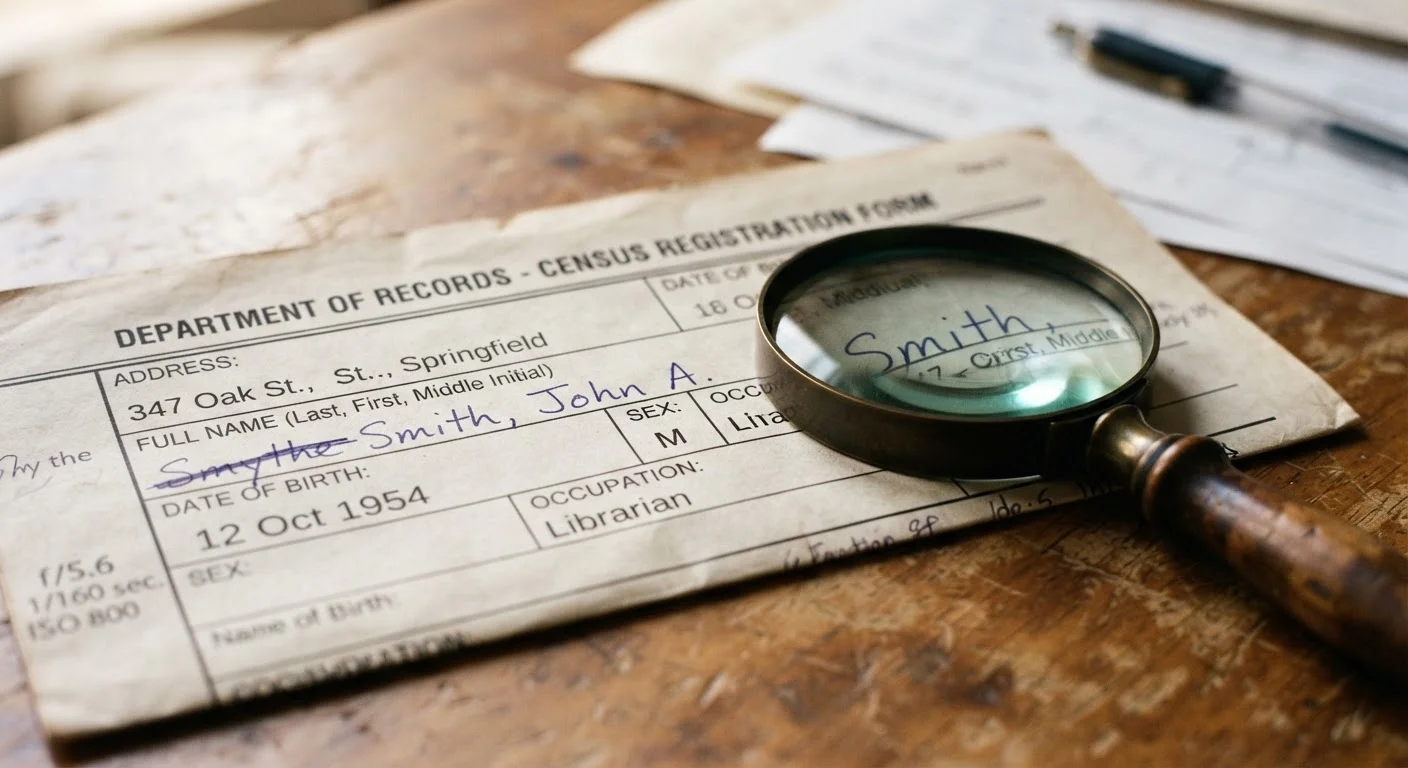
Photo: searchopenrecords editorial
—— In This Article
Key Takeaways
- Public records store names exactly as entered, so spelling inconsistencies directly affect search results.
- Nicknames, legal name changes, and transliteration differences are common sources of variation.
- Data-entry errors by clerks or transcribers can permanently alter how a name appears in a database.
- Searching multiple name variants — not just the most familiar spelling — improves retrieval accuracy.
- Phonetic search tools and wildcard characters can help surface records filed under unexpected spellings.
Why Name Consistency Is Rare in Public Records
Public records are created by dozens of different agencies — courts, vital records offices, tax assessors, motor vehicle departments — each with its own data-entry staff, forms, and software. There is no single national standard for how a name must be recorded. As a result, the same person can be listed as "Robert," "Rob," "Bob," and "Roberto" across different documents, all of which are technically correct representations of how that name was presented at the time.
Beyond intentional name variation, transcription errors introduced by clerks are common. A handwritten form misread during data entry, an optical character recognition (OCR) error when scanning older paper documents, or a simple typing mistake can permanently alter a name in a database. Because corrections require official processes, these errors often persist for years.
This matters practically: if you search a court records portal for "Catherine" and the record was entered as "Katharine," you may receive zero results — not because the record does not exist, but because the database treats those strings as distinct. See our guide to contradictory search results for more on how database inconsistencies compound this problem.
The Most Common Sources of Name Variation
Understanding where variations originate helps you anticipate what alternate terms to search. The main categories include:
- Nicknames and informal names: Many people use a name socially that differs from their legal name — William/Bill, Elizabeth/Beth, Margaret/Peggy. Records may reflect whichever version was provided at the time of the transaction.
- Legal name changes: Marriage, divorce, adoption, and formal legal petitions all change how a person's name appears in subsequent records. Older records retain the prior name, creating a split trail.
- Transliteration variants: Names originating in non-Latin scripts were romanized individually by immigration and naturalization clerks, producing multiple plausible English spellings. This is a particularly significant issue for genealogy research — see our article on navigating inconsistent names and spellings in old records.
- Hyphenation and spacing: Compound surnames are recorded inconsistently — "Garcia-Lopez," "Garcia Lopez," and "Garcialopez" may all refer to the same person.
- Clerical and OCR errors: Transposed letters, misread characters ("rn" read as "m," for example), and dropped prefixes like "Mc" or "O'" are common, especially in digitized historical records.
Always Check Both Given Name and Initials
Some records — particularly older court filings and property records — use only initials for first or middle names. If a full-name search returns nothing, try searching with just the first initial and full surname, or vice versa. This is especially relevant when searching for individuals in records from the early-to-mid twentieth century, when abbreviated entries were common practice.
Practical Strategies for Searching Across Name Variants
Once you recognize that variation is structural — not exceptional — you can adjust your search methodology accordingly.
Build a name variant list before you search. Write down all known nicknames, alternate spellings, maiden names, and former surnames for the person you are researching. Include common misspellings of each. This takes two minutes and meaningfully improves your coverage.
Use wildcard and phonetic search options when available. Many government portals and genealogy databases support wildcard characters (often an asterisk) that match any sequence of letters. Searching "Kath*rine" will return both "Katherine" and "Katharine." Phonetic tools like Soundex group names by sound rather than spelling, which is particularly useful for surnames. Check the database's search help page to confirm which options are supported.
Search first name and last name independently. Some databases allow field-level searching. If a last name is rare, searching by surname alone with a date range can surface records where the first name was recorded differently than expected.
For address-adjacent searches, name variation compounds with address inconsistency — our overview of why address lookup results go wrong explains how these data quality issues interact. Similarly, if you are researching someone through email traces, the email lookup guidance covers how name-based identifiers can drift across platforms.
Researchers working with historical documents face an additional layer of complexity from period-specific naming conventions and calendars. Our article on why genealogists misread historical records addresses these specific pitfalls in depth.
This article is for general informational purposes only. Public record search results depend on the specific databases and jurisdictions involved, and outcomes will vary by search and record type.
Frequently Asked Questions

Public Records 101 Editorial Team
Public Records 101 Editorial Team is the collective byline for our editorial team and contributor network. Articles published under this byline or an editorial pen name are researched, written, and reviewed according to our editorial standards for clarity, consistency, and independence before publication.
View author profile