
Offline Records That Have No Online Equivalent—and How to Reach Them
Not every document has been digitised. Learn which record types still require in-person or mail requests and how to submit them correctly.
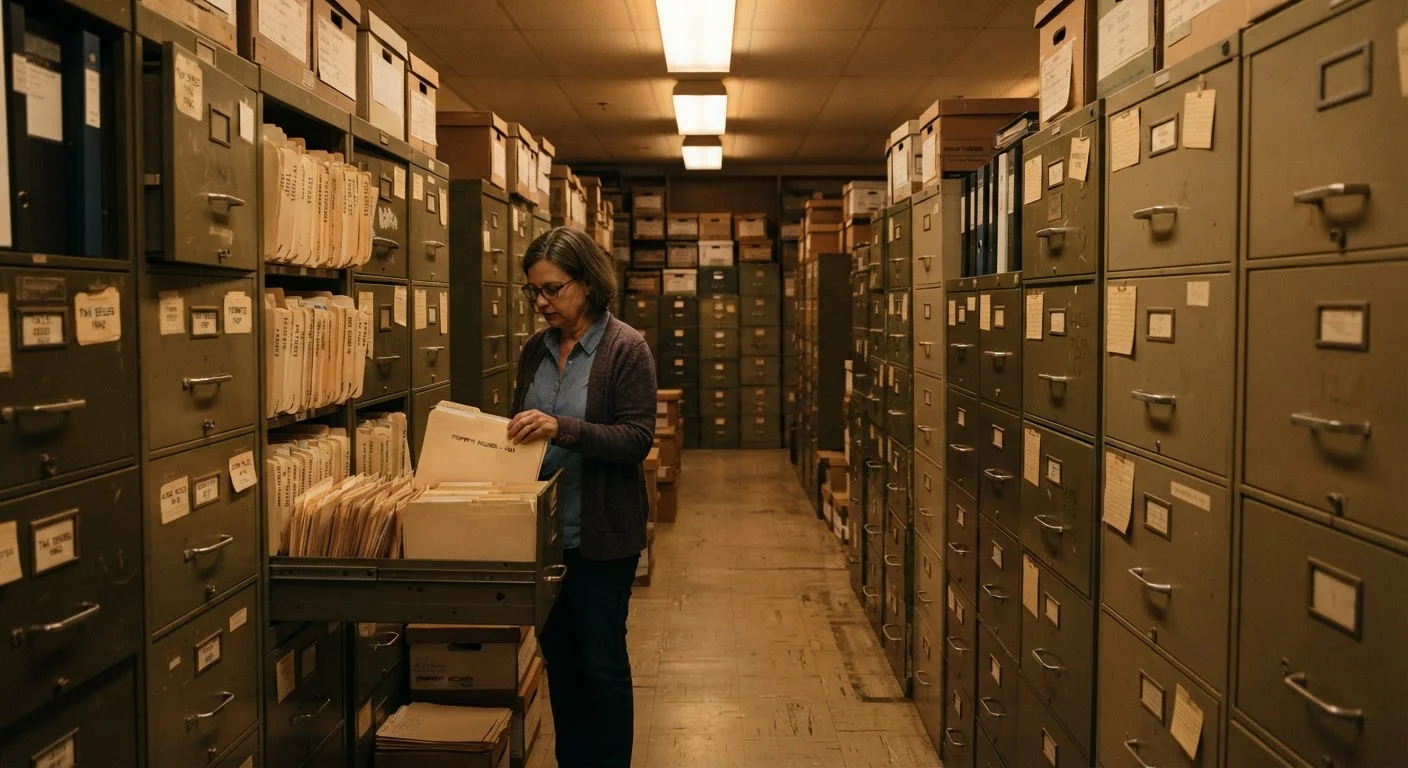
Photo: searchopenrecords editorial
—— In This Article
Key Takeaways
- Significant categories of public records have never been digitised and cannot be found through any online search.
- Accessing offline records typically requires a written request submitted by mail or an in-person visit to the custodian agency.
- Knowing the correct custodian—county clerk, vital records office, probate court—is the first step to a successful request.
- Each agency has its own fee schedule, acceptable ID requirements, and turnaround times.
- A clear, complete request letter reduces delays and avoids unnecessary back-and-forth.
Which Records Are Still Offline—and Why
The assumption that all public records are a keyword search away is one of the most common research mistakes people make. As explored in our overview of online record limitations, digitisation backlogs, budget constraints, and legal restrictions mean that enormous swaths of official documentation simply do not exist in digital form.
Common categories that remain predominantly offline include:
- Pre-1970s vital records — many county-level birth, marriage, and death certificates from earlier decades were never converted to digital formats.
- Handwritten court dockets and probate files — older estate records, guardianship files, and civil case exhibits are frequently stored only in the originating courthouse.
- Local land and deed records — especially in rural counties, deed books and plat maps may exist only as bound ledgers in the county recorder's office.
- Military discharge papers (DD-214s) — the National Personnel Records Center in St. Louis holds millions of paper files, including records from a 1973 fire that destroyed many Army and Air Force documents.
- Church and institutional records — baptismal registers, hospital admission logs, and orphanage files held by private institutions have no legal obligation to digitise and often haven't.
- Historical newspaper obituaries — while some papers have been microfilmed, many local weeklies exist only on physical film reels or bound volumes at public libraries. Our guide to finding obituaries covers the full range of sources.
Understanding why a record is offline helps you approach the right custodian. Age, geography, institutional type, and funding all play roles. For a broader comparison of what online archives do and don't cover, see our piece on common assumptions that lead searchers astray.
State Archives Are Often Overlooked
When county offices say they don't have a record, the next call should be to the state archives. Many older county court, land, and vital records have been transferred to state custody over the decades. State archivists can often search holdings remotely and tell you whether a record exists before you commit to a full request or an in-person visit.
Before You Request: Identifying the Right Custodian
No single agency holds all offline records. Custodianship depends on the record type, the jurisdiction where the event occurred, and the era. Use the table below as a starting reference:
| Record Type | Likely Custodian |
|---|---|
| Vital records (birth, death, marriage) | State vital records office or county clerk |
| Property deeds and mortgages | County recorder or register of deeds |
| Probate and estate files | County or circuit probate court |
| Military service and discharge records | National Personnel Records Center (NARA) |
| Criminal and civil court records | Clerk of the originating court |
| Historical school or institutional records | State archives or the institution itself |
State archives are an underused resource. Most states maintain a repository of transferred county and agency records; the Historical Records Access hub is a useful starting point for understanding what state-level repositories hold. If you are unsure whether a record even survives, call the custodian agency before drafting a formal request — staff can confirm record availability and save you time.
How to Submit a Request for Offline Records
Follow the steps below whether you are writing a mail request or preparing for an in-person visit. For a deeper comparison of mail requests versus repository visits, our article on digitised archives versus physical repository visits covers the trade-offs in detail.
Confirm the record exists and where it is held
Phone or email the likely custodian to verify the record's existence, its physical location, and the correct department to address your request. Ask specifically whether the record has been transferred to a state archive, microfilmed, or is still in the originating office.
Gather your identification and authorisation documents
Most agencies require a government-issued photo ID. Vital records often require proof of a direct familial relationship (birth certificate, marriage certificate) or a notarised affidavit if you are requesting on behalf of another party. Military record requests via NARA's Standard Form 180 (SF-180) require the veteran's signature or, for deceased veterans, proof of next-of-kin status.
Draft a clear, complete request letter
Your letter or form should include: the full legal name on the record, approximate date and jurisdiction of the event, your relationship to the subject, the specific record type you need, the format you prefer (certified copy, plain copy, or inspection), and your return address. Vague requests produce delayed or rejected responses.
Calculate and include the correct fee
Fees vary widely: a certified vital record copy may cost $5–$30 depending on the state, while court file copies may be priced per page. Check the agency's current fee schedule on its official site. Send a money order or personal check made payable exactly as instructed — many offices do not accept cash by mail or credit cards for mailed requests.
Send via trackable mail and keep copies
Mail your request using USPS Certified Mail with Return Receipt, or a trackable courier service. Keep photocopies of everything you send — the letter, the ID, the check, and the envelope. Note the tracking number and the date sent in a log.
Follow up if you receive no response within the stated timeframe
Most agencies post a standard processing window (commonly 4–12 weeks for older records). If that window passes without a response, call the office with your tracking number in hand. Ask whether the request was received, whether additional information is needed, and when you can expect a response. Document every interaction.
This article is for general informational purposes only. Record access laws, fees, and procedures vary by jurisdiction and can change. Always verify requirements directly with the relevant agency before submitting a request.

Public Records 101 Editorial Team
Public Records 101 Editorial Team is the collective byline for our editorial team and contributor network. Articles published under this byline or an editorial pen name are researched, written, and reviewed according to our editorial standards for clarity, consistency, and independence before publication.
View author profile