
Financial Records and the Limits of Public Disclosure
Some financial records are public, but most personal financial data is protected. Here's what's accessible and what stays private.
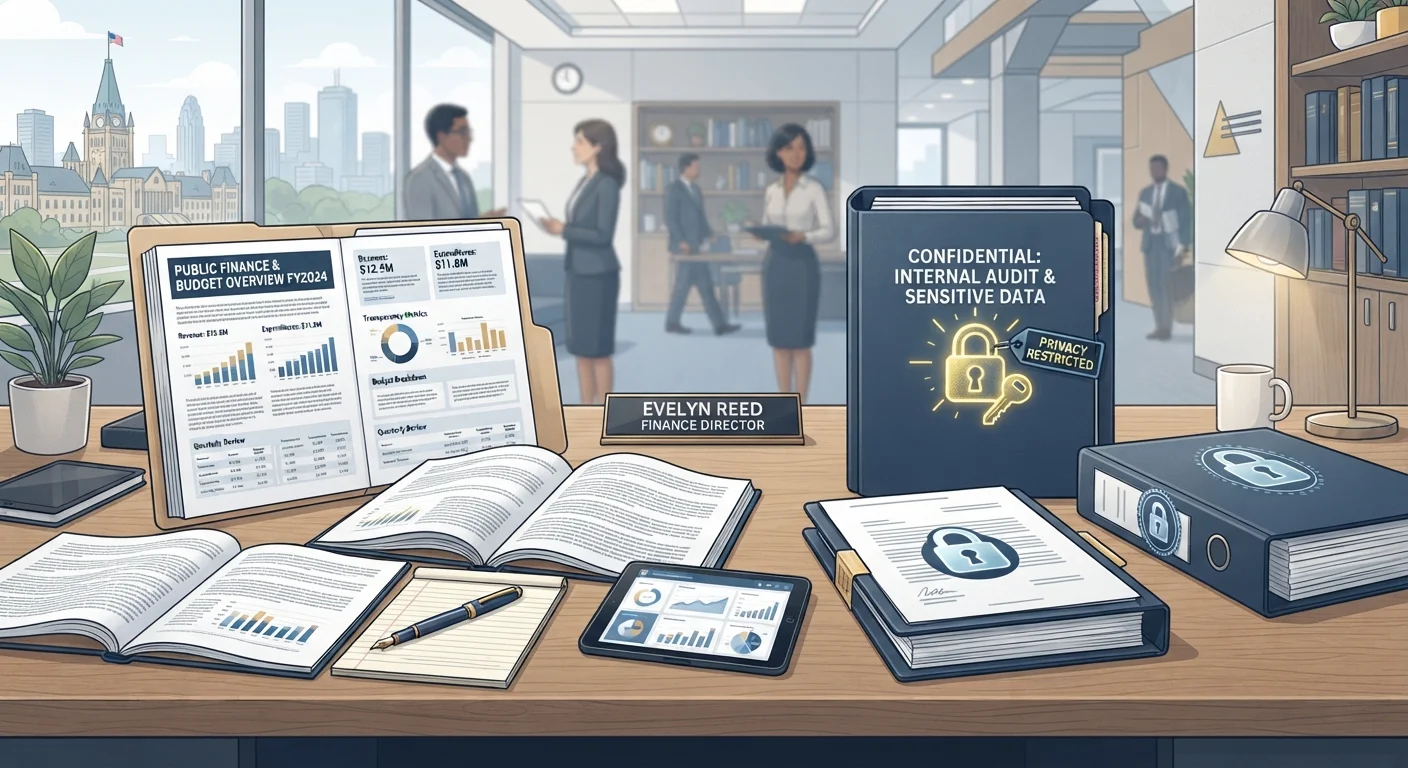
Photo: searchopenrecords editorial
—— In This Article
Key Takeaways
- Most personal financial data — bank balances, tax returns, credit scores — is legally protected from public disclosure.
- Court-filed financial actions like bankruptcies, liens, and judgments are part of the public record.
- Government budgets and certain regulatory filings are publicly accessible under federal and state transparency laws.
- Federal laws like FOIA and the Privacy Act draw clear lines between what the government must disclose and what it must protect.
- Understanding these boundaries helps you know what to realistically expect when searching public records.
Why Financial Records Don't Follow One Simple Rule
When people search public records for financial information, they often expect a straightforward answer — either a record is public or it isn't. The reality is more layered. Financial data sits at the intersection of government transparency obligations and individual privacy rights, and different rules apply depending on who holds the record and why it was created.
A good starting framework is this: financial records created through a government legal process or held by a government agency as part of its public function are far more likely to be accessible than records held by private financial institutions or generated in the course of a private transaction. For a deeper look at what makes any government record public in the first place, see what makes a government record "public".
This distinction matters because misunderstanding it leads to two common mistakes: assuming too much is available (and misusing the search process) or assuming too little (and overlooking records that are legitimately accessible).
Financial Records That Are Part of the Public Record
Several categories of financial information are genuinely part of the public record because they are filed with or maintained by a government body as part of a formal legal or regulatory process.
- Bankruptcy filings: Federal bankruptcy cases are filed in U.S. Bankruptcy Courts and are public records accessible through the PACER (Public Access to Court Electronic Records) system. They reveal the nature of a debtor's financial situation at the time of filing.
- Civil judgments and liens: When a court orders someone to pay a debt, or when a government agency files a tax lien, those actions are typically recorded in public court or county records. These can surface in background checks and property searches.
- Government budgets and expenditures: Federal, state, and local government budgets, contracts, and spending data are generally public. The Federal Funding Accountability and Transparency Act requires federal spending to be posted online.
- Nonprofit financial disclosures: Organizations holding 501(c)(3) tax-exempt status must file Form 990 with the IRS, and those forms are publicly available, disclosing revenue, expenses, and executive compensation.
For more detail on how these records appear in formal background check contexts, see financial records that appear in background checks.
501(c)(3)
Nonprofits required to disclose Form 990 publicly
The IRS requires tax-exempt organizations under this classification to make their annual Form 990 filings available for public inspection, including salary and revenue data.
IRC §6103
Federal law shielding individual tax returns
This section of the Internal Revenue Code makes individual federal tax returns strictly confidential and inaccessible to the public or most government agencies without specific authorization.
PACER
Federal court system for public case access
The Public Access to Court Electronic Records system provides public access to federal court filings, including bankruptcy cases, at a per-page fee set by the Judicial Conference.
Financial Records That Are Legally Protected
The much larger category of financial data is protected from public disclosure. This includes virtually all personal financial information held by private institutions and much of what the federal government holds about individual taxpayers.
- Bank account details: The Gramm-Leach-Bliley Act (GLBA) prohibits financial institutions from sharing nonpublic personal information, including account balances, transaction histories, and loan details, without authorization.
- Individual tax returns: IRC Section 6103 makes federal tax returns strictly confidential. Neither the IRS nor any other federal agency may disclose a taxpayer's return information to the public.
- Credit reports and scores: Governed by the Fair Credit Reporting Act (FCRA), credit data can only be accessed for specific permissible purposes — employment (with consent), lending decisions, or certain legal proceedings. They are not public records.
- Personal investment and brokerage accounts: Private investment accounts held at brokerage firms are not public records and are not subject to FOIA requests.
The legal architecture protecting this data is discussed more broadly in our overview of public records vs. private data. For a parallel look at how privacy law shapes what's findable online more broadly, see privacy laws that shape what you can and cannot find online.
What This Means for Practical Searches
Understanding these boundaries has direct practical value. If you are researching whether a business partner has unresolved judgments or tax liens, that information may be legitimately accessible through court records or county recorder offices. If you are trying to find out someone's bank balance or credit score, no legal public records channel exists for that — and any source claiming to provide it should be treated with skepticism.
Background checks lawfully conducted under FCRA guidelines can surface court-filed financial records but cannot access protected financial data without the subject's explicit consent. See what records appear in a background check for a fuller picture of what these reports realistically contain, and records that almost never appear in a standard background check for what they cannot include.
When in doubt about whether a specific record is accessible or how to obtain it, consulting a licensed attorney or a professional with relevant expertise in public records law is advisable. This article provides general educational information and is not legal or financial advice.
This article is for informational purposes only and does not constitute legal, financial, or tax advice. Readers with questions about their specific financial records or legal rights should consult a qualified attorney or financial professional.
Frequently Asked Questions

Public Records 101 Editorial Team
Public Records 101 Editorial Team is the collective byline for our editorial team and contributor network. Articles published under this byline or an editorial pen name are researched, written, and reviewed according to our editorial standards for clarity, consistency, and independence before publication.
View author profile