
NAUPA vs. Individual State Portals: Which Search Path Finds More
The NAUPA-affiliated MissingMoney.com covers many states, but individual portals go deeper. Here's how to decide which to search first.
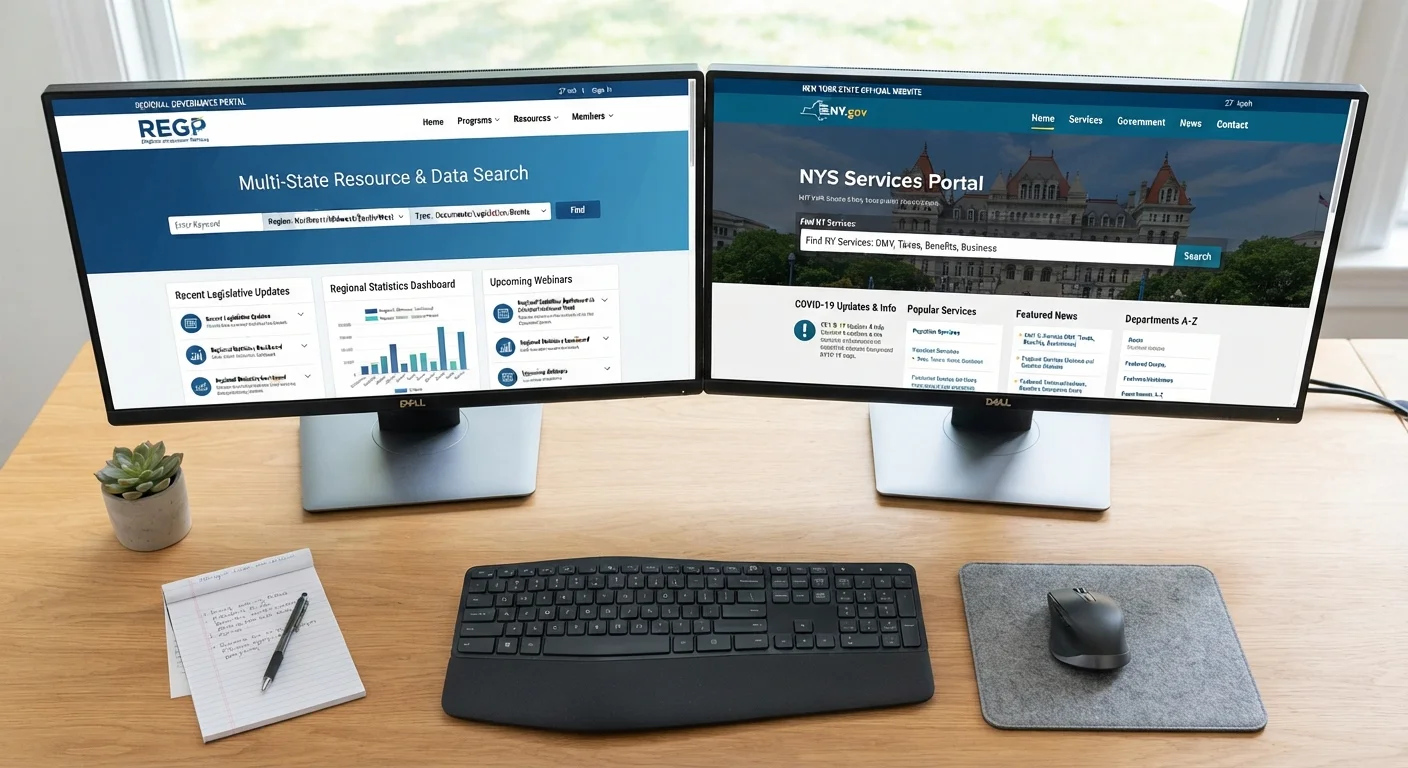
Photo: searchopenrecords editorial
—— In This Article
Key Takeaways
- MissingMoney.com is NAUPA-affiliated and searches multiple participating state databases simultaneously, but not all 50 states are included.
- Individual state portals are the authoritative source and often contain more current data, additional property types, and fuller search filters.
- A complete unclaimed property search typically requires using both approaches — start broad, then go deep.
- Neither method requires payment; any site charging a fee to search is not an official resource.
- Property types covered and claim processes vary by state, so checking each portal directly reduces the chance of missing funds.
What Each Search Path Actually Is
MissingMoney.com is the consumer-facing search tool endorsed by the National Association of Unclaimed Property Administrators (NAUPA) — the organization that coordinates unclaimed property programs across U.S. states and territories. It allows a single query to pull results from a number of participating state databases simultaneously. It is free to use and is a legitimate, government-endorsed entry point.
Individual state portals are websites operated directly by each state's treasury or unclaimed property division. Examples include California's claimit.ca.gov, New York's officialpaymentsclaimsportal.com (via the Office of the State Comptroller), and Texas's claimittexas.org. These are the primary, authoritative databases — the records MissingMoney.com draws from, when a state participates.
Understanding this hierarchy matters: individual state portals are always the source of record. MissingMoney.com is a convenience layer on top of some of them. See our state-by-state overview of unclaimed property portals for detail on how each state's program differs.
Head-to-Head: Coverage, Depth, and Reliability
The most important distinction is coverage. Not every state participates in MissingMoney.com, and participation levels can change. A search that returns zero results there does not mean zero results exist — it may simply mean a relevant state is not feeding data into the tool at that moment.
| Criterion | MissingMoney.com | Individual State Portals |
|---|---|---|
| Geographic coverage | Multi-state, participating states only | Single state, complete records |
| Data authority | Aggregated from state sources | Primary source of record |
| Search speed | Fast — one query, many states | Slower — one portal per state |
| Filter depth | Basic (name, state) | Advanced (type, year, company) |
| Data currency | Depends on state feed timing | Most current available |
| Claim submission | Redirects to state portal | Direct submission on-site |
| Cost to search | Free | Free |
Individual portals also tend to surface more granular search filters — such as property type, reporting company, or year reported — that are not always exposed through the aggregated interface. For strategies on using those filters effectively, see our guide on getting the most out of a state unclaimed property portal.
The Right Search Sequence to Follow
The most effective approach is sequential, not either/or. Here is a practical order:
- Search MissingMoney.com first. Enter your full legal name plus any previous names (maiden name, hyphenated variations). Note every state that returns a result — and every state that does not appear in the results at all.
- Identify which states are not covered by MissingMoney.com. NAUPA's website lists current participants. For any state where you've lived, worked, or held a bank account that isn't listed, go directly to that state's official portal.
- Search each relevant state portal individually, using name variations and prior addresses. This is where records most likely to be overlooked are found. Our step-by-step walkthrough of a state database search explains the process for first-time searchers.
- Repeat for deceased relatives or estate searches. Unclaimed property laws vary, but heirs are generally permitted to claim on behalf of a deceased owner. Each state's portal details its own heir-claim documentation requirements.
Common search habits — like only checking your current state or only using your current legal name — are among the top reasons funds stay unclaimed. Our article on search habits that lead to missed unclaimed property covers these pitfalls in detail.
Watch Out for Impostor Sites
Neither MissingMoney.com nor any official state portal charges a fee simply to search for unclaimed property. If a website asks for payment before showing you search results, it is not an official government resource. Always verify the URL matches the state treasurer or comptroller's official domain. For context on how official portals differ from third-party services, see our comparison of government portals vs. third-party aggregators.
This article is for general informational purposes only and does not constitute financial, legal, or tax advice. Consult a qualified professional for guidance specific to your circumstances.

Unclaimed Money Editorial Team
Unclaimed Money Editorial Team is the collective byline for our editorial team and contributor network. Articles published under this byline or an editorial pen name are researched, written, and reviewed according to our editorial standards for clarity, consistency, and independence before publication.
View author profile