
A State-by-State Overview of Unclaimed Property Portals
A reference guide to how individual state unclaimed property programs differ in scope, portal design, claim processing, and property types covered.
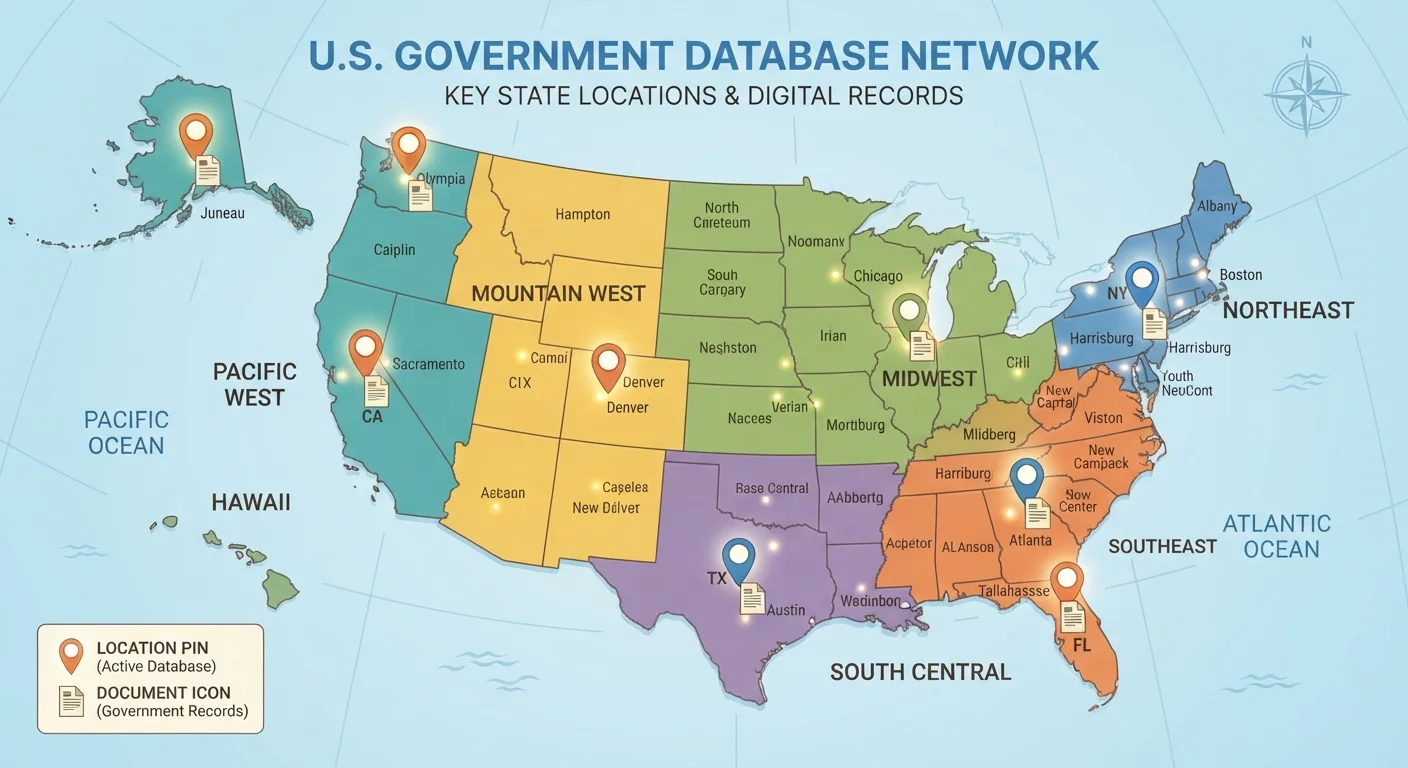
Photo: searchopenrecords editorial
—— In This Article
Why State Portals Differ — and Why It Matters
Each U.S. state administers its own unclaimed property program under its own statutes, which means the portal you use in Texas looks, behaves, and covers different property types than the one in New York or Oregon. Understanding these differences before you search helps you interpret results accurately and avoid missing funds held under another state's custody.
Property typically ends up with the state where the owner's last known address was recorded — not necessarily where the holder (bank, insurer, employer) is headquartered. If you've lived in multiple states, you may need to search several portals. For a foundational explanation of how this lifecycle works, see the How Unclaimed Money Works hub.
To understand the systems operating behind these portals — who maintains the data and how reports get filed — see How State Unclaimed Property Databases Actually Work.
Key Dimensions That Vary by State
When comparing state portals, four dimensions matter most:
- Dormancy period: Most states require a holder to report property after 3–5 years of inactivity, but some states use shorter windows for specific property types (e.g., payroll checks may go dormant in one year in certain jurisdictions).
- Property types covered: All states cover financial accounts and uncashed checks. Many also cover securities, safe deposit box contents, life insurance proceeds, utility deposits, and gift card balances — but specific inclusions differ by statute.
- Portal search functionality: Some states offer advanced filters (property type, estimated value range, city); others provide only a basic name search. A few states, particularly smaller ones, still list property in downloadable files rather than a live search interface.
- Claim processing method and timeline: Many states now accept fully electronic claims with digital document upload. Others require notarized paper forms mailed to the state treasurer's office. Typical processing times range from a few weeks to several months depending on the claim's complexity and the state's volume.
If you're deciding whether to start with a multi-state aggregator like MissingMoney.com or go directly to individual portals, NAUPA vs. Individual State Portals: Which Search Path Finds More explains the tradeoffs clearly.
Notable State Program Features
While all 50 states, plus the District of Columbia, Puerto Rico, and some U.S. territories, operate programs, several states are worth highlighting for distinctive features:
- California (SCO.ca.gov)
- One of the largest programs by dollar volume. Allows searching by business name as well as individual. Offers a value-range filter and accepts electronic claims for most property types. Requires identity verification documents even for smaller claims.
- New York (OSC.ny.gov)
- Covers an unusually broad range of property types including court-ordered funds and banking deposits. Processing is primarily electronic, though complex estate claims often require additional documentation.
- Texas (ClaimItTexas.org)
- Provides a straightforward search interface and fully online claim submission. Separately tracks mineral proceeds, which is relevant given the state's energy sector.
- Florida (Florida.UnclaimedProperty.com)
- Accepts expedited claims for smaller amounts with minimal documentation. Larger claims require sworn proof of ownership and may involve a longer review period.
- Pennsylvania (PATreasury.gov)
- Noteworthy for publishing holder reports publicly, which allows searching by the name of the company that reported the property — useful if you know a former employer or financial institution is involved.
These examples illustrate that knowing your state's specific process is as important as finding a match. For a step-by-step walkthrough of using any state portal effectively, see Your First Unclaimed Property Search: A State Database Walkthrough.
Searching Across Multiple States
If you've relocated, married, or inherited property, searching a single state portal is rarely sufficient. Practical steps to ensure complete coverage include:
- List every state where you held a bank account, received a paycheck, or maintained a utility account over your lifetime.
- Search each state's official treasurer or controller portal individually using name variations (maiden names, initials, common misspellings).
- Use MissingMoney.com as a starting point — it aggregates data from participating states — but always follow up on individual state portals, as not all states participate fully and data may lag behind the state's own records.
- If you're searching on behalf of a deceased relative's estate, check the state portal for the decedent's last known address, as well as any state where they held accounts.
For guidance on maximizing what you find regardless of which portal you use, Getting the Most Out of a State Unclaimed Property Portal covers search strategies including name variations and address history. And once you find a match, Claiming Your Money walks through the documentation and filing steps involved in completing a claim.
This article provides general educational information about public government programs and is not legal or financial advice. For questions about a specific claim or its tax implications, consult a qualified professional.

Unclaimed Money Editorial Team
Unclaimed Money Editorial Team is the collective byline for our editorial team and contributor network. Articles published under this byline or an editorial pen name are researched, written, and reviewed according to our editorial standards for clarity, consistency, and independence before publication.
View author profile