
Flood, Fire, and Hail: How Environmental Damage Shows Up in Vehicle Records
Environmental damage events like flooding or hail are sometimes recorded in VIN history. Learn what these entries indicate and how reliable they are.
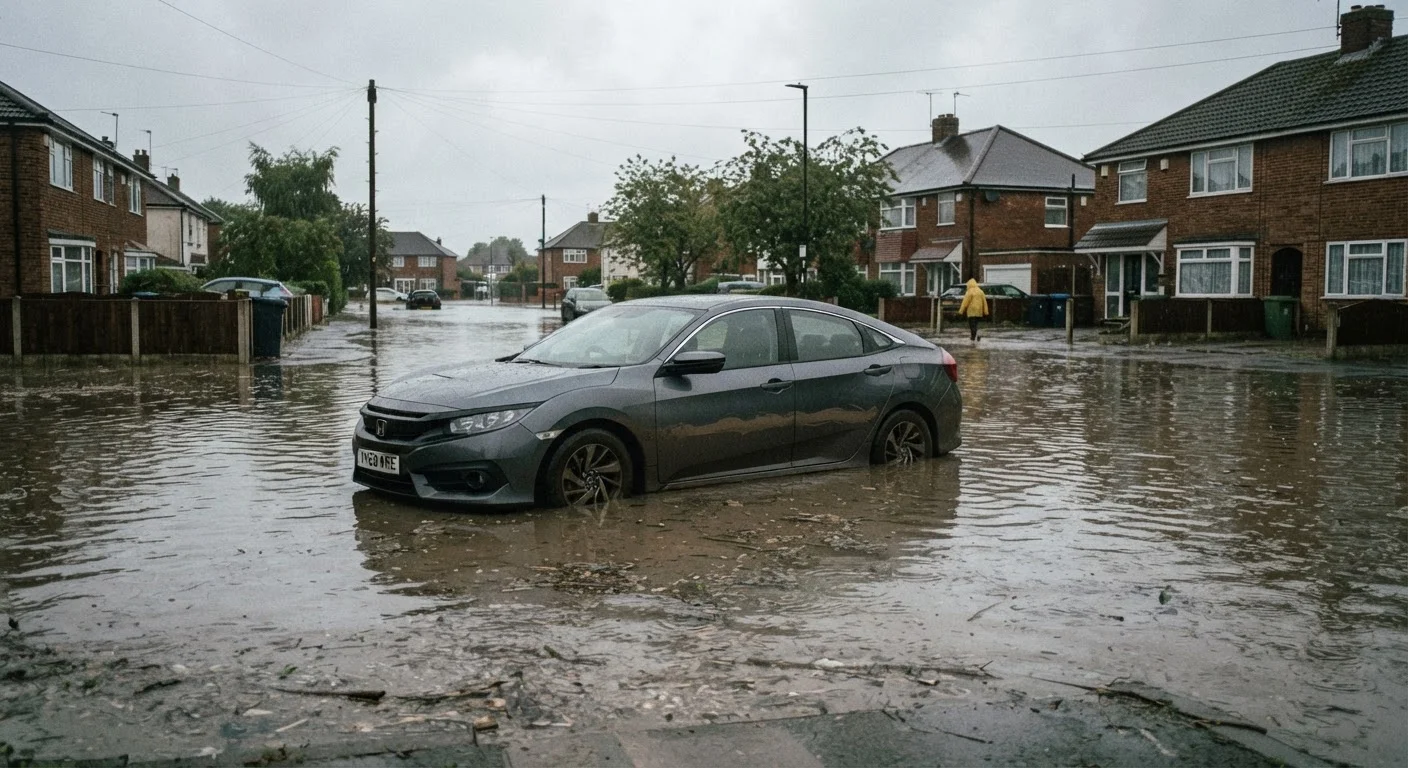
Photo: searchopenrecords editorial
—— In This Article
Key Takeaways
- Flood, fire, and hail damage can appear in vehicle records as title brands or insurance loss entries.
- Title brands issued by state DMVs are the most reliable and permanent form of damage notation.
- Not all environmental damage is reported — uninsured incidents may leave no record at all.
- A VIN history report may show an environmental entry even if the vehicle looks undamaged today.
- Significant environmental damage — especially flooding — can affect long-term reliability in ways not visible during a standard inspection.
How Environmental Damage Enters the Public Record
When a vehicle suffers significant environmental damage — whether from a hurricane, wildfire, or severe hailstorm — that event can enter the public record through two primary channels: an insurance claim or a state title action.
If an insurer declares the vehicle a total loss, it is required under federal law to report that determination to the National Motor Vehicle Title Information System (NMVTIS), a federally authorized database that aggregates title and loss data from state DMVs, insurers, and salvage operators. The state DMV then typically issues a title brand — a permanent designation attached to the VIN indicating the nature of the loss. Common environmental brands include flood, fire damage, and hail damage, though exact terminology varies by state.
These brands are the most reliable form of environmental damage notation because they originate from official government records. Once issued, they follow the vehicle across state lines and ownership changes. For a deeper look at how title brands work and what each designation means, see Title Brands Decoded: Salvage, Rebuilt, Flood, and More.
Beyond title brands, vehicle history reports may also include insurance loss records reported directly by insurers, even when the damage did not reach total-loss status. These entries can reflect partial payouts for hail repair, smoke damage, or water intrusion — events that left the vehicle drivable but carrying a documented history.
What Each Type of Environmental Damage Signals
Different environmental events carry different implications for a vehicle's safety and long-term reliability. Understanding what each type of entry means helps you interpret records accurately rather than reacting to labels alone.
Flood Damage
Flood entries are among the most consequential in vehicle records. Water intrusion — especially above the floor pan — can affect electrical systems, corrode structural components, and create persistent mold issues. The damage is often internal and not visible during a casual inspection. Vehicles that were submerged and later dried out may function normally for months before hidden corrosion causes failures. A flood brand, or any notation referencing water or flood loss, warrants thorough scrutiny.
Fire Damage
Fire damage entries range from minor to catastrophic. A vehicle with a fire history may have had its wiring harness compromised, its structural integrity weakened by heat, or its interior materials replaced — not always to factory standards. The record entry alone does not communicate the severity; the key question is whether the vehicle carries a salvage or rebuilt title as a result, or merely an insurance claim with repairs completed.
Hail Damage
Hail entries are generally less alarming than flood or fire notations. Most hail damage is cosmetic — dents in body panels, cracked glass — and can be repaired without affecting mechanical reliability. However, if hail damage was severe enough to trigger a total-loss declaration, it will appear as a title brand, not just a claim record. That distinction matters significantly when assessing the vehicle's value and insurability.
The Reliability Gap: What Records Miss
Vehicle history reports are only as complete as the data reported to them. Environmental damage that was never insured — a vehicle owner who paid out-of-pocket for hail repairs, or a flood-damaged car sold privately before a claim was ever filed — may leave no record whatsoever.
This is the core limitation that every VIN search user should understand. As explained in detail in Public Records vs. Reported Data: The Limits of What a VIN Search Can Find, public VIN data reflects reported events, not all events. Vehicles that were flooded during a natural disaster and then quickly resold without going through insurance may carry no official damage notation.
Additionally, reporting depth varies by state. Some states report title data to NMVTIS more completely than others, meaning a vehicle branded in one state might show up cleanly if it was later retitled in a state with looser reporting requirements — a practice sometimes called title washing.
Title Washing: A Known Limitation
Title washing occurs when a vehicle with a damage brand in one state is retitled in another state that may not fully recognize or carry forward the original brand. While NMVTIS is designed to prevent this by sharing data across states, coverage and enforcement are not uniform nationwide. A clean title in the state where you are purchasing a vehicle does not guarantee the vehicle has no prior damage history in another state — checking the NMVTIS record directly or using a report that draws from it is advisable.
This is why a VIN history check should be one part of a broader assessment process, not the only one. Physical inspection by a qualified mechanic remains essential, particularly for vehicles with any environmental damage entry — or for used vehicles from regions historically affected by flooding events.
Reading Environmental Entries in Context
Finding an environmental damage entry in a vehicle's record is not, by itself, a disqualifying signal. Context matters. A hail damage claim from several years ago with documented repairs differs meaningfully from a flood brand with a subsequent rebuilt title and no repair documentation.
When you encounter an environmental entry, consider asking these questions:
- Was the vehicle declared a total loss, or was the damage repaired under a standard claim?
- Does the vehicle now carry a salvage or rebuilt title as a result?
- What is the time gap between the damage event and subsequent ownership records?
- Are there follow-on service or repair records that suggest the damage was properly addressed?
Environmental damage entries should also be read alongside other history flags. For comparison, collision entries have their own interpretation nuances — see Accident Records on a Vehicle History Report: What the Data Really Means for guidance on reading those records carefully.
For a broader list of patterns that warrant closer investigation, Red Flags Worth Scrutinising in Any Vehicle History Report provides practical context on what combinations of entries should prompt further action before completing a purchase or sale.
This article is for general informational purposes only and does not constitute legal, financial, or mechanical advice. For decisions involving a specific vehicle, consult a qualified mechanic and, where appropriate, a licensed professional.
Frequently Asked Questions

Vin Search Editorial Team
VIN Search Editorial Team is the collective byline for our editorial team and contributor network. Articles published under this byline or an editorial pen name are researched, written, and reviewed according to our editorial standards for clarity, consistency, and independence before publication.
View author profile