
Title Brands Decoded: Salvage, Rebuilt, Flood, and More
Title brands signal a vehicle's damage or loss history. Learn what each designation means and how it stays tied to the VIN permanently.
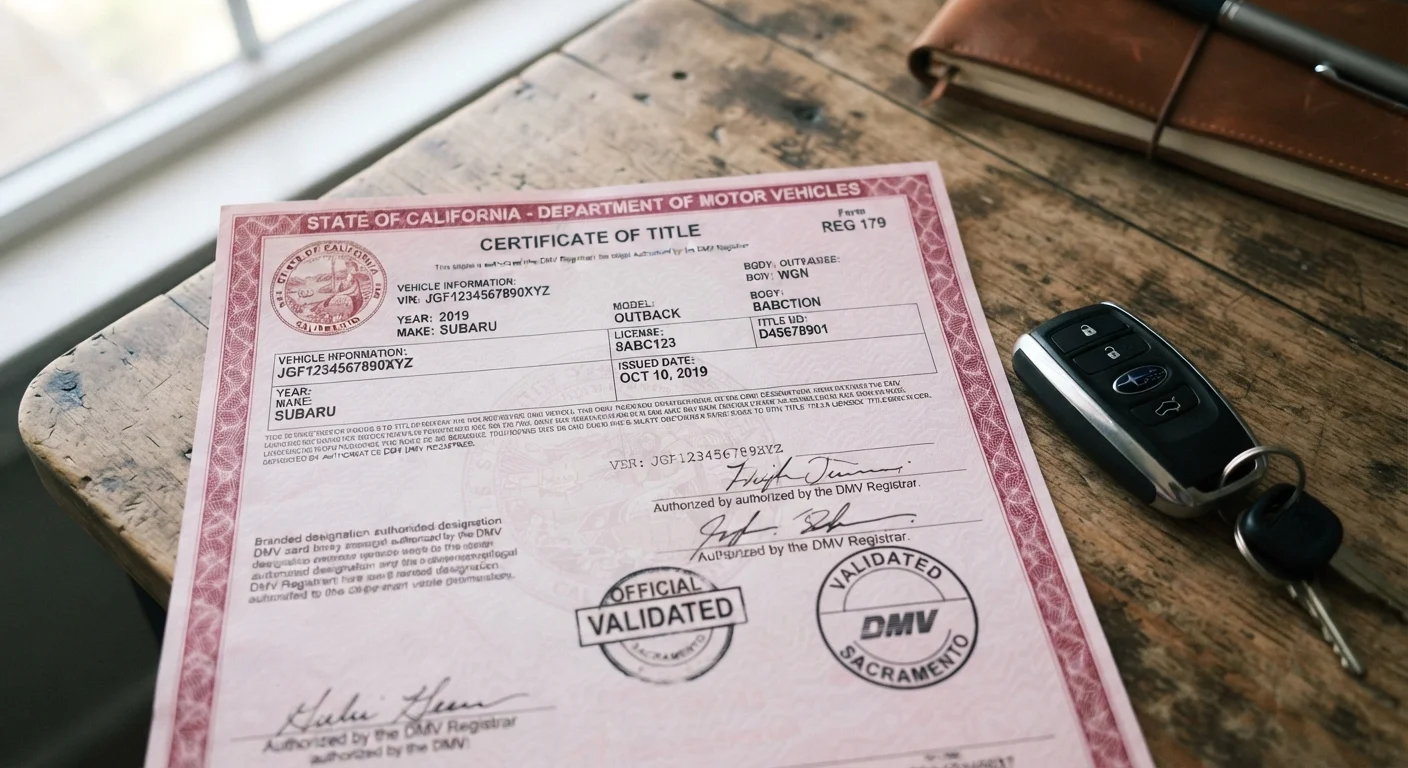
Photo: searchopenrecords editorial
—— In This Article
What Is a Title Brand?
A title brand is an official designation printed on a vehicle's certificate of title by a state motor vehicle agency. It signals that the vehicle has experienced a significant event — such as severe damage, theft, or a manufacturer buyback — that consumers and lenders need to know about before making decisions.
Brands are part of the public record and attach permanently to a vehicle's VIN. Even if a car changes hands repeatedly or moves across state lines, the brand follows it through title history databases. Understanding what each brand means is foundational to reading any vehicle history report accurately. See the VIN Lookup Basics hub for a primer on how VINs work before diving deeper.
| Total-loss threshold (typical range) | 75%–100% of pre-damage value (Varies by state DMV regulation) |
| Federal title database | NMVTIS (National Motor Vehicle Title Information System) (Administered by the U.S. Department of Justice) |
| Brand permanence | Brands attach to the VIN permanently (State and federal title record law) |
| Odometer disclosure law | Truth in Mileage Act (federal) (49 U.S.C. § 32701 et seq.) |
| Junk title road use | Generally cannot be retitled for road use (State DMV rules vary) |
The Major Title Brands Explained
State naming conventions vary somewhat, but the following categories cover the core brands you are most likely to encounter in US vehicle records.
Salvage
A salvage title is issued when an insurer declares a vehicle a total loss — meaning repair costs exceed a defined percentage of the vehicle's pre-damage value (thresholds vary by state, commonly 75–100%). The insurer takes ownership, and the state rebrands the title. A vehicle with a salvage title generally cannot be legally registered or driven on public roads. For a detailed walkthrough of the total-loss process, see Total Loss Designations: What Happens After an Insurer Writes Off a Vehicle.
Rebuilt / Reconstructed
After a salvage vehicle is repaired, an owner may apply for a rebuilt (sometimes called reconstructed) title. Most states require a physical inspection to verify that the vehicle meets safety and roadworthiness standards before issuing this title. A rebuilt title allows legal registration but the brand remains visible on the title permanently.
Flood
A flood brand appears when a vehicle has been water-damaged beyond a state-defined threshold. Water intrusion can corrode electrical systems, weaken structural components, and promote mold — problems that are not always apparent during a visual inspection. Environmental damage entries in VIN records are explored more fully in Flood, Fire, and Hail: How Environmental Damage Shows Up in Vehicle Records.
Lemon Law Buyback
When a manufacturer repurchases a vehicle under a state's lemon law — typically because repeated repair attempts failed to fix a substantial defect — the title receives a lemon law buyback brand. The vehicle may be resold, but the brand must be disclosed.
Odometer Rollback
An odometer brand (or mileage discrepancy brand) is recorded when there is documented evidence that an odometer reading does not match prior recorded mileage. Federal law under the Truth in Mileage Act requires accurate odometer disclosure at every ownership transfer.
Junk / Scrapped
A junk title (terminology varies by state) signals that the vehicle has been designated for parts or scrap only. Vehicles with junk titles generally cannot be titled for road use again — a key distinction from salvage titles.
How Brands Persist in the Public Record
Title brands are recorded by state DMV agencies and shared nationally through systems such as the National Motor Vehicle Title Information System (NMVTIS), a federally mandated database administered by the U.S. Department of Justice. Insurance companies, salvage yards, and junk recyclers are required to report to NMVTIS, which means brand information aggregates from multiple independent sources — not just the titling state.
This multi-source architecture is important: it limits — though does not eliminate — opportunities for a brand to be obscured when a vehicle moves to a different state. The practice of moving branded vehicles across state lines to obtain a clean title is known as title washing. Learn how this distortion of the public record trail works in Title Washing: How It Distorts the Public Record Trail.
Vehicle history reports draw on NMVTIS data alongside insurer total-loss reports and auction records, giving consumers multiple checkpoints to cross-reference. That said, reporting gaps exist: not every damage event results in an insurance claim, and not every claim triggers a title brand. A title showing no brands is not a guarantee of a clean history — a point examined in Why a Clean Title Doesn't Always Mean a Clean History.
For a broader look at what vehicle history reports can reveal across all brand types, visit the Vehicle History Reports hub. A companion reference for comparing specific designations side-by-side is also available: Salvage, Rebuilt, and Clean Titles: A Field Guide to Title Brands.
This article is for general informational and educational purposes only. It does not constitute legal, financial, or professional advice. Consult a qualified professional for decisions specific to your situation.

Vin Search Editorial Team
VIN Search Editorial Team is the collective byline for our editorial team and contributor network. Articles published under this byline or an editorial pen name are researched, written, and reviewed according to our editorial standards for clarity, consistency, and independence before publication.
View author profile