
What a Vehicle History Report Actually Contains
From title records to odometer readings, learn what data fields appear in a vehicle history report and what each one tells you.
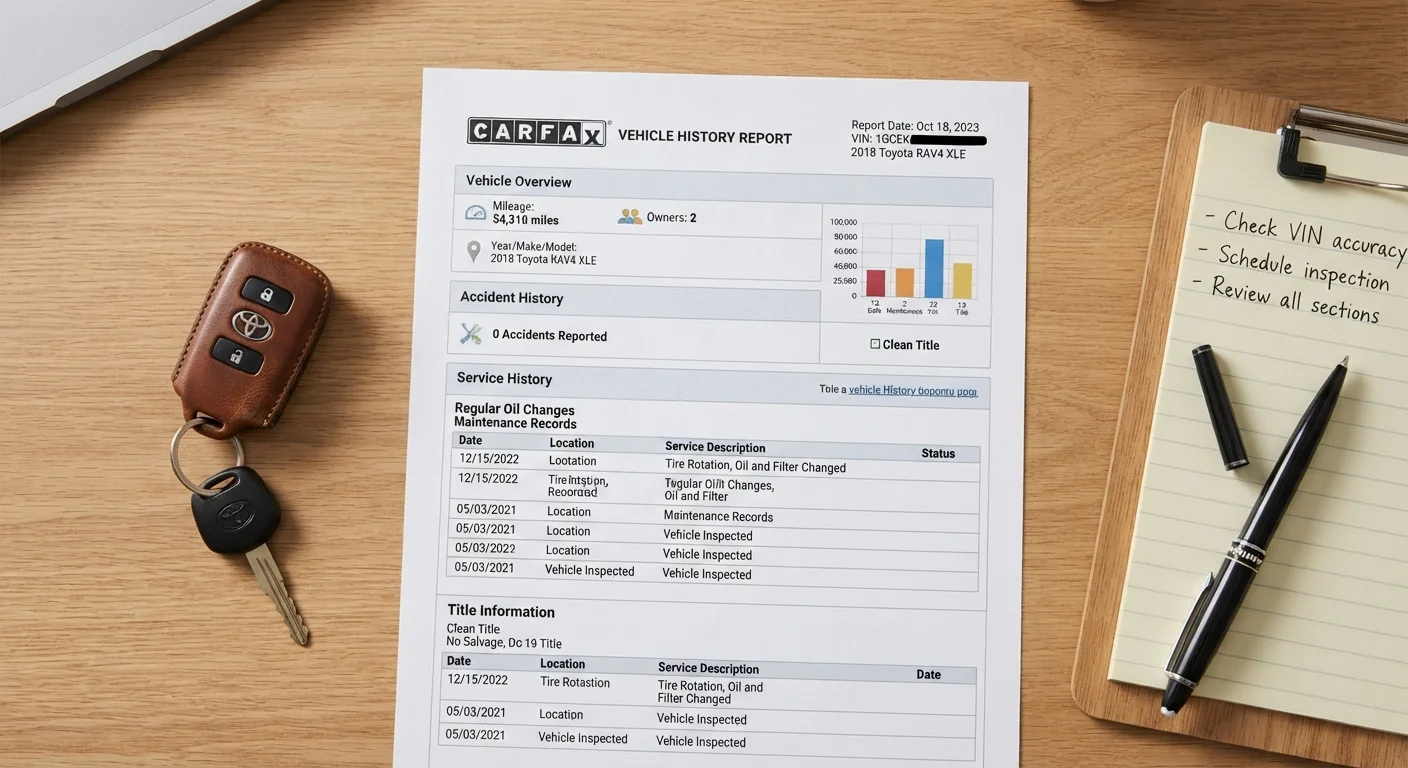
Photo: searchopenrecords editorial
—— In This Article
Key Takeaways
- A vehicle history report pulls data from state DMV records, federal odometer filings, insurance databases, and salvage auctions.
- Title brands — such as salvage, flood, or lemon law buyback — are among the most critical data points in any report.
- Odometer disclosure records can reveal potential rollback fraud across multiple ownership transfers.
- Reports show reported accidents, not all accidents; private repairs that bypass insurance may never appear.
- Ownership history entries reveal how many times a vehicle changed hands and in which states.
- A vehicle history report is one layer of due diligence, not a guarantee of a vehicle's current condition.
The Core Data Categories in Any Report
A vehicle history report organizes its information into several distinct categories. Understanding what each one represents — and where the underlying data originates — is essential for reading any report accurately. To get grounded in the basics first, see the VIN Lookup Basics hub for an overview of how a VIN works as a vehicle identifier.
Title Records
Title records are the backbone of any vehicle history report. Each time a vehicle is sold or transferred, a new title is issued by the state DMV. These records show the sequence of registered owners, the states where the vehicle was titled, and any title brands applied along the way. Title brands are official notations that flag significant events: common ones include salvage, flood, rebuilt/reconstructed, odometer rollback, and lemon law buyback. For a field-by-field breakdown of what appears on an actual title document, see Reading a Vehicle Title Document.
Odometer Disclosure History
Federal law (the Truth in Mileage Act) requires sellers to disclose odometer readings during most ownership transfers. These disclosures are recorded on title documents and flow into vehicle history reports, creating a mileage timeline across every transfer. Comparing readings chronologically can expose potential rollback fraud — a red flag any buyer should investigate further.
Accident and Damage Records
Accident entries in a report come from insurance claims data and, in some cases, law enforcement databases. A typical entry notes the date, severity description (minor, moderate, severe), and which structural areas were affected. Importantly, this section only captures reported incidents — see the section below on limitations for why that distinction matters.
Ownership History
This section lists how many owners the vehicle has had, in which states it was registered, and whether it was used as a personal, fleet, rental, or commercial vehicle. A taxi or rental history, for example, may indicate higher-than-average wear even if the mileage looks reasonable.
Lien, Recall, and Auction Records
Beyond the core categories above, most reports include several additional data types that carry real implications for buyers and lenders.
Lien Records
When a vehicle is financed, a lender records a lien against the title. A vehicle history report may show whether a lien exists or was released. An open lien means a lender still has a legal interest in the vehicle — buying a car with an unresolved lien can create serious legal complications. For a deeper look at how VINs connect to lien data, explore the VIN & Title Records hub.
NHTSA Recall Records
The National Highway Traffic Safety Administration (NHTSA) maintains a public database of safety recalls. Vehicle history reports typically flag open recalls tied to a specific VIN — meaning the recall repair has not been completed. This data comes directly from manufacturer and NHTSA records and is generally reliable.
Auction and Impound Records
If a vehicle passed through a salvage auction, insurance auction, or government impound, that event is often captured. Auction records are particularly useful because they sometimes include inspection photos or damage descriptions recorded at the time of sale.
17
Characters in a standardized VIN
NHTSA standardized the 17-character VIN format in 1981; all vehicles manufactured for the US market since then use this format.
~1 in 5
Used vehicles with undisclosed damage history
Industry analyses of used-vehicle listings have estimated that a meaningful share of vehicles carry damage or title events not disclosed by sellers.
50+
State and territory DMV sources
Vehicle history reports may draw on title and registration data from all 50 US states and territories, though participation and data recency vary by jurisdiction.
What a Report Cannot Tell You
Understanding a vehicle history report's limitations is just as important as knowing what it contains. Reports only reflect data that was captured and submitted to a reporting database. A significant portion of real-world vehicle events simply never make it into any report.
Private repairs — those paid out-of-pocket without an insurance claim — leave no record. Accidents in states or jurisdictions that don't participate in data-sharing programs may also be absent. Mechanical condition, deferred maintenance, and the current state of wear and tear are entirely outside the scope of any report.
This is why vehicle history reports are best treated as one layer of due diligence rather than a final verdict. Public Records vs. Reported Data explores the coverage gaps in detail, while Verifying a Vehicle History Report explains how to cross-check report findings against physical documents and a professional inspection. If you want a guided walkthrough of how to read each section, Interpreting a Vehicle History Report steps through the process for first-time readers.
This article is for general informational purposes only and does not constitute legal or financial advice. Consult a qualified professional for decisions specific to your circumstances.
Frequently Asked Questions

Vin Search Editorial Team
VIN Search Editorial Team is the collective byline for our editorial team and contributor network. Articles published under this byline or an editorial pen name are researched, written, and reviewed according to our editorial standards for clarity, consistency, and independence before publication.
View author profile