
Reading a Vehicle Title Document: Field by Field
A quick-reference breakdown of every common field on a vehicle title, from the VIN and odometer to brand codes and lien data.
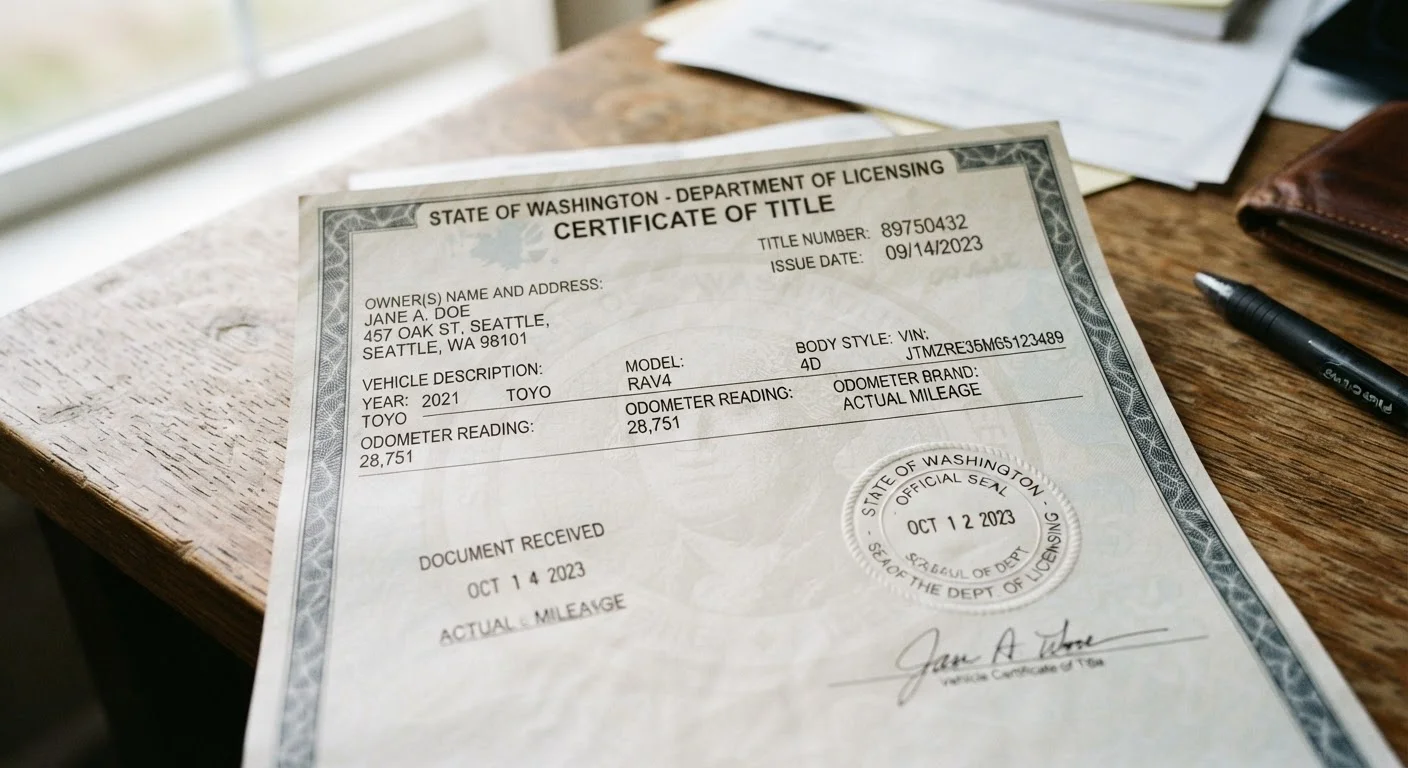
Photo: searchopenrecords editorial
—— In This Article
What a Vehicle Title Document Is
A vehicle title is a state-issued legal document that establishes who owns a motor vehicle. Each state's DMV — or equivalent agency — creates and maintains title records, which become part of the public record trail linked to a car's VIN. Understanding every printed field on that document helps you verify ownership status, spot red flags, and avoid costly mistakes when buying or selling a vehicle.
Titles vary slightly by state, but federal standards and NHTSA guidelines create enough uniformity that the core fields appear on virtually every US title. This reference guide walks through each of those fields in order.
Core Identification Fields
These fields establish the identity of the vehicle and are the first thing to cross-check against any other documents you have.
- VIN (Vehicle Identification Number)
- A 17-character alphanumeric code standardized by NHTSA. The VIN ties every public record — registrations, titles, odometer readings, insurance events — to this specific vehicle. Verify it matches the VIN stamped on the dashboard plate and door jamb. See VIN Lookup Basics for a full breakdown of how to decode each character.
- Year, Make, and Model
- The model year, manufacturer name, and vehicle model as recorded at first registration. Discrepancies between these fields and the VIN decode can signal a data entry error or, in rare cases, VIN tampering.
- Body Style and Color
- Descriptive fields used to identify the physical vehicle. Color may change over time; the title reflects the color at the time of titling, not necessarily current paint.
Ownership and Lien Fields
These fields establish who holds legal ownership and whether any financial claims remain against the vehicle.
- Owner Name and Address
- The legal owner(s) of record at the time the title was issued. Multiple names may appear connected by "and" (both parties must sign to transfer) or "or" (either party may sign).
- Lienholder Name and Address
- If the vehicle was financed, the lender's name appears here. A lien means the lienholder has a legal interest in the vehicle until the loan is repaid. A title showing a lienholder should not be accepted in a private sale until lien release documentation is provided. Learn more about how a lien gets attached to a vehicle title.
- Title Issue Date
- The date the state DMV issued this version of the title. Multiple title issue dates across a vehicle's history can indicate ownership transfers or title corrections.
Odometer and Brand Fields
Federal law — specifically the Truth in Mileage Act — requires odometer disclosure at each ownership transfer for most passenger vehicles. These fields record that disclosure.
- Odometer Reading
- The mileage recorded at the time of transfer. It must be entered by the seller and acknowledged by the buyer. Look for the accuracy certification: "Actual Mileage," "Exceeds Mechanical Limits" (meaning the odometer rolled over), or "Not Actual Mileage" (meaning the reading is known to be inaccurate).
- Title Brand
- A brand is a permanent notation stamped on a title to disclose significant history. Common brands include Salvage, Rebuilt/Reconstructed, Flood, Lemon Law Buyback, and Junk. A clean title carries no brand. For a detailed explanation of what each brand means, see Salvage, Rebuilt, and Clean Titles: A Field Guide to Title Brands.
Title brands transfer with the vehicle across state lines, though "title washing" — retitling in a state that doesn't recognize a prior brand — is a known risk. A thorough vehicle history report may surface brands that don't appear on the current title.
Transfer and Signature Section
The reverse side of most titles contains the transfer section, which must be completed correctly for a sale to be legally valid.
- Seller Signature and Date
- The current owner(s) must sign exactly as their name appears on the front. An unsigned title cannot be transferred.
- Buyer Name and Address
- The new owner's information as it will appear on the next title. This information goes to the DMV to generate the new title in the buyer's name.
- Sale Price
- Required in many states and used to calculate sales tax at registration. Deliberately understating the sale price to reduce tax is illegal.
- Notarization (where required)
- Some states require a notary's seal on the transfer section. Check your state DMV's requirements before completing a sale.
For a broader look at how all these records connect across a vehicle's lifetime, see The Public Record Trail Behind a Vehicle Title and the comprehensive VIN & Title Records: A Complete Walkthrough.
If any field raises questions, a vehicle history report walkthrough can help you cross-reference the title data against independent records. And if something looks inconsistent, review what can complicate a title record search before proceeding.

Vin Search Editorial Team
VIN Search Editorial Team is the collective byline for our editorial team and contributor network. Articles published under this byline or an editorial pen name are researched, written, and reviewed according to our editorial standards for clarity, consistency, and independence before publication.
View author profile