
Eight Things a VIN Can Reveal — and Four It Cannot
A VIN unlocks a surprising amount of vehicle data, but it has real limits. Know exactly what to expect before running a lookup.
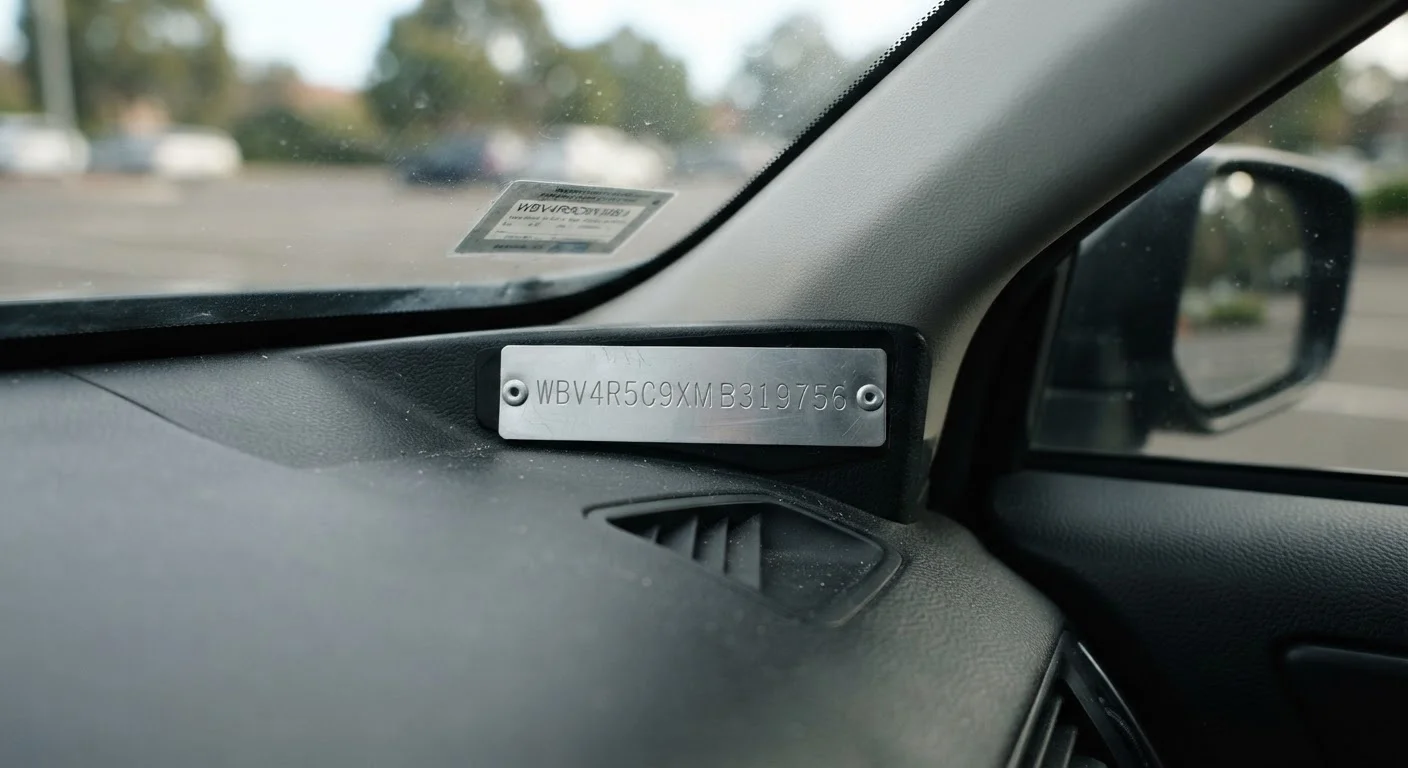
Photo: searchopenrecords editorial
—— In This Article
Key Takeaways
- A VIN encodes manufacturer details, vehicle specifications, and a unique production serial number by design.
- Title history, odometer readings, and recall status are among the most useful facts a VIN lookup can surface.
- VIN searches draw from reported data, so unreported incidents — like private sales or cash repairs — may not appear.
- No VIN lookup can tell you about a vehicle's current mechanical condition or future reliability.
- Understanding these limits helps you use VIN data as one tool among several, not a definitive guarantee.
What a VIN Is — and Why the Distinction Matters
A VIN is a standardized 17-character code assigned to every road vehicle manufactured for sale in the United States since 1981, governed by NHTSA standards. Each character position encodes specific data: the manufacturer, vehicle attributes, a check digit for validation, the model year, plant of assembly, and a unique production sequence number. For a deeper breakdown of how each segment works, see how to decode a VIN's 17 characters.
The critical distinction for consumers is this: the VIN itself is just an identifier. What a VIN lookup reveals depends entirely on the databases queried — state DMV title records, NHTSA recall systems, insurance total-loss databases, and other reported sources. Some information is reliably captured; other information is structurally absent. The twelve items below map exactly what falls into each category.
Country and manufacturer of origin
The first character of a VIN identifies the country where the vehicle was assembled, and the first three characters together form the WMI — a code assigned by NHTSA that pinpoints the specific manufacturer. This data is baked into the VIN at the factory and is considered highly reliable.
The first three VIN characters reliably identify the manufacturer regardless of where the car is later sold.
Vehicle make, model, and body style
Characters four through eight, called the VDS, encode the vehicle line, series, body type, engine type, and restraint systems. Combined with manufacturer data, this lets a lookup confirm whether the physical vehicle matches what a seller claims it to be — a useful cross-check against altered badging or misrepresentation.
VDS characters can confirm whether a car's claimed model and engine match factory specifications.
Model year of manufacture
The tenth character encodes the model year according to a defined alphanumeric cycle established by NHTSA. Note that a vehicle's model year can differ from its calendar year of manufacture — a detail that matters for insurance, registration, and parts sourcing.
Model year is encoded in position ten and may differ from the actual calendar year the car was built.
Assembly plant
The eleventh character identifies the specific plant where the vehicle was assembled. While this is rarely the primary concern for most buyers, it can be relevant for understanding regional build standards or verifying authenticity on collector vehicles.
Assembly plant data can matter for collector vehicles where production location affects authenticity.
Title and ownership history
When a vehicle changes hands through a formal title transfer processed by a state DMV, that event typically creates a public record linkable to the VIN. A lookup can surface the number of previous owners, the states where the vehicle was titled, and any title brands — such as salvage, rebuilt, or flood designations — applied by a state authority. What a VIN reveals about ownership history explains how this data flows through public records systems.
Title brands like salvage or flood are among the most consequential facts a VIN lookup can surface.
Odometer readings at title transfer
Federal law requires odometer disclosure at the time of title transfer for most vehicles under a certain age. Those disclosures are recorded and can be retrieved by VIN, allowing comparison across multiple title events. Significant gaps or rollbacks between reported readings are a recognized red flag.
Comparing odometer readings across title events can reveal potential rollback fraud.
Open safety recalls
NHTSA maintains a public database of vehicle safety recalls indexed by VIN. A lookup against this database shows whether any manufacturer-issued recalls remain unaddressed on a specific vehicle. This is one of the most actionable pieces of information a VIN search provides and is available directly through NHTSA's official tools at no cost.
Open recall status is publicly available through NHTSA and is one of the most actionable VIN data points.
Insurance total-loss and salvage events
When an insurer declares a vehicle a total loss, that event is typically reported to industry databases and can be linked to the VIN. This is how salvage history often surfaces even when a title brand has been "washed" through registration in a lenient state — though coverage is not universal across all insurers or states.
Insurance total-loss reports can catch salvage history even when title branding has been obscured.
CANNOT REVEAL: Unreported accidents and cash repairs
If a vehicle was damaged and repaired privately — without an insurance claim filed and without triggering a title brand — that event leaves no trace in any VIN-linked database. A structurally compromised vehicle can carry a clean title history if prior owners paid out of pocket and no authority was notified. This is a fundamental limit of reported-data systems, not a gap that any lookup service can bridge.
Cash repairs leave no data trail — a VIN search cannot reveal damage that was never officially reported.
CANNOT REVEAL: Current mechanical condition
A VIN lookup is a historical document, not a diagnostic tool. It cannot tell you whether the transmission is slipping today, whether brake pads are worn, or whether the engine has developed a leak. For current condition, a qualified mechanic performing a pre-purchase inspection is the appropriate resource — no database substitutes for physical examination.
No database can replicate what a mechanic discovers during a hands-on pre-purchase inspection.
CANNOT REVEAL: Private-sale ownership changes
When a vehicle changes hands between private parties without a formal title transfer — a practice sometimes called a "curbside" transaction — that ownership event is invisible to VIN-linked records. The number of real-world owners may therefore be higher than what title history shows. This is particularly common in certain used-vehicle markets and among older vehicles.
Private sales without title transfers are invisible to VIN records, understating true ownership count.
CANNOT REVEAL: Future reliability or resale value
VIN data is backward-looking. It cannot predict how a vehicle will perform going forward, nor can it determine a precise market value. Pricing guides and reliability data from independent sources are separate tools for those assessments. Treating a clean VIN history as a guarantee of trouble-free ownership is a common misreading — see common VIN misconceptions for more on this and related errors.
A clean VIN history is not a guarantee of future reliability — it reflects the past, not the road ahead.
Using VIN Data Wisely
A VIN lookup is a powerful starting point, but it works best when paired with a physical inspection and, for high-stakes purchases, a pre-purchase inspection by a qualified mechanic. Understanding the coverage gaps in vehicle history reports is just as important as knowing what those reports include. For readers new to the process, a first-time VIN lookup guide covers where to find a VIN and how to run a search step by step.
The four things a VIN cannot reveal are not flaws in the system — they reflect genuine limits of reported, centralized data. Recognizing those boundaries is what separates an informed vehicle buyer from one who over-relies on a single source. Used correctly, VIN data is one of the most accessible and revealing tools in public records.
Pair VIN data with a physical inspection
For any significant vehicle purchase, treat a VIN lookup as your first filter, not your final verdict. If the history report raises no flags, that is reassuring — but a pre-purchase inspection by a licensed mechanic can surface mechanical issues that no database tracks. The two tools together provide much stronger confidence than either one alone.

Vin Search Editorial Team
VIN Search Editorial Team is the collective byline for our editorial team and contributor network. Articles published under this byline or an editorial pen name are researched, written, and reviewed according to our editorial standards for clarity, consistency, and independence before publication.
View author profile