
VIN Lookup from Scratch: Everything a First-Time Vehicle Owner Should Know
New to VIN searches? This guide explains what a VIN is, how to find it, and what a lookup can tell you about any vehicle's history.
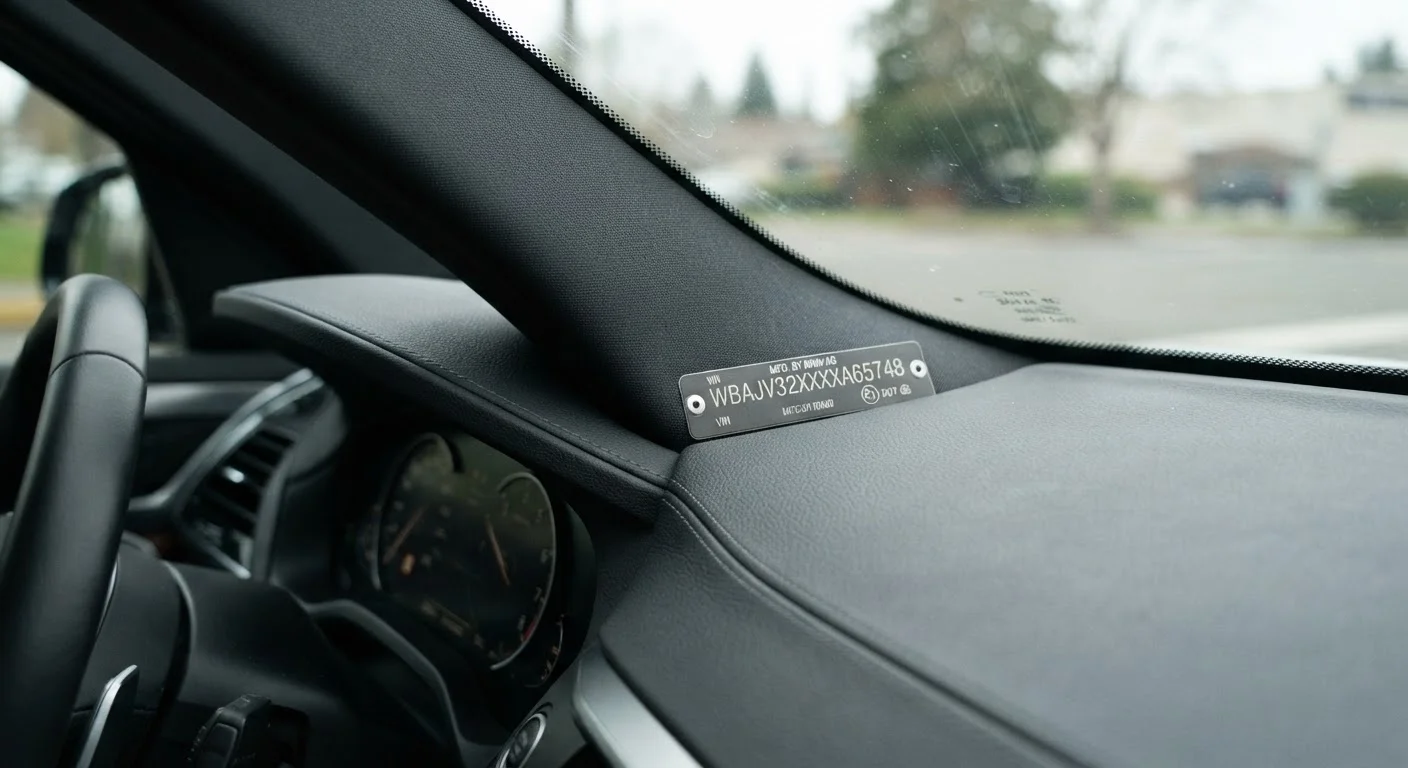
Photo: searchopenrecords editorial
—— In This Article
Key Takeaways
- Every US vehicle built after 1981 has a unique 17-character VIN assigned at the factory.
- A VIN encodes the manufacturer, vehicle type, and production details — not just a random serial number.
- Your VIN appears in multiple physical locations and on key documents like your title and registration.
- A VIN lookup can reveal title history, odometer records, and recall status — but not every event leaves a public record.
- NHTSA provides a free, official tool for decoding VINs and checking open safety recalls.
- Understanding what a VIN search can and cannot show helps you evaluate any vehicle with realistic expectations.
What Is a VIN and Why Does It Matter?
A Vehicle Identification Number (VIN) is a standardized 17-character code assigned to every motor vehicle manufactured or imported for sale in the United States since 1981. The National Highway Traffic Safety Administration (NHTSA) established the format under federal regulation, which is why every VIN follows the same structure regardless of make or country of origin.
Think of a VIN as a vehicle's fingerprint. No two vehicles produced in the same year share an identical number, which makes it the most reliable way to identify a specific car, truck, or motorcycle across public records systems. When a vehicle changes hands, gets titled, is involved in an insurance claim, or triggers a safety recall, that activity is linked to its VIN — not to a license plate, which can change, or to a model name, which is shared by thousands of identical vehicles.
For a first-time owner, understanding the VIN is the foundation of everything else: reading a history report, verifying a title, or checking whether open safety recalls exist. See what a VIN actually is for a deeper look at the standard's origins and purpose.
VIN
A Vehicle Identification Number — a unique 17-character code assigned to every motor vehicle, used to track it across title, recall, and insurance records.
NHTSA
The National Highway Traffic Safety Administration, the US federal agency that sets vehicle safety standards and maintains the official VIN format and recall database.
Title brand
An official designation recorded on a vehicle's title — such as salvage, flood, or rebuilt — that flags significant events in the vehicle's history.
Check digit
The ninth character of a VIN, calculated mathematically from the other characters, used to detect errors or fraudulent alterations to the number.
World Manufacturer Identifier (WMI)
The first three characters of a VIN that identify the country of manufacture and the specific manufacturer that built the vehicle.
Odometer disclosure
A recorded mileage reading documented at the time of a title transfer, required by federal law and accessible through vehicle history data.
Where to Find Your VIN
A VIN appears in several places on every vehicle and across several documents. Knowing where to look — and which source to trust — saves time and prevents errors when you run a search.
- Dashboard plate: The most commonly referenced location. Look through the driver's side of the windshield at the lower corner of the dashboard. The plate is riveted in place and designed to be visible from outside the vehicle.
- Driver's door jamb: A sticker on the door frame or the door edge often repeats the VIN alongside tire pressure and load ratings.
- Title and registration documents: The VIN printed on your state-issued title is the official legal record. This is the authoritative document version.
- Insurance card and policy: Your insurer records the VIN when issuing coverage.
- Engine bay and frame: Manufacturers stamp the VIN in additional locations to aid in recovery after theft or to confirm authenticity after major repairs.
If the VINs in these locations do not all match, treat that as a flag worth investigating before relying on any history report. For a comprehensive breakdown of every location, see where to find your VIN.
What the 17 Characters Actually Mean
The VIN is not a random string. Each position encodes specific information according to the NHTSA standard.
| Position(s) | Name | What It Encodes |
|---|---|---|
| 1–3 | World Manufacturer Identifier (WMI) | Country of manufacture and manufacturer identity |
| 4–8 | Vehicle Descriptor Section (VDS) | Model, body style, engine type, and restraint systems |
| 9 | Check Digit | A calculated value used to detect transcription errors or fraud |
| 10 | Model Year | The vehicle's model year, encoded as a letter or number |
| 11 | Plant Code | The specific assembly plant where the vehicle was built |
| 12–17 | Production Sequence Number | The vehicle's unique production order within that plant |
Position 9, the check digit, is particularly useful: it is calculated mathematically from the other characters, so a forged or misread VIN will usually fail validation. For a full position-by-position reference, see the VIN decoded guide.
What a VIN Lookup Can—and Cannot—Tell You
A VIN lookup pulls data from public records systems — state DMV title filings, NHTSA recall databases, and in some cases insurance total-loss records. Here is a realistic picture of what those sources provide.
What a lookup commonly reveals:
- Title history: how many times the vehicle was titled and in which states
- Title brands: salvage, flood, rebuilt, or lemon-law buyback designations
- Odometer readings recorded at title transfers
- Open or previously completed safety recalls from NHTSA
- Manufacturer specifications decoded from the VIN structure itself
What a lookup cannot guarantee:
- Accidents not reported to an insurer or law enforcement
- Mechanical wear or maintenance history done outside dealerships
- Problems that occurred but were never officially documented
Always Verify With a Physical Inspection
No VIN report replaces eyes-on evaluation. A pre-purchase inspection by a licensed, independent mechanic can identify mechanical issues, frame damage, or signs of flooding that public records will never capture. Budget for this step whenever you are buying a used vehicle.
Understanding this distinction is critical. A report showing no adverse history is valuable — but it reflects the limits of available public data, not a certification of the vehicle's condition. For a detailed breakdown, see what a VIN can and cannot reveal.
How to Run Your First VIN Search
Running a VIN lookup is straightforward once you have the correct number in hand. Follow this sequence to get accurate, useful results.
- Record the VIN carefully. Transcription errors are the leading cause of misleading results. VINs never contain the letters I, O, or Q — these are excluded to avoid confusion with 1, 0, and 9. If you see those characters, recheck your source.
- Start with the NHTSA decoder. NHTSA's free tool at nhtsa.gov decodes the manufacturer data embedded in every VIN and shows open safety recalls. This is an official government source — no cost, no account required.
- Understand what additional reports cover. Detailed history reports — title chains, odometer records, insurance events — are compiled by services that aggregate state DMV data. These typically involve a fee. Evaluate what level of detail you need before deciding.
- Cross-check against the physical vehicle. Compare the VIN on the report with the dashboard plate and title. Any discrepancy deserves investigation.
- Pair the report with a physical inspection. For any vehicle you intend to purchase, a pre-purchase inspection by a qualified, independent mechanic remains essential regardless of what the VIN history shows.
For a guide to avoiding the most common search mistakes, see avoiding VIN lookup errors. When you are ready to go deeper, the complete VIN lookup reference covers every aspect of the process end-to-end.
This article is for general informational purposes only. It does not constitute legal or financial advice. Consult a qualified professional for guidance specific to your situation.
Frequently Asked Questions

Vin Search Editorial Team
VIN Search Editorial Team is the collective byline for our editorial team and contributor network. Articles published under this byline or an editorial pen name are researched, written, and reviewed according to our editorial standards for clarity, consistency, and independence before publication.
View author profile