
The Complete Reference to VIN Lookup: Structure, Sources, and Safe Use
A definitive, end-to-end resource on VINs — covering structure, decoding, public data sources, privacy considerations, and common use cases.
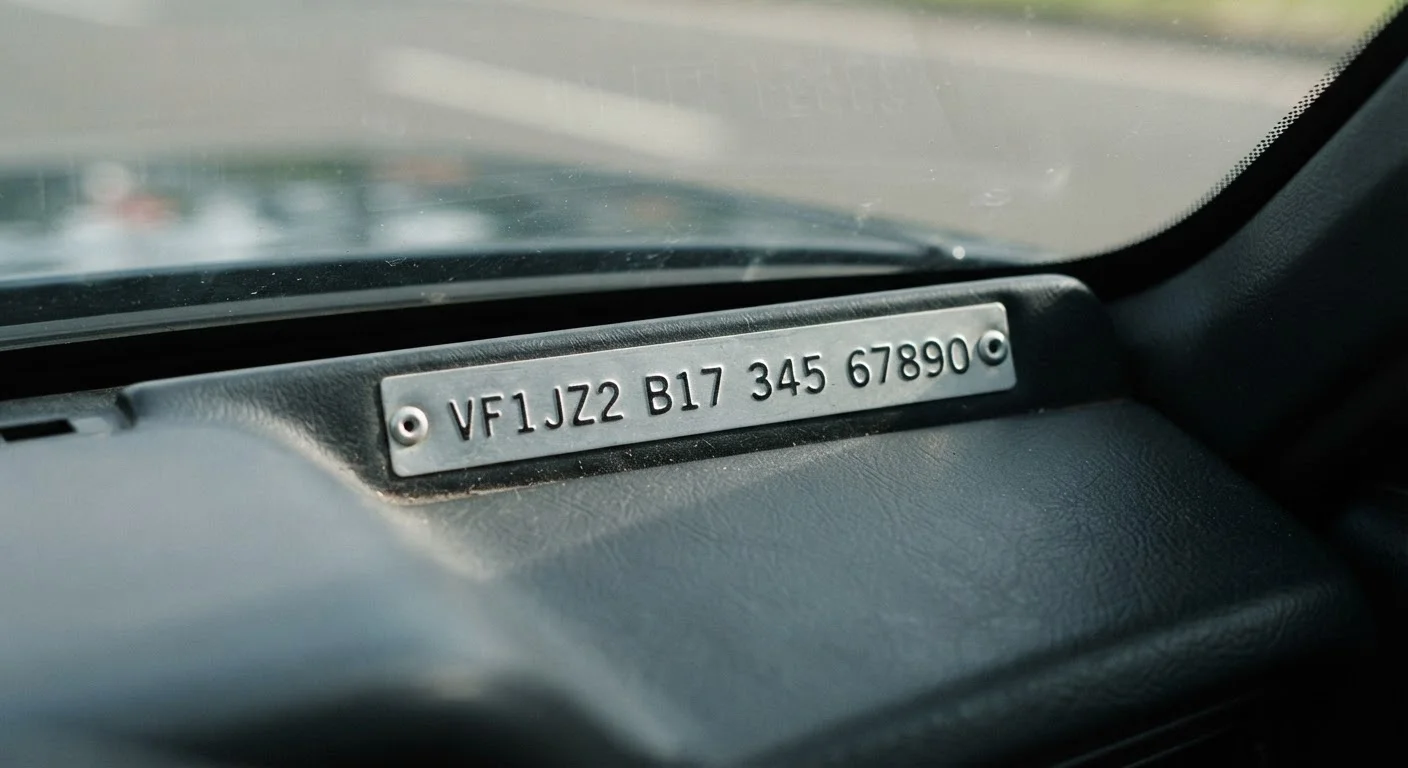
Photo: searchopenrecords editorial
—— In This Article
Key Takeaways
- Every US vehicle built after 1981 carries a standardized 17-character VIN regulated by NHTSA.
- Each character group within a VIN encodes distinct information: manufacturer, vehicle attributes, and a unique serial.
- Official VIN data flows from manufacturers through state DMV title records and federal safety databases.
- A VIN search can reveal title history, recalls, and registration events — but not every incident is reported.
- Use VIN lookups to verify vehicle identity before any purchase, financing, or insurance decision.
What Is a VIN and Why It Exists
A Vehicle Identification Number (VIN) is a 17-character alphanumeric code assigned to every motor vehicle manufactured or sold in the United States after 1981. It functions as a vehicle's permanent fingerprint — unique to that specific unit and unchanging throughout its entire service life.
The standardization was established by the National Highway Traffic Safety Administration (NHTSA) under Federal Motor Vehicle Safety Standard regulations. Before 1981, manufacturers used inconsistent internal numbering, making it difficult for regulators, insurers, and law enforcement to track vehicles across state lines. The uniform 17-character format solved that problem by creating a consistent identifier that state DMVs, courts, insurers, and federal agencies all recognize.
Understanding what a VIN is — and what it connects to — is the foundation for making sense of any vehicle history report or title record. For a deeper look at how the VIN connects to title and registration records, the public record trail begins the moment a vehicle is first titled.
Anatomy of a VIN: Breaking Down All 17 Characters
The 17 characters are divided into three functional sections, each carrying distinct meaning:
World Manufacturer Identifier (Positions 1–3)
The first three characters identify the vehicle's manufacturer and the country of assembly. Position 1 indicates the country of origin (for example, 1, 4, or 5 indicates the United States; J indicates Japan). Positions 2 and 3 narrow down the specific manufacturer and division. NHTSA maintains the official database of assigned WMI codes.
Vehicle Descriptor Section (Positions 4–9)
Characters 4 through 8 describe the vehicle's attributes as defined by the manufacturer — typically body style, engine type, restraint systems, and model line. These are manufacturer-defined and vary in meaning across brands. Position 9 is a check digit, a mathematically calculated value used to detect fraudulent or transposed VINs. Knowing how to verify a check digit is a useful fraud-detection skill covered in detail in our guide to reading a VIN character by character.
Vehicle Identifier Section (Positions 10–17)
Position 10 encodes the model year using a standardized letter or number key (for example, K = 2019, L = 2020). Position 11 identifies the manufacturing plant. Positions 12 through 17 form the sequential production serial number, making every VIN globally unique.
Always verify the VIN physically on the vehicle — check the dashboard plate, the driver-side door jamb sticker, and the engine block stamp — and confirm all three match before trusting any history report.
VIN cloning, where a stolen vehicle is given the identity of a legitimately registered one, is a documented fraud method. Mismatched VIN locations are one of the clearest red flags investigators look for.
Run a recall check directly through NHTSA's official database in addition to any third-party report, because recall status can change after a history report is generated.
Recalls are issued and remedied on a rolling basis. A report generated months ago may not reflect a recall announced last week, so checking the primary federal source adds a critical layer of currency.
Where VIN Data Comes From: Official Sources Explained
When you run a VIN lookup, the results are only as reliable as the underlying data sources. Understanding where that data originates helps you evaluate what any report actually covers.
- NHTSA: The federal agency maintains a publicly accessible database of safety recalls tied to VINs and WMI codes. You can query it directly at nhtsa.gov. This is the authoritative source for open recall status.
- State DMV title records: When a vehicle is registered or its title changes hands, state motor vehicle agencies record that transaction. These records feed into aggregated databases and are the primary source for title status, odometer readings at transfer, and lien information.
- National Motor Vehicle Title Information System (NMVTIS): A federally mandated system that aggregates title and brand data from participating states, insurance carriers, and salvage yards. NMVTIS is designed to prevent title washing — the practice of re-titling a branded (salvage or flood-damaged) vehicle in a state that doesn't recognize the brand.
- Insurance and salvage sources: Total-loss declarations and salvage auction records are reported to NMVTIS by participating insurers and junk/salvage entities as required by federal rule.
For a complete walkthrough of how these sources interact across a vehicle's life, see our VIN and title records guide.
Common VIN Lookup Use Cases
VIN searches serve several legitimate and practical purposes for everyday consumers:
- Pre-purchase verification
- Confirming that the VIN on the physical vehicle matches the title document and that no title brands (salvage, flood, lemon law buyback) are attached before a sale closes.
- Recall checking
- Identifying whether open safety recalls affect a specific unit — recalls are VIN-specific, not just model-wide, so checking the individual VIN matters.
- Odometer fraud detection
- Comparing odometer readings recorded at each title transfer can reveal rollbacks that a seller may not disclose.
- Insurance and financing support
- Lenders and insurers use VIN data to confirm vehicle identity, valuation basis, and lien status before extending coverage or credit.
- Estate and inheritance situations
- Executors and heirs sometimes need to establish the ownership history and lien status of vehicles in an estate.
The vehicle history reports hub provides additional context on what types of events each category of report typically covers.
Privacy, Limitations, and Safe Use
VIN-based public records are subject to important legal and practical boundaries that every user should understand.
What Privacy Law Governs VIN Data
The Driver's Privacy Protection Act (DPPA) restricts the use of personal information obtained from DMV records. VIN data itself is not personal information, but records linking a VIN to a registered owner's name and address are protected. Legitimate VIN reports provide vehicle history without exposing current owner identity.
What a VIN Search Cannot Guarantee
Coverage gaps are real. Not every accident, repair, or title event is reported to a database. Private-party sales may never generate a title-transfer record in some states. Unreported mechanical issues, maintenance history, and cosmetic damage exist entirely outside any VIN-linked system. For a transparent accounting of these limits, see our article on what a VIN search can and cannot find.
A Clean Report Is Not a Clean Bill of Health
A VIN history report reflects only what has been reported to the data sources it queries. Accidents handled privately, mechanical failures, and flood damage not processed through insurance may leave no trace in any database. Never rely solely on a VIN report when making a significant vehicle purchase — a physical inspection by a licensed mechanic is an essential complement, not an optional add-on.
Safe and Appropriate Use
Use VIN lookups to inform decisions — not as a definitive guarantee of vehicle condition. A clean history report does not mean a vehicle is problem-free; it means no adverse events were reported to the sources queried. For high-value purchases, a pre-purchase inspection by a qualified mechanic remains the most reliable supplement to any VIN-based research.
This article is for general informational and educational purposes only. It does not constitute legal, financial, or professional mechanical advice. Consult qualified professionals for decisions specific to your circumstances.

Vin Search Editorial Team
VIN Search Editorial Team is the collective byline for our editorial team and contributor network. Articles published under this byline or an editorial pen name are researched, written, and reviewed according to our editorial standards for clarity, consistency, and independence before publication.
View author profile